





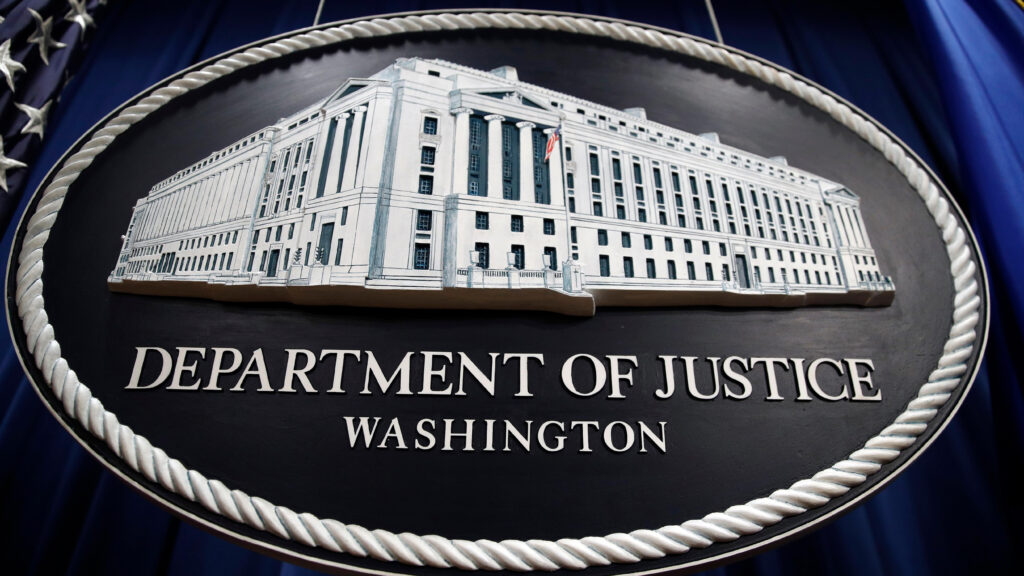
ATTORNEY Elizabeth Loeb of the U.S. Department of Justice-Environmental Enforcement Section said the federal court should focus on the Commonwealth Utilities Corporation’s inability to fill key longstanding management positions.
Loeb also asked the court to pay particular attention to CUC’s substantial arrears from key customers (the hospital and CNMI government), continued significant deficiencies in the operation and maintenance of the drinking water system, and continued lack of revised procurement procedures.
In a 26-page status report, Loeb said, “Since the major infrastructure needs in Stipulated Order 2 have been addressed, the United States respectfully requests that the upcoming Status Conference focus on CUC’s compliance with Stipulated Order 1.”
In Nov. 2008, after the U.S. Environmental Protection Agency cited CUC for violating the Clean Water Act and the Safe Drinking Water Act, the federal court issued Stipulated Orders 1 and 2.
SO1 focuses on CUC’s management structure, drinking water and wastewater issues, such as requiring CUC to provide safe drinking water to residents on a 24-hour basis, maintaining adequate chlorine supplies, safely treating and discharging wastewater, developing long-term capital improvement and financial plans, and implementing the projects described in the completed Master Plan. SO1 also sought to restructure CUC’s organization to reflect a typically functioning utility and requires that key employees possess appropriate education and experience levels.
SO2 focuses on oil issues such as requiring CUC to repair and replace oil storage units and operation infrastructure, manage tank and pipeline facilities, manage facility wastes, and manage facility drainage and storm water run-off. CUC is also required to maintain infrastructure and implement spill and emergency response protocols.
Echoing concerns raised by the U.S. Environmental Protection Agency in its status report, Loeb said CUC “historically sustains lengthy vacancies in management positions thereby impeding CUC’s operations and compliance with the Orders.”
“At the present time,” she added, “CUC has vacancies in three of the required eight management positions. The Executive Director position has been vacant since February 22, 2023. The Chief Engineer position has been vacant since February 24, 2020. The Chief Financial Officer position has been vacant since May 21, 2023. These are critical positions that impact CUC’s compliance with the substantive requirements of Stipulated Orders One and Two.”
The current position of “acting” executive director does not provide sufficient authority to implement major changes or make significant decisions, Loeb said.
Moreover, the “absence of a CFO means that no progress can be made on CUC’s compliance with the SO1’s requirement that it create and implement a Financial Plan and Master Plan and have Financial Reserves. Those requirements are years overdue. It is critical for CUC to have a Financial Plan and Master Plan as standard practices for all utilities, and as required by SO1, to scope out and solidify its financial future.”
Without an executive director or CFO, however, EPA does not believe progress on these plans will occur, Loeb told the court.
“Consequently, on February 8, 2024, due to ongoing concerns, EPA imposed a stipulated penalty of $162,600 pursuant to Paragraph 86.a of SO1 for Preliminary Injunctive Relief,” she said.
The penalty is for violations of Paragraph 8, “Executive Director,” and Paragraph 14, “Chief Financial Officer” of SO1, she added.
“The letter conveying the penalty demand is attached to this Status Report as Exhibit 3. It thus is critical that CUC hire and retain persons who meet the qualifications set forth in SO1 and fill all vacancies in a timely manner. The United States would like to discuss this longstanding compliance issue with the Court as Court intervention is likely required to address it,” Loeb said.
Broken equipment
Loeb said “CUC continues to have issues in identifying, tracking, and repairing broken equipment in its wastewater treatment and drinking water systems, and ideally maintaining equipment regularly to prevent failure.”
“A significant amount of critical equipment is often inoperable and in various states of repair for months, and in many cases, for years. This includes lift station pumps and generators, vehicles, leaking water lines, and water meters,” she added.
Loeb said SO1 also required CUC to develop and submit for EPA approval revised procurement procedures for wastewater treatment and drinking water systems by March 11, 2010.
“Nearly fourteen years later, CUC has still failed to do so. CUC previously submitted a copy of CUC procurement regulations to EPA on March 2, 2010. EPA disapproved the submission on March 1, 2011, explaining that the submission did not include any analysis or assessment of the efficiency or timeliness of the regulations, nor provide SOPs or otherwise modify the existing regulations,” Loeb said.
She said CUC provided a response on May 30, 2011, stating that “CUC is not offering concrete changes or solutions to its current Regulations.”
She said EPA disapproved CUC’s submission as inadequate on Aug. 13, 2018.
Loeb said on May 31, 2022, CUC provided an “Interim Progress Report.”
“The Interim Progress Report stated [that] CUC had recently adopted amendments to procurement regulations to allow for indefinite delivery, indefinite-quantities contracts, and provided procurement clarifications for Architect-Engineering professional services contracts. EPA accepted the progress documented in the progress report and on November 3, 2022, requested CUC to provide a final submission by January 15, 2023. On January 26, 2023, CUC provided a submission, which did not address EPA’s comments and EPA rejected it as inadequate. CUC provided a revised submission on February 6, 2023, subsequently revised and submitted on February 9, 2023. The revised submission generally addressed EPA’s comments but remains insufficient to demonstrate an efficient procurement process,” Loeb said.
As a result, “lengthy and burdensome procurement procedures remain an impediment to efficient and timely repair of broken equipment,” she added.
She said CUC has indicated that new procurement procedures have been submitted to the CUC board for approval. CUC provided these amendments to EPA for review on September 8, 2023. EPA has not yet had time to fully review how the revisions have impacted procurement processes to improve timeliness and efficiency, Loeb said.
She reiterated that court intervention may be necessary to address these longstanding issues.
As of press time Monday evening, designated federal Judge David O. Carter had yet to set a status conference for February.
CUC, for its part, is expected to submit its own status report to the court.
