







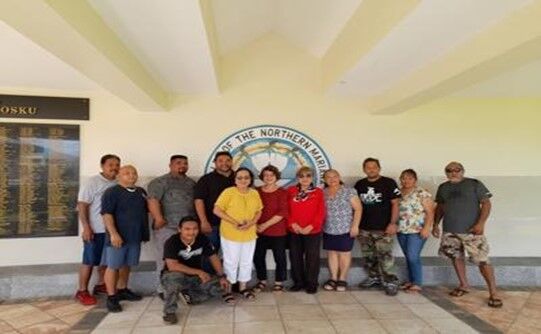
Northern Islands Mayor Valentino Taisacan, standing 3rd left, Public Lands Advisory Board nominee Kodep Ogumoro-Uludong, Connie Togawa, 17th Council Chairwoman Marian DLG Tudela, Vice Chairwoman Antonia M. Tudela, Secretary Carmen C. Pangelinan, former Northern Islands Mayor Vicente Santos, Mayor Taisacan’s staff Paul Santos, Mario Santos, John Santos, former Mayor Vicente Santos and Lorna Iginoef.
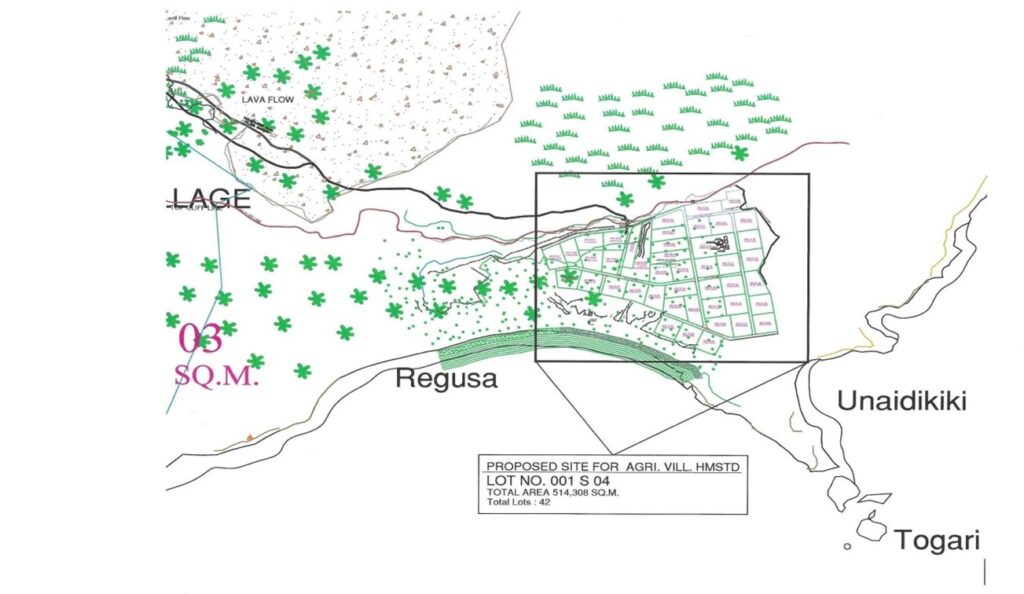
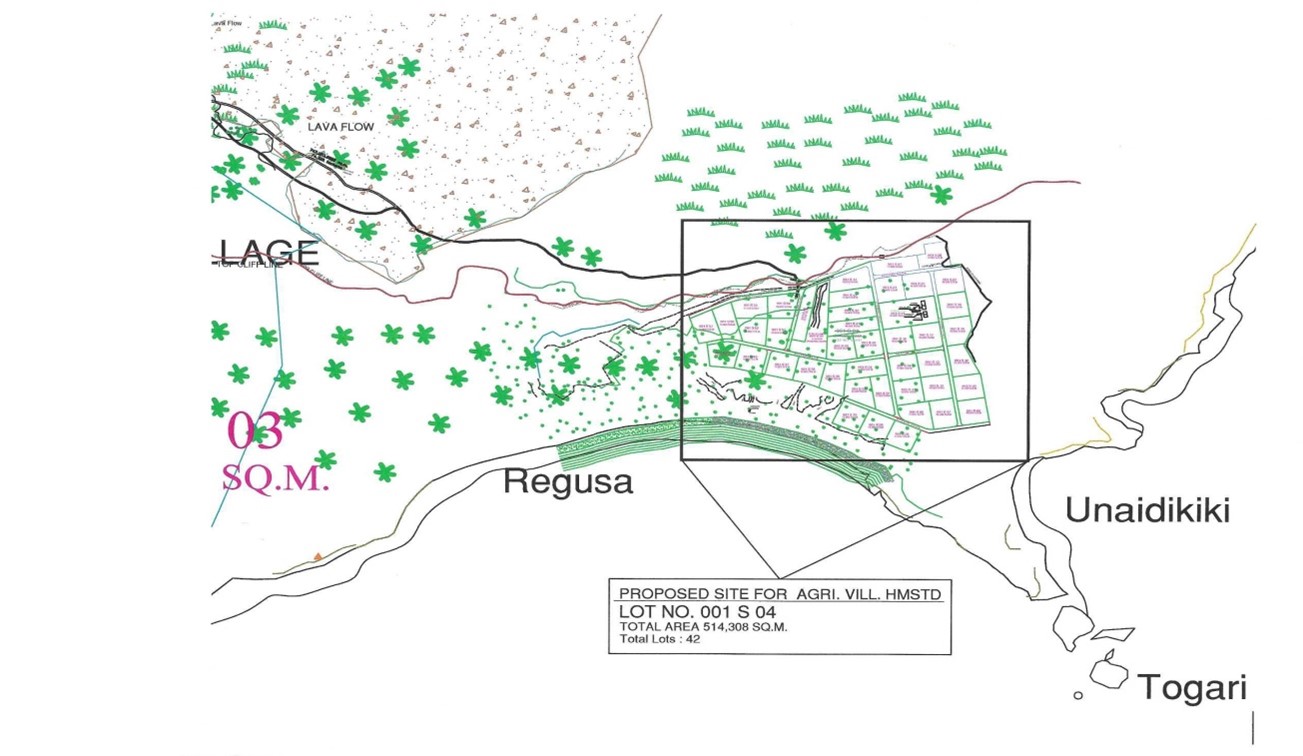
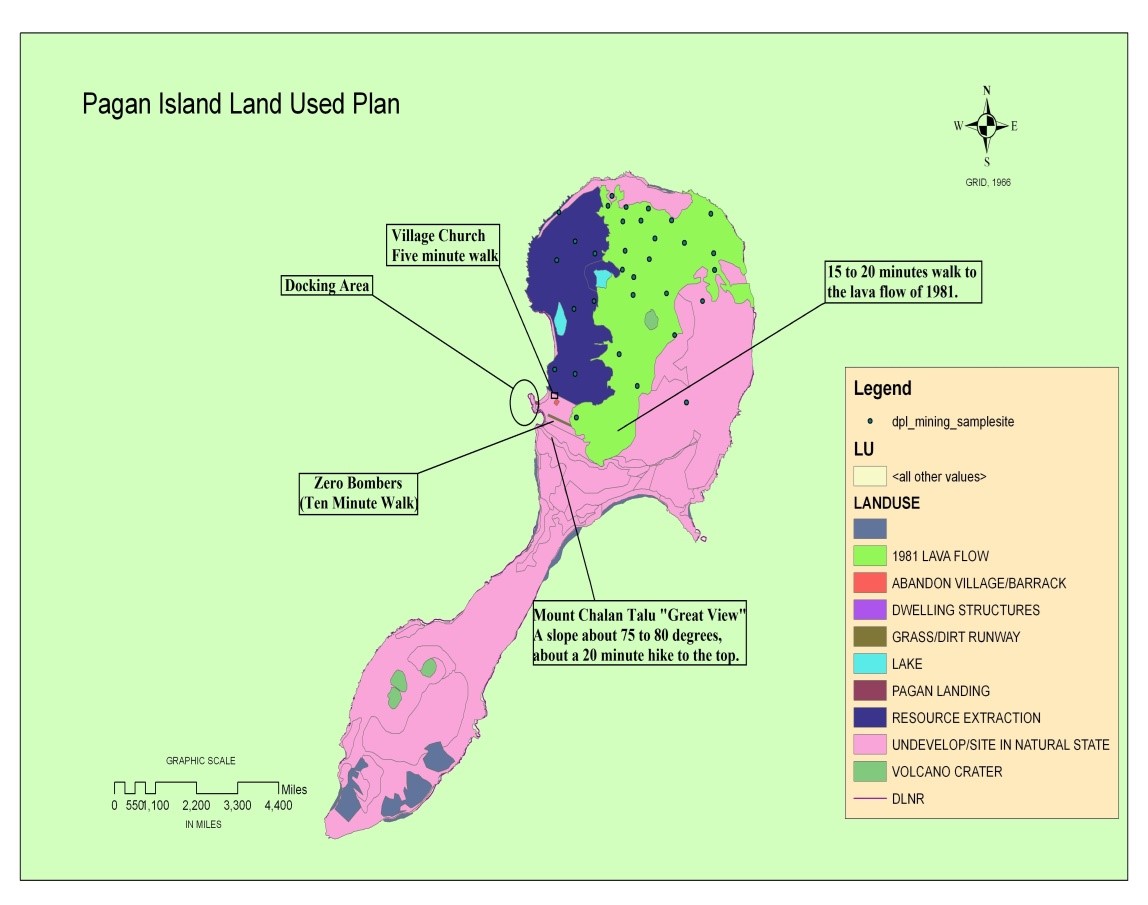
(SNIMC) — Saipan and Northern Islands Municipal Council Vice Chair Tonie Manibusan Tudela applauds the positive effort of Department of Public Lands Secretary Terry Santos toward the resettlement of Pagan in the Gani or Northern Islands with the completion of surveys involving at least 40 agricultural homestead plots now ready and available for bona fide Pagan residents.
Tudela expressed delight over this latest development in response to Council Resolution 17SNIMC05 authored by the vice chair, urging swift action on resettlement and redevelopment of the Gani islands.
The vice chair wishes to also offer her assistance to Pagan residents who need help when they are ready to submit their completed agricultural homestead applications and the required documents to the DPL homestead administrator on the second floor of the office at Joeten Dandan on Saipan.
Tudela recalled that based on a census of Pagan, at least 49 people were counted and considered Pagan residents. As of this writing, DPL homestead administrator had so far received six applications for the 42 Pagan agricultural homestead plots.
Tudela said Northern Marianas College-Cooperative Research, Extension and Education Services has an agriculture master plan for the Northern Islands that has been in place since the time of then-Director Ross Manglona. She said the goal is to implement agricultural homesteads in Pagan that are similar to Hawaii’s where the U.S. Department of Agriculture and the University of Hawaii’s College of Tropical Agriculture and Human Resources provide selective breeding or cultivars research on tea growing on the Big Island of Hilo.
The NMC agriculture plan provides an historic overview of farming in the Gani Islands during the Spanish, German, Japanese and U.S. eras. The master plan lists fruits and vegetables good for production on the island including sugarcane, sweet potato, watermelon and pineapple. There was cotton production during the Japanese era while coconut for copra was grown during the German period. The Japanese also grew sugarcane, pineapple, sweet potato, watermelon and tobacco among other crops.
Tudela fondly recalled the enthusiasm of late Mayor Jerome Aldan during an historic economic summit during which the mayor noted that “the post-war industry that brought prosperity to the islanders was the copra industry. So successful was the industry that copra helped jumpstart what later became a Micronesia-wide development engine in the United Micronesian Development Association, the largest non-government development group in Micronesia.”
UMDA, Tudela said, once owned the Palms Hotel and was a major stockholder in Continental Air Micronesia and Laolao Golf & Resort, among other major investments in the Commonwealth.
Tudela also pointed out that the bulk of the world’s tea is grown in Asia, specifically in China, Taiwan, India, Japan and Sri Lanka.
Tea growing in these countries takes advantage of a combination of favorable conditions in climate, tradition and culture, which allowed the tea industry to thrive for centuries. The latest hotbed for tea growing and export production is on Hawaii’s Big Island — the Hilo/west side of Kona, which is an ideal place for growing tea while the east side is renowned for Hawaii’s Kona coffee.
According to research, tea growing is known to grow well based on factors not limited to acidic soil, good drainage, higher elevation, 75 to 90% humidity, 65 to 80°F temperatures, year-round sunlight, among others. Because tea in Hawaii is cultivated on volcanic soil, the leaves retain distinct Hawaii-origin flavors and are considered specialty refined tea.
Like NMC-CREES, Hawaii’s USDA office and the University of Hawaii’s College of Tropical Agriculture and Human Resources provide research on selective breeding or cultivars.
Hawaii consists of eight islands — Oahu, Maui, Kauai, Molokai, Lanai, Kahoolawe, Niihau, and the island of Hawaii or the Big Island — while the Gani Islands consist of Farallon de Medinilla, Anatahan, Sarigan, Guguan, Alamagan, Pagan, Agrihan, Asuncion, Maug and Farallon de Pajaros, farthest north and closest to Japan. The Gani Islands are surrounded by the world famous Marianas Trench.
