






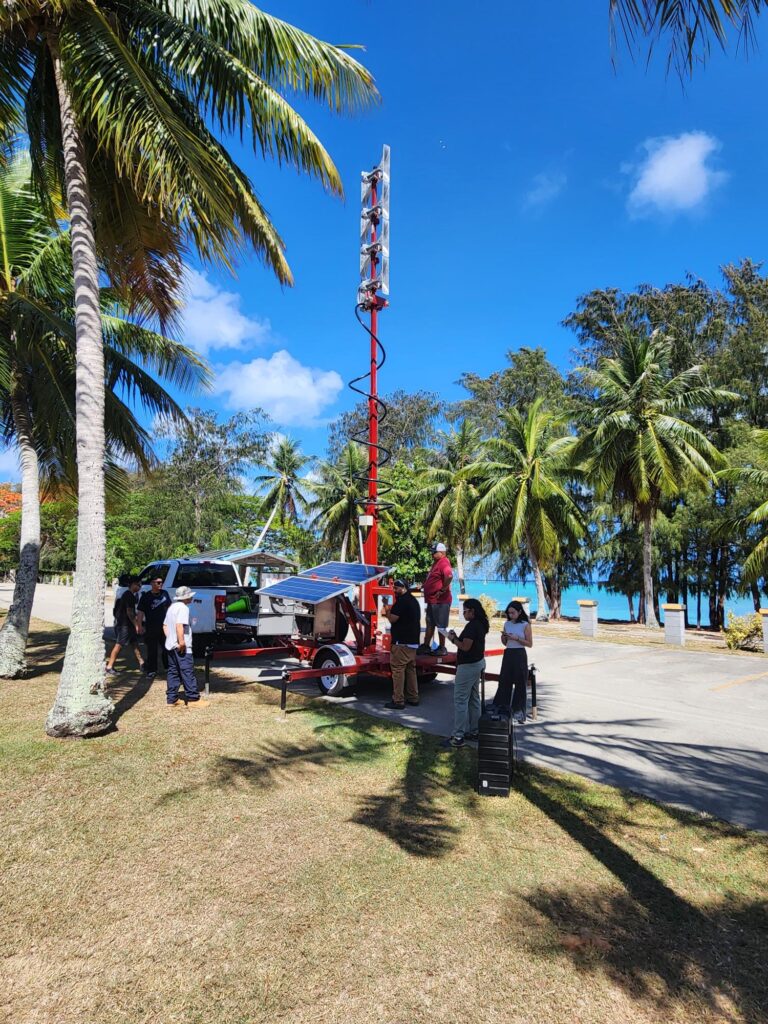
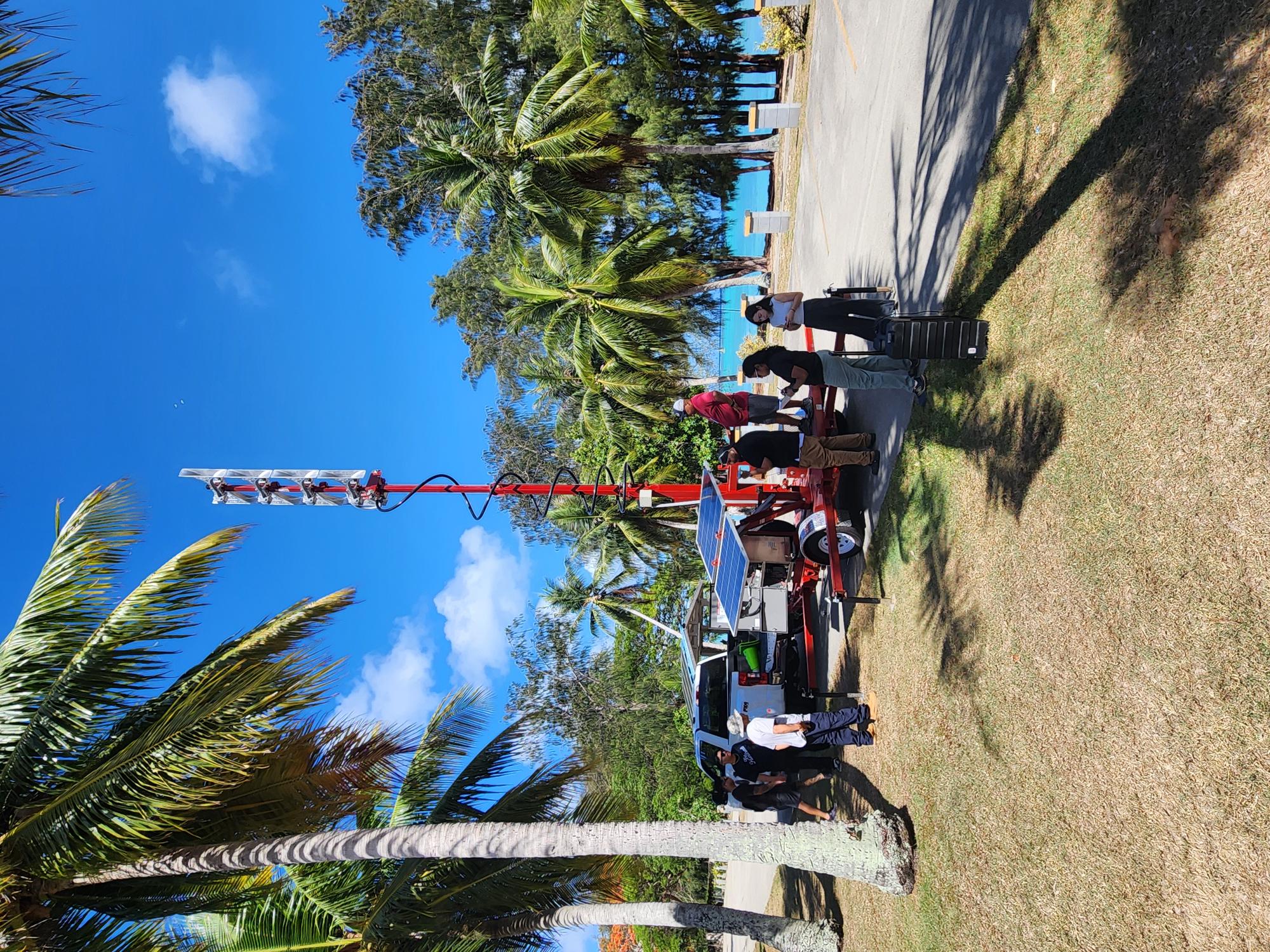
HSEM personnel set up a mobile all-hazard siren at Paupau Beach in San Roque on Wednesday morning.
THE CNMI Office of Homeland Security and Emergency Management tested its new mobile all-hazard siren system at Paupau Beach in San Roque, and at Garapan Fishing Base on Wednesday.
HSEM Public Information Officer Bernard Villagomez said the all-hazard system can also be remotely activated from the Emergency Operations Center on Capital Hill or in any other location.
“The mobile siren can be set up under 15 minutes. We’re testing some areas to make sure the warning messages can reach residents of the island,” Villagomez said.
“We have two mobile all-hazard sirens, one of which we are testing right now. The sirens are currently for Saipan only, as of right now,” he added.
According to Villagomez, the siren’s noise can be heard from a mile or a mile-and-a-half distance.
“Potential threats including tsunami warnings, severe weather warnings, wildfire warnings, and air raids warnings will each have a distinct alert siren call,” he said.
The all-hazard siren system was made by Alertus Technologies, which is based in Baltimore.
“The siren will be tested at least once a month, to make sure it is working properly,” Villagomez said.
HSEM will conduct another siren testing today, Thursday, May 30, in the same areas: from 9:30 a.m. to 11:30 a.m. at Paupau Beach, and from 1 p.m. to 2 p.m. at the Garapan Fishing Base.
What to expect:
• The siren will emit a loud, audible tone designed to alert residents. It is expected to be heard both indoors and outdoors within testing areas.
• Each mobile siren activation will last for approximately two minutes, with multiple activations throughout the testing period.
CNMI Office of Homeland Security and Emergency Management personnel test the mobile all-hazard siren at the Garapan Fishing Base on Wednesday morning.
