

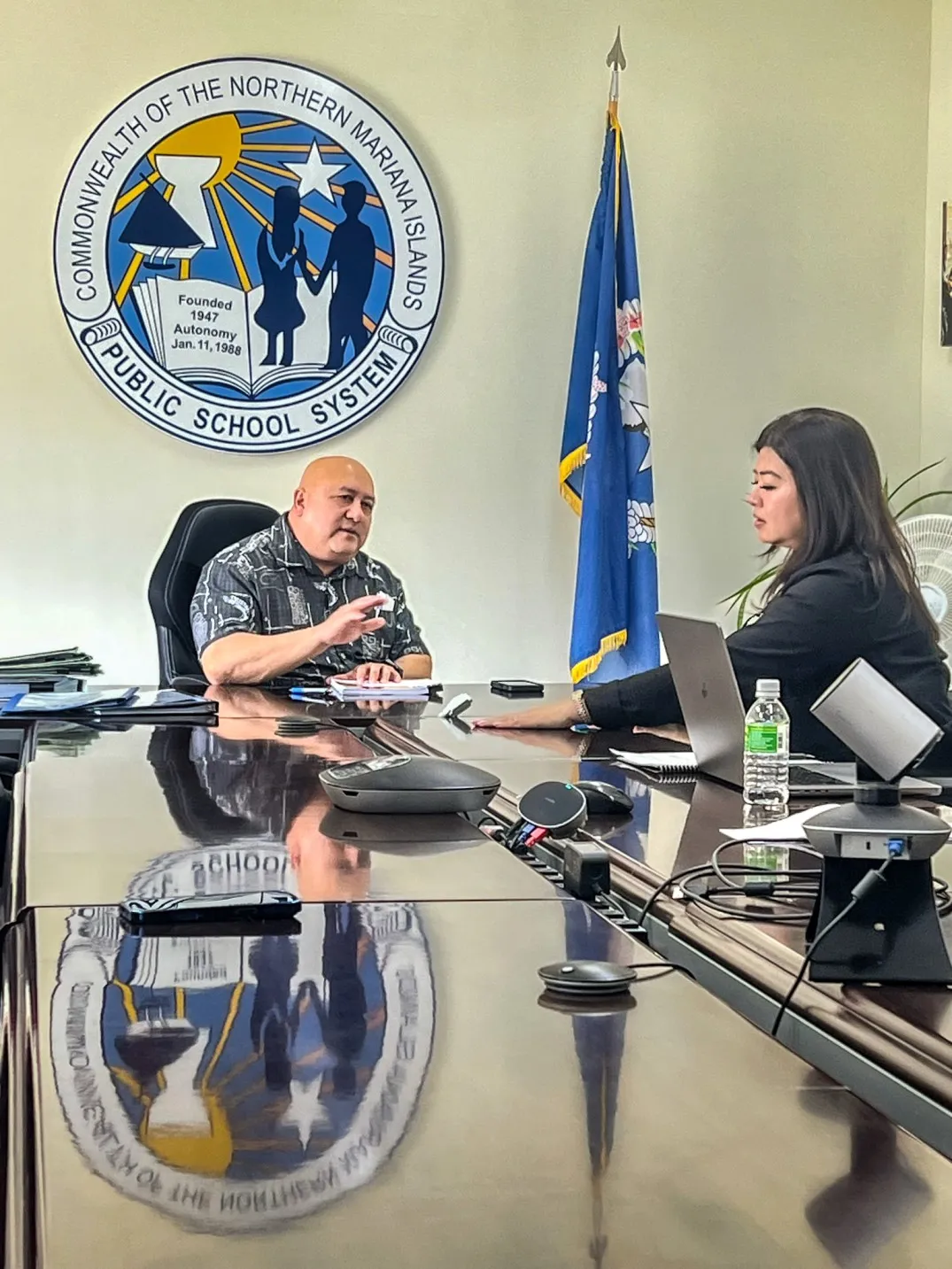


Nelson Jun Xu of L.A. Baumann & Associates said rather than wait for the federal government to take over the CNMI’s immigration system, IRs should exercise their right to apply for green cards either through employment-based immigration or family-based immigration.
The IR status entitles the holder to be treated like a resident.
But Xu said the U.S. immigration does not recognize the IR status — only the green card or permanent residency.
Thousands of foreign workers here who married locals or other U.S. citizens have IR status. Others are IRs of children who became U.S. citizens having been born here.
Xu who is licensed to practice in New York, Guam and the Northern Marianas held a forum here on Saturday afternoon that was attended by an estimated 300 foreign workers from the Philippines, China, Thailand, Nepal, Bangladesh, among other countries.
The federalization law mandates all foreign workers on the islands to be treated as transitional workers under the soon-to be federally administered CNMI immigration system.
Specific regulations about this transition period are still in the drafting stage and won’t be finalized until April 2009.
Employers in the CNMI and Guam also have the option to petition foreign workers under the H-visa program.
Xu said there are a lot of H-visa types.
He said Guam, which may need about 15,000 foreign workers for the military buildup projects, will likely use H2B visa which is designed to hire construction or skilled workers.
The immigration attorney said applying for an H-visa is a lengthy process as it first requires publication of job orders to make sure that it cannot be filled locally.
The Guam governor will then issue temporary labor certificates for the unfilled skilled positions — immigration and training fees must be paid. A registration fee of $1,000 must also be paid to the U.S. Department of Labor.
Xu said employers pay the fees when applying for the H-visa of a foreign worker.
The CNMI and Guam are both exempt from the U.S. national H-visa quota of about 66,000 annually.
Thus, both can fill their labor needs with qualified foreign workers through the H-visa program.
The United Workers Movement, the Saipan Chinese News, Korea Times, among other organizations, sponsored Xu’s trip to Saipan.
Xu earned his law degree from the University of Illinois.
He also holds a master’s and Ph.D. in law, specializing in immigration law.
