

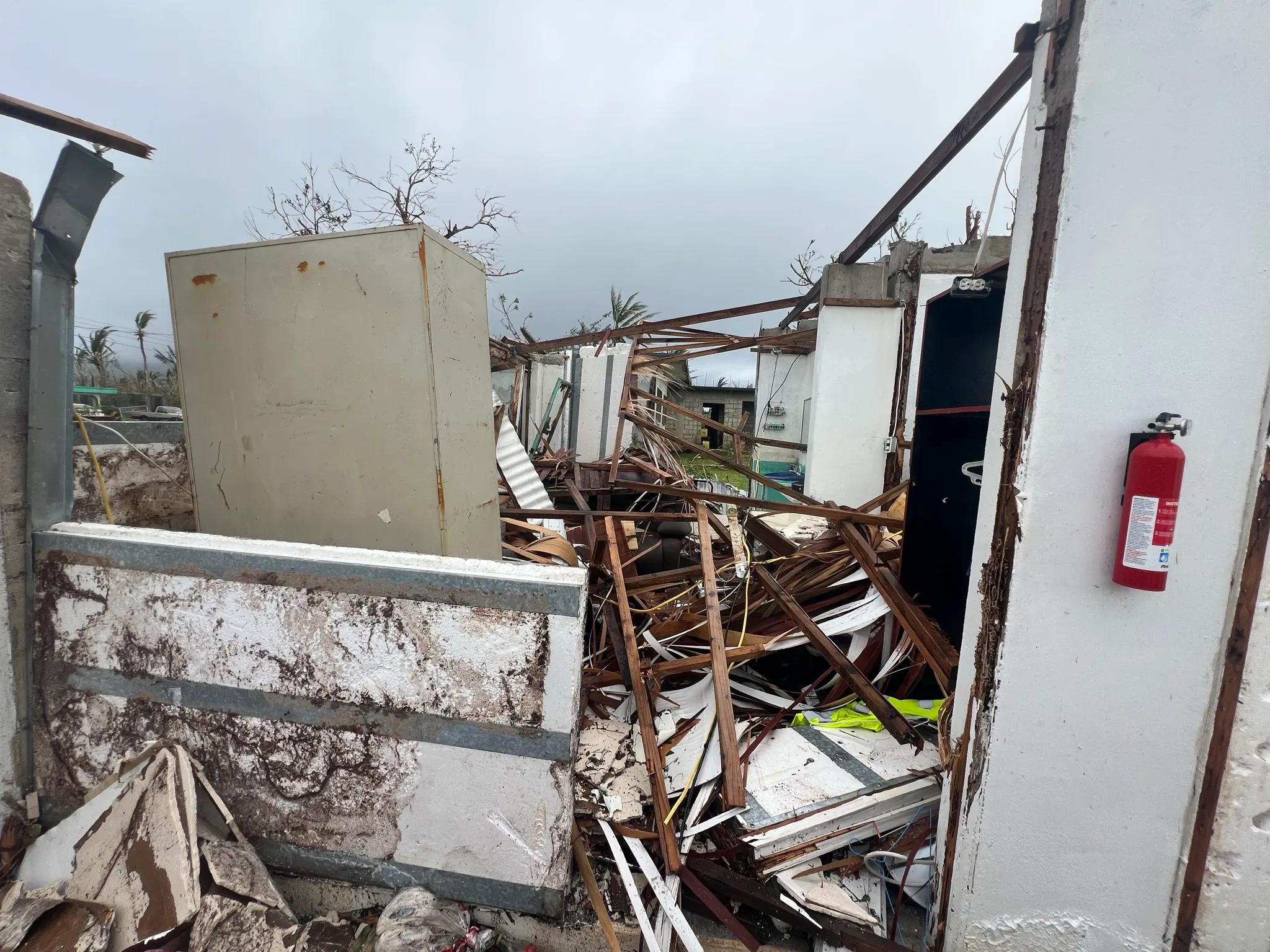


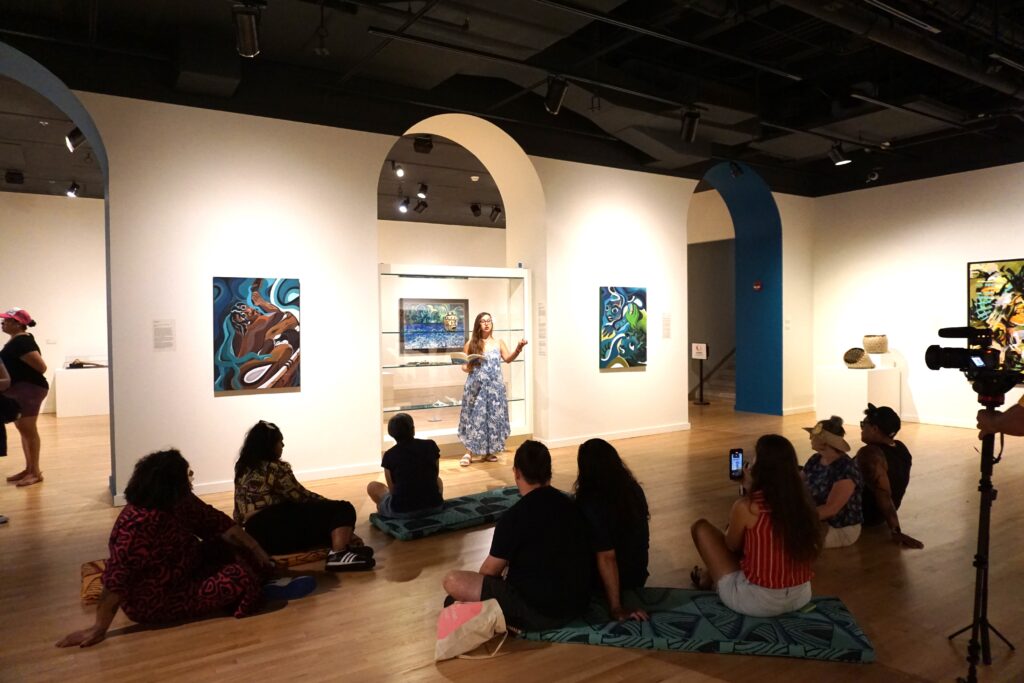
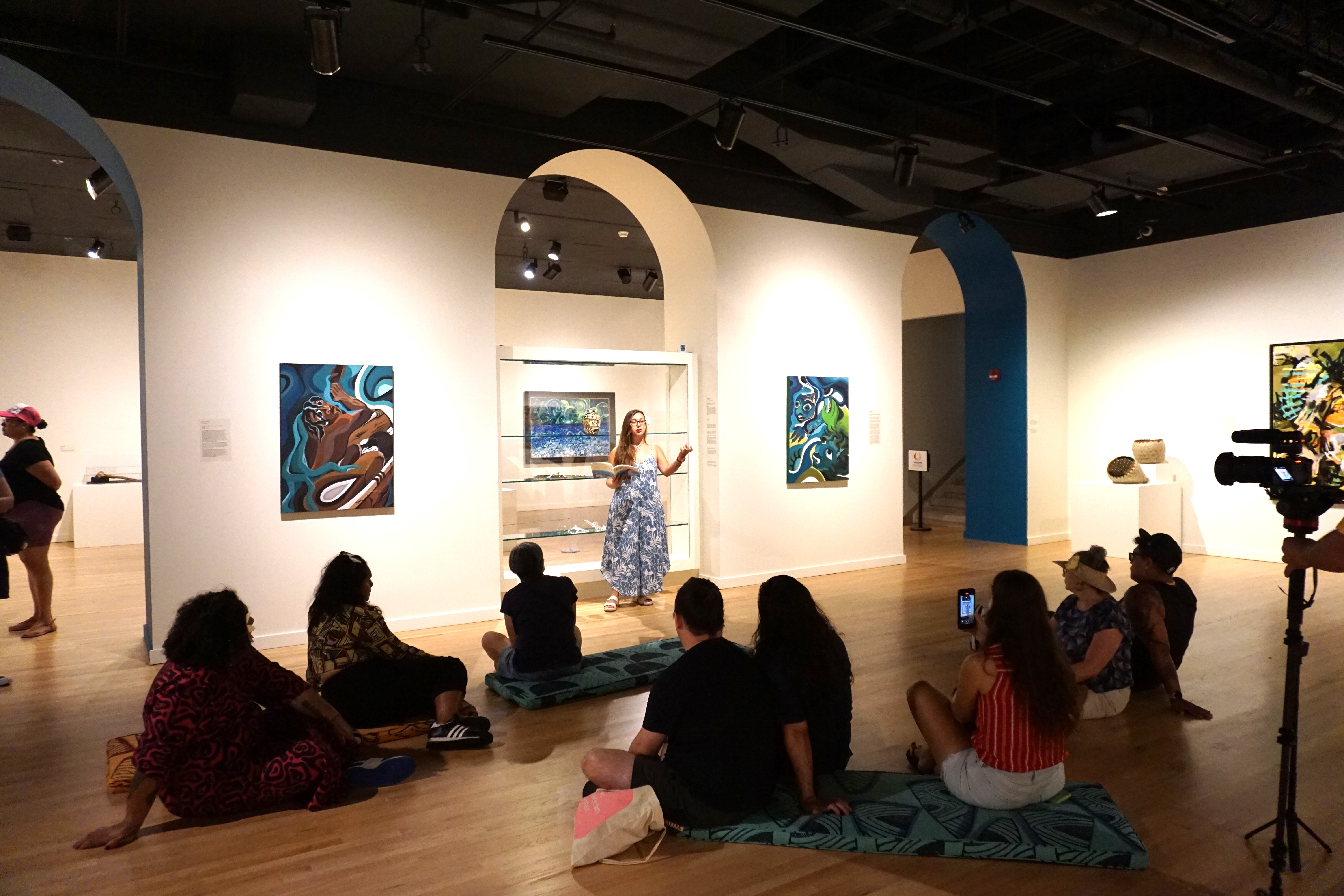
Arielle Taitano Lowe reads from “Ocean Mother” at Capitol Modern in Honolulu, Hawaii on June 14.
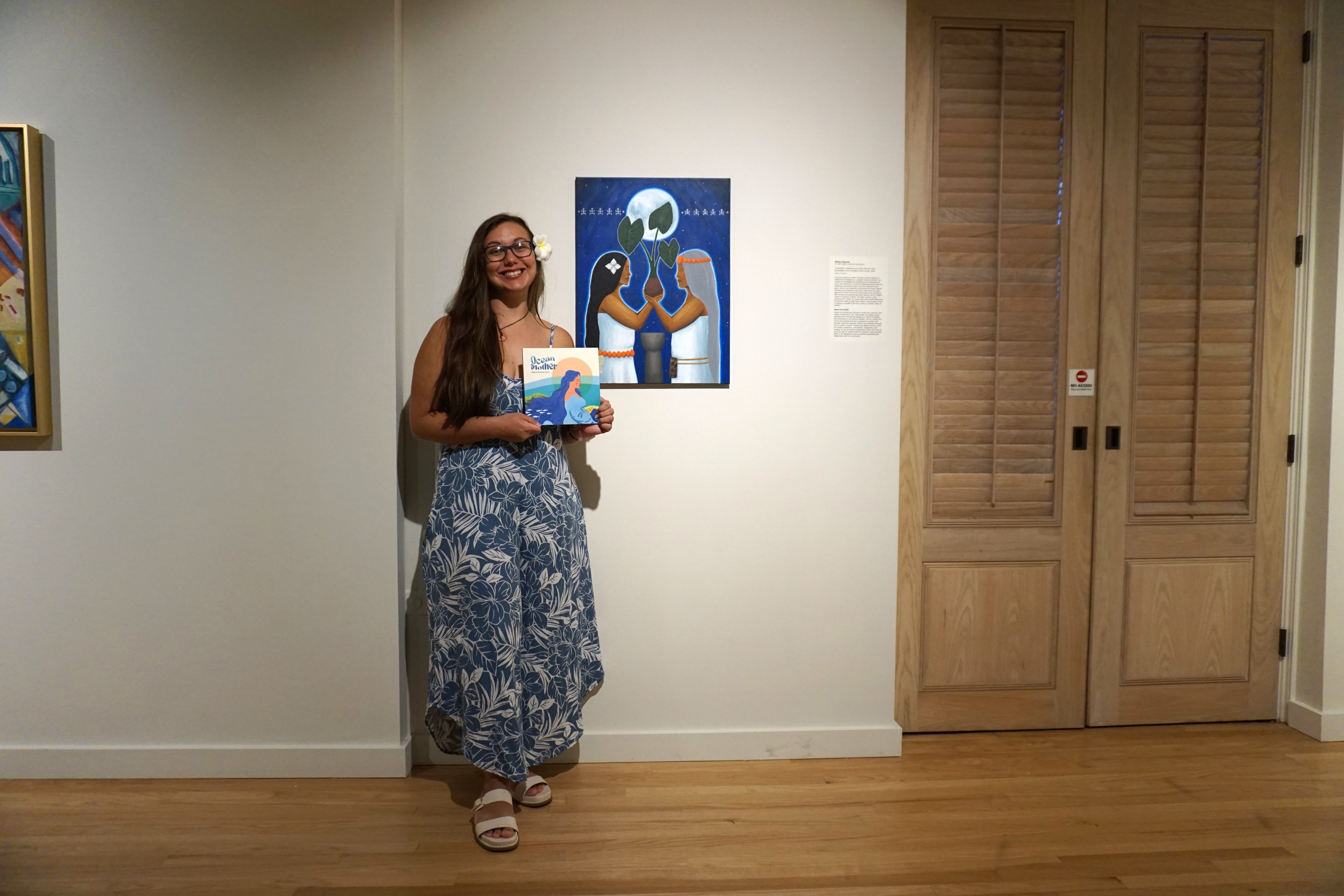
Arielle Taitano Lowe holds a copy of her debut book of poetry as she poses for a photo near Gillian Duenas’ artwork, “I menhalom manaina-ta na man la’la’ hit” at Capitol Modern in Honolulu, Hawaii on June 14.
HONOLULU — Guam poet Arielle Taitano Lowe read poems from “Ocean Mother,” her 2024 debut book, at a gathering of Pacific Island poets on June 14 at Capitol Modern here in Honolulu.
The event was part of the Hawai’i Poet Laureate Program: Pacific Voices Pop-up.
Lowe read two of her poems: “Trongkon Nunu,” which is about language preservation; and “One Day Our Bodies Will Be Free,” a complex work that weaves in themes of generational female empowerment, body sovereignty, colonialism, and ecology.
“This [event] is really to bring all of our voices together from Hawaii, Samoa, Guam and to help bring more energy to this art gallery that is specifically for FestPAC,” Lowe said, referring to the 13th Festival of Pacific Arts & Culture, which was held in Honolulu from June 6 to 16.
Lowe spoke to Variety about what literature and poetry can do for culture.
“The act of writing down our stories allows our stories to evolve into this introduced medium of writing,” she said. “It can also allow our stories to further evolve into mixed media. When you think of literature, novels, plays, and screenwriting, the recent eruption of Chamorro literature is part of that participation in this modern communicative technology.”
She said that even if written literature is newer to the Pacific than other art forms, Chamorros have been “telling stories and sharing stories for 4,000 years.”
Lowe, who also has a background in slam poetry, has been writing poems since her youth. She said poetry allows an artist the space to “dream.”
“Poetry, most openly compared to other genres, invites playing with form. Poetry also allows us to dream about the kind of future we want for our people. But also for Chamorro writers or writers from Guam, poetry is a natural modern expression that’s very harmonious with our oral storytelling. I also feel like poetry is a direct connection to our ancestors where we can perform extemporaneous work and ask them to share their wisdom with us.”
She added, “When I think of dreaming, I think of freedom, and I think poetry allows us to express ourselves freely.”
For Marianas-based poets who dream of being published, Lowe said they should pursue opportunities where they are.
“Keep writing, keep chasing opportunities to be in a community with other writers — go to workshops. Don’t let the lack of existing programs get you down as a young person,” she said. “I wanted poetry so badly that even if we don’t have a poetry course at the University of Guam, I actively sought out poetry workshop opportunities online, on other islands, and I hope to be among the writers who can go back home and introduce these workshops and forms and find time and space for young people to write.”
She said budding writers should have resiliency. “Don’t give up finding new forms, new ways to play and experiment, and to get new ideas and really just believe in yourself and don’t let any negativity get in your way.”
