




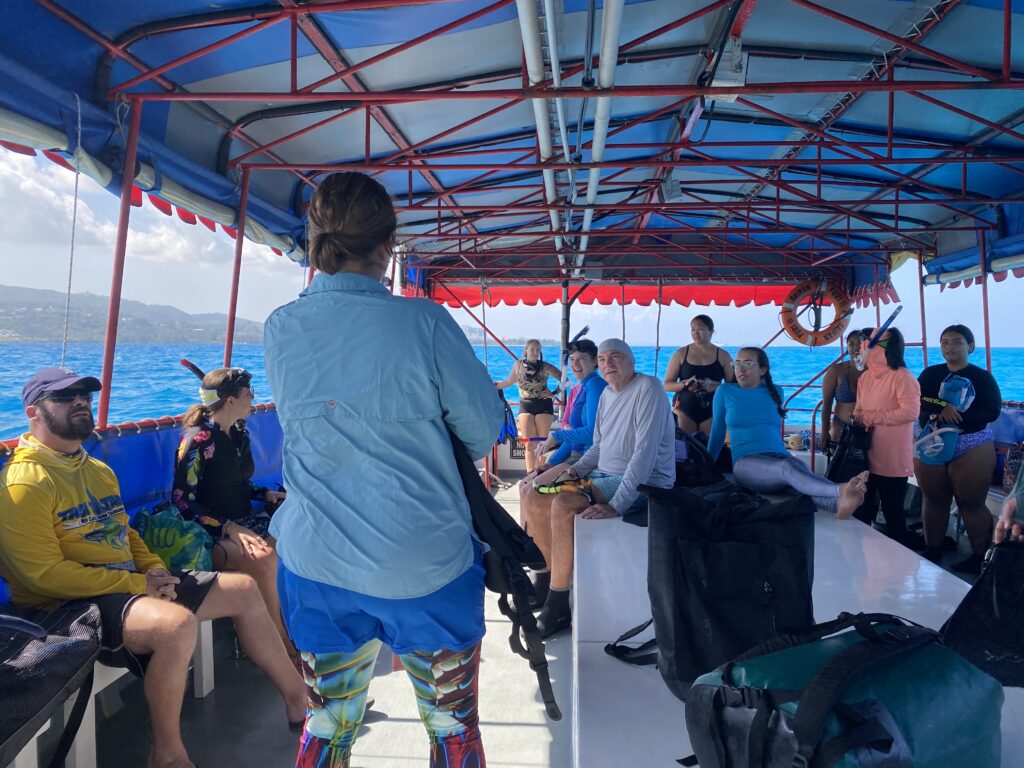
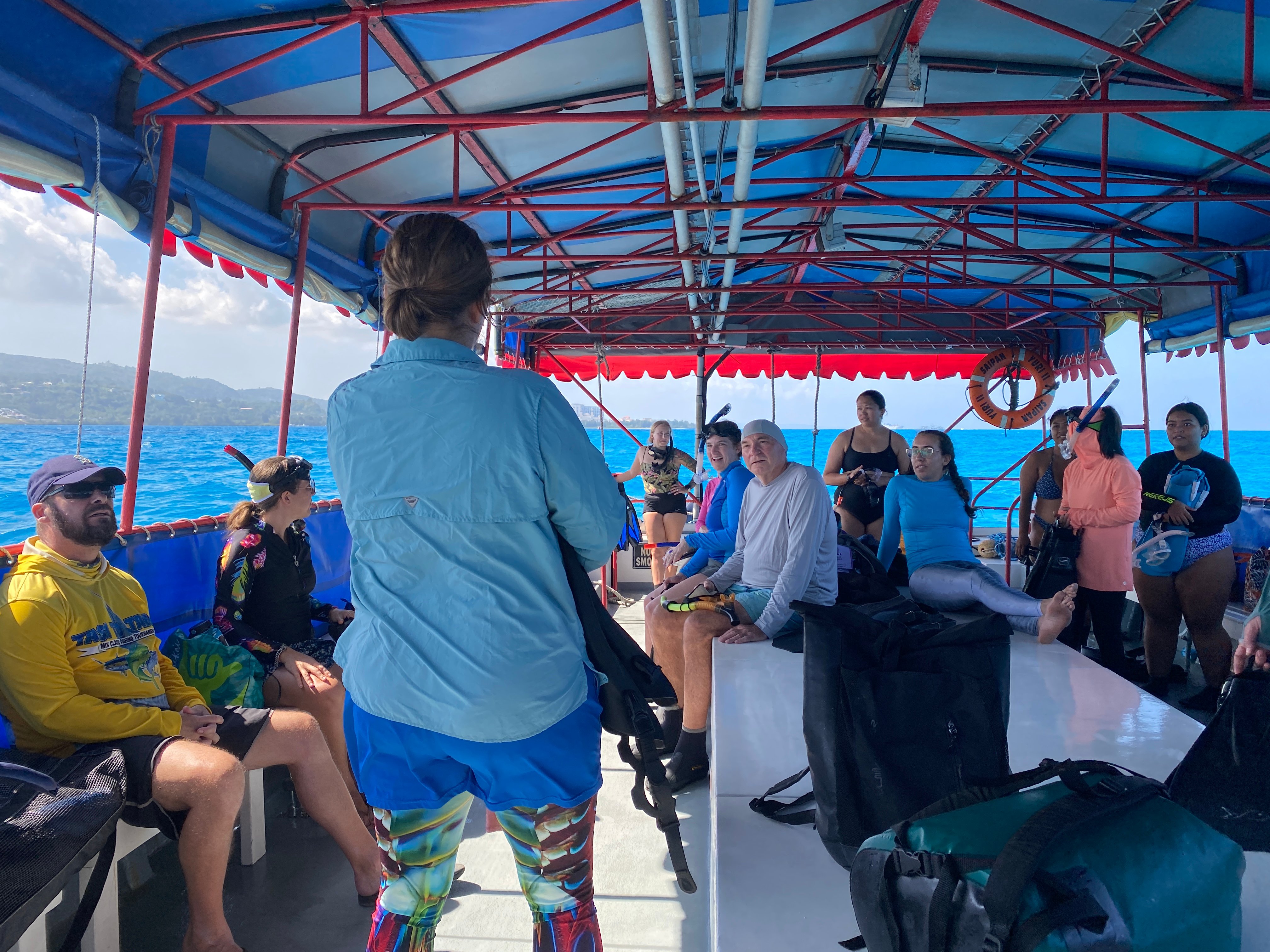
Mariana Islands Conservation Conference participants listen to Lyza Johnston ahead of their field trip to the Saipan Coral Nursery on Feb. 28.
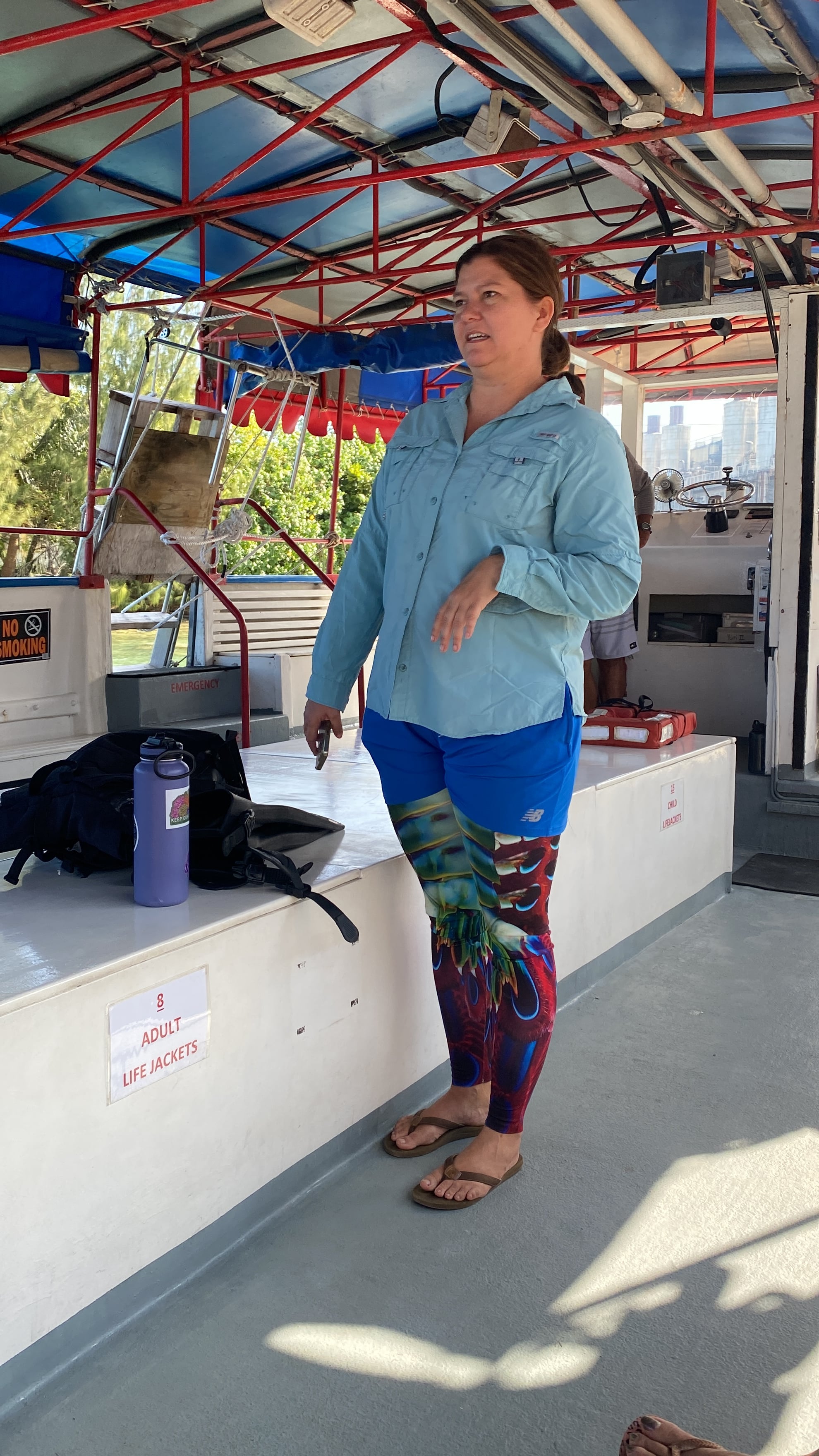
Lyza Johnston speaks during a boat tour of the Saipan Coral Nursery on Feb. 28.
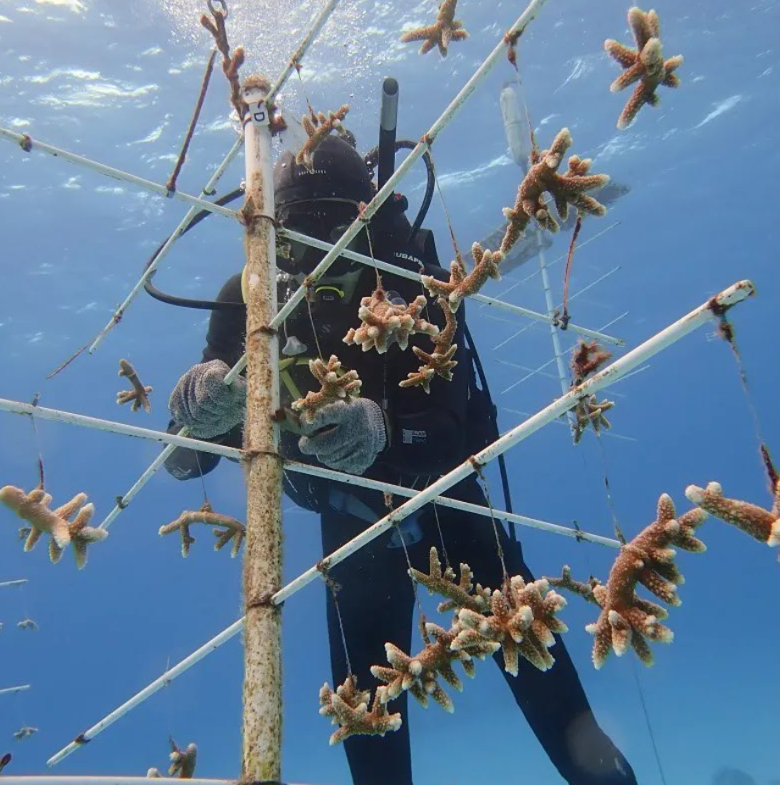
Coral species are grown on PVC pipes located under about 25-30 feet of water in the Saipan Lagoon.
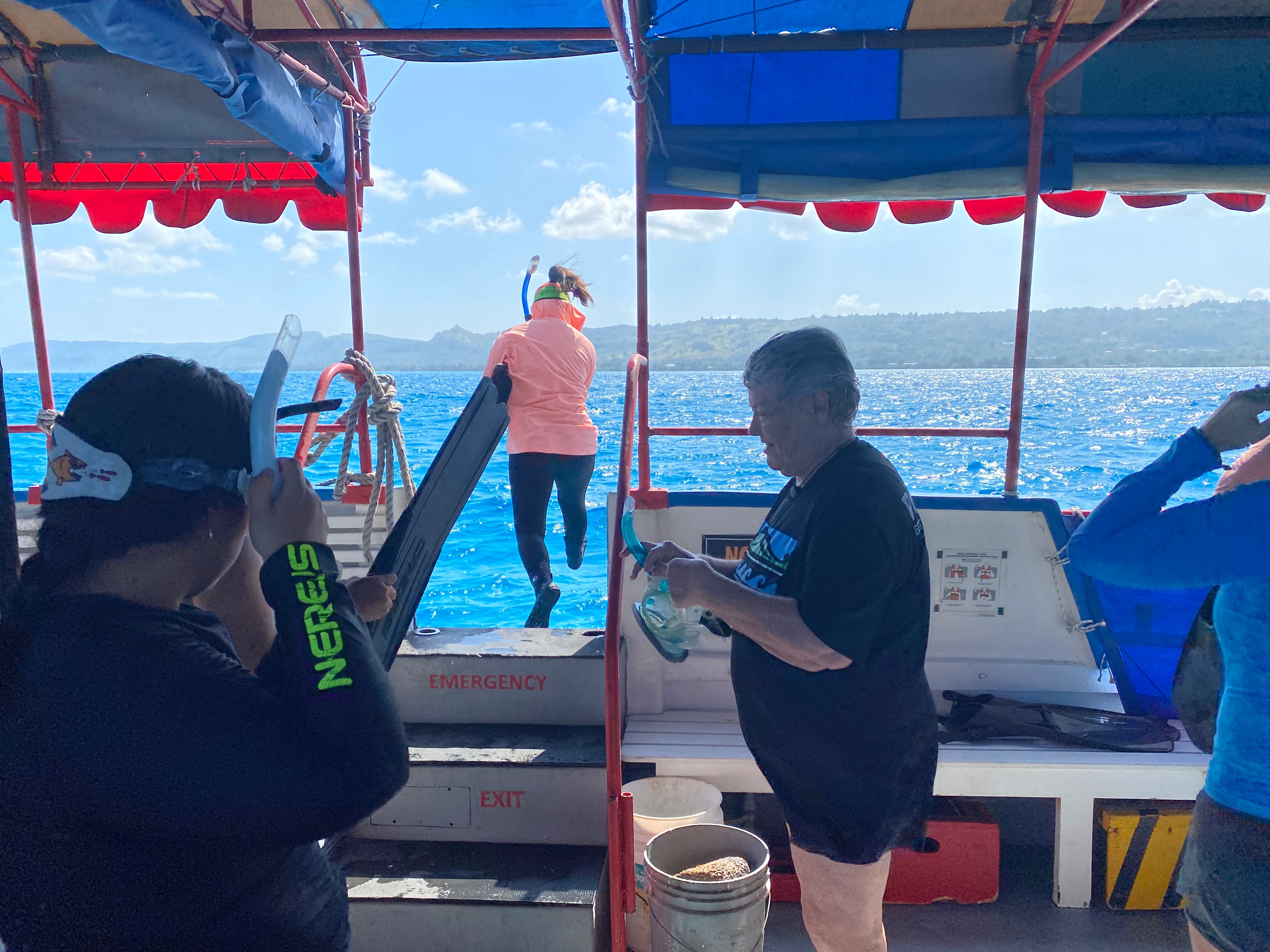
Kylie Hasegawa, a JAMS employee, leaps off the boat and into the Saipan Lagoon during a field trip to the Saipan Coral Nursery on Feb. 28.
FOURTEEN participants of the Mariana Islands Conservation Conference on Wednesday toured the Johnston Applied Marine Sciences or JAMS Saipan Coral Nursery in the Saipan Lagoon, only a short distance away from Managaha.
Lyza Johnston, the marine researcher in charge of JAMS, led the tour.
She said there are 25 trees that grow over 10 species of corals. One of those is the endangered Acropora globiceps.
JAMS “farms” these trees in response to “climate change associated with ocean warming,” Johnston said.
“Unfortunately, we’ve lost a lot of our corals on Saipan and throughout the Mariana Islands due to thermal stress and bleaching,” Johnston said. “Some estimates are over 60% of coral cover, and so we’re trying to restore those degraded reef and all the ecosystem services that corals provide.”
Johnston said Saipan and Mariana corals provide wave dissipation, fisheries habitat, tourism recreation opportunities, and more.
She said the JAMS team collected functionally diverse corals — these are “big and branchy” corals that fulfill multiple roles, such as serving as habitats for fish and other organisms while also protecting the shore from waves. The goal is to outplant the corals around the Marianas.
The selected species are commonly found around the Marianas, which means that the JAMS team has flexibility in choosing where to outplant the grown corals once they’re mature.
The corals grow on PVC “trees” that are under approximately 25-30 feet of water.
Coral samples collected from local parent colonies comprise less than 10% of the parent colony.
“Hopefully they continue to grow and reproduce on their own,” Johnston said, adding that the JAMS team places multiple genetically distinct corals adjacent to each other for their reproductive benefit.
She said, “Awareness is always really important. We want people to know what we’re doing here. It’s important for our funding, too. We’re constantly looking for additional funds to keep this going. We want to spread the word about all the success we had with our restoration program so we can keep building it.”
