



By Ulysses Torres Sabuco
[email protected]
Variety News Staff
APRIL 18, 2026 — the third night after Sinlaku. The power was still out. Trees lay snapped like matchsticks across roads and rooftops. Metal roofs curled upward as if the wind had tried to peel the island open. Yet every evening, when the light began to fade, something stubborn and beautiful happened.
The sky refused to stay broken.
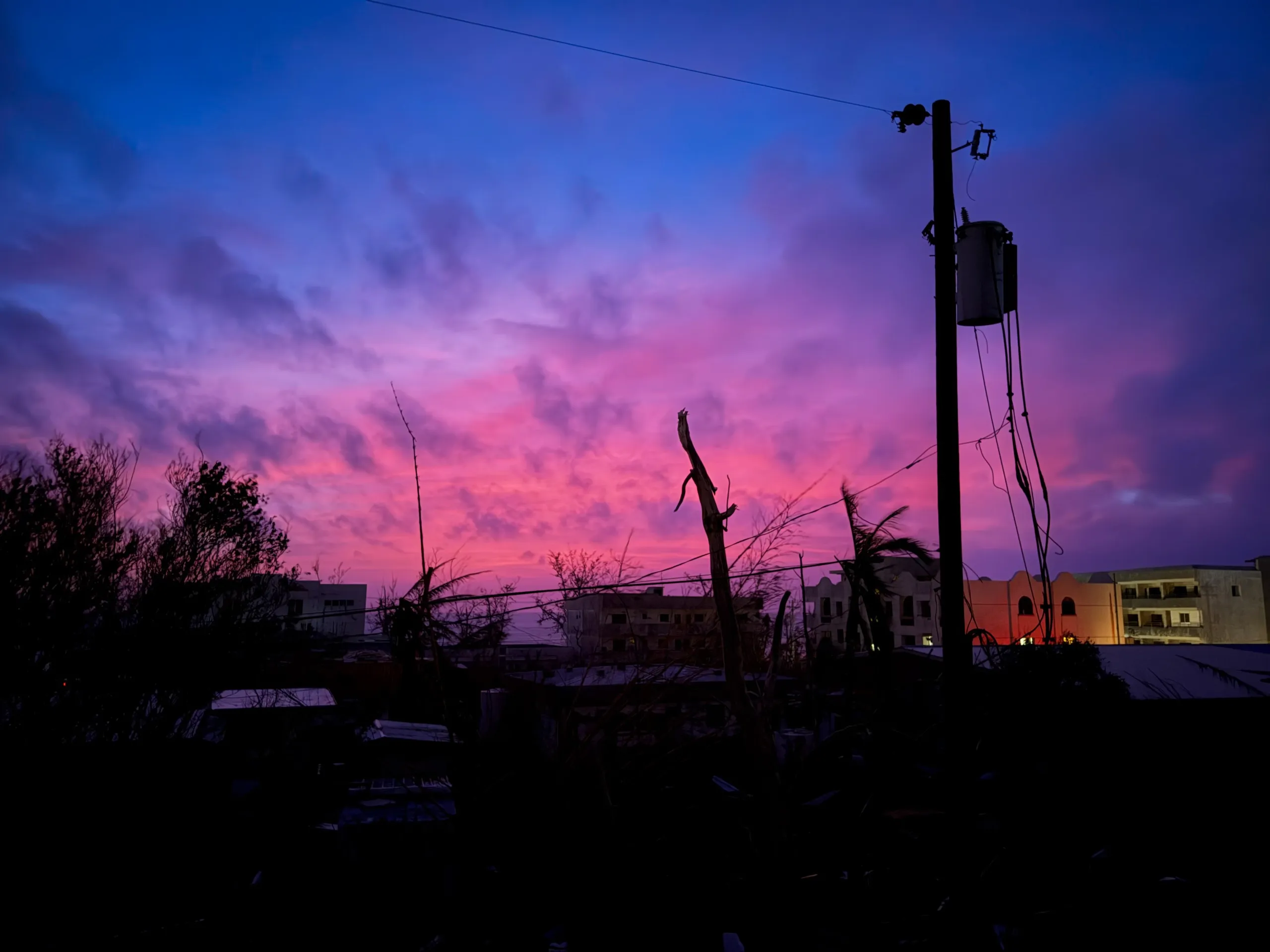
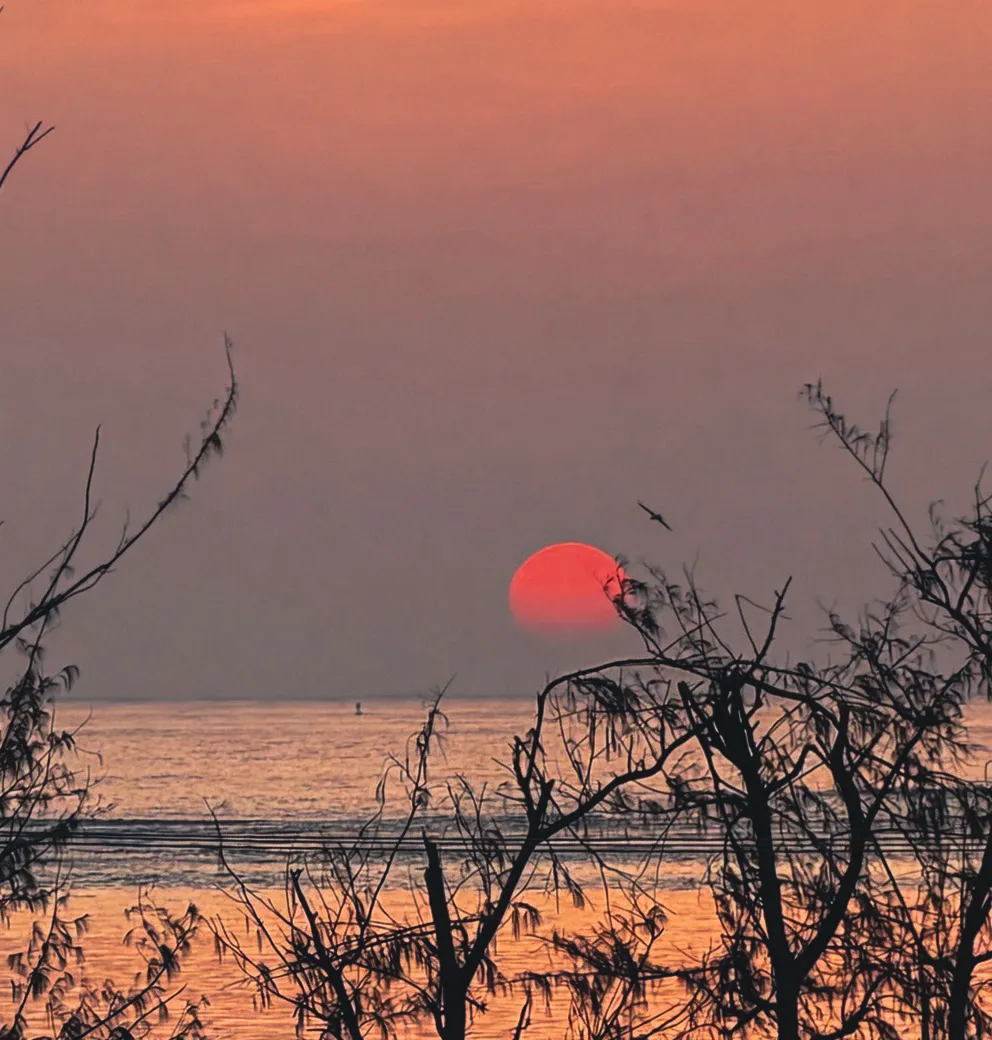
On my way to pick up my laptop and phones charging at a friend’s home with a generator, I drove down Beach Road just as the sun was setting. The sky stopped me in my tracks — deep pinks, purples, and soft oranges glowing behind the battered scenery.
It was the third night after Sinlaku. I parked my car, stepped outside with my phone’s camera, and simply stood there.
The clouds were bruised purple and rose, the kind of colors usually seen only in postcards. A lone utility pole leaned hard to one side, wires dangling like broken necklaces. Behind it, the sunset burned so fiercely it looked almost defiant. The destruction was everywhere — bent palms, scattered debris, houses standing dark and quiet. But the sky kept painting anyway.
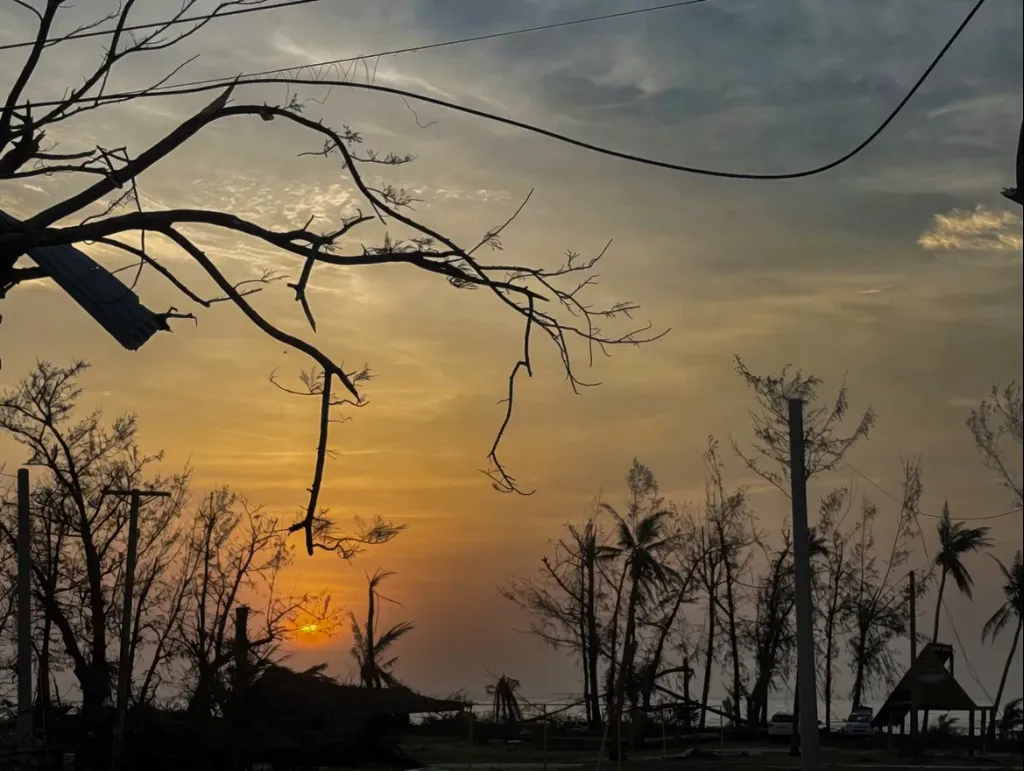
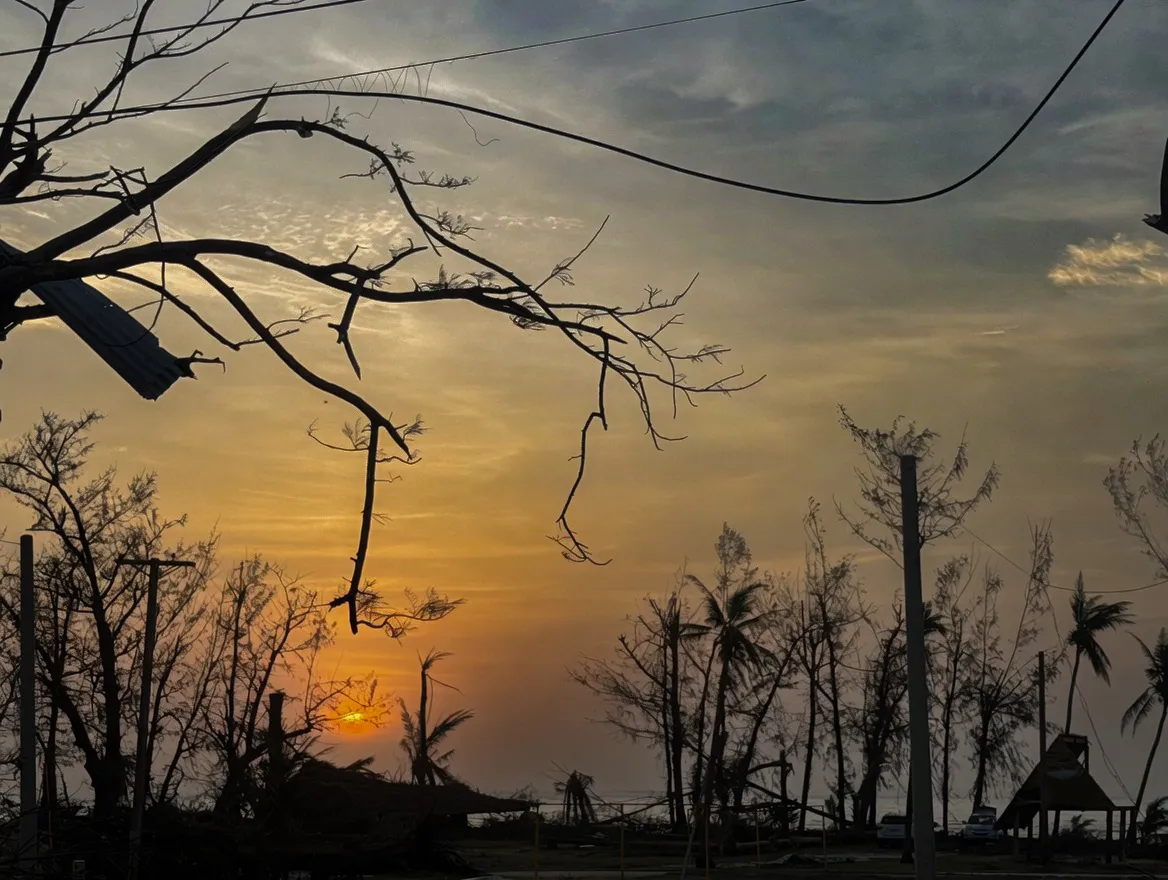
The next evening, it was softer, gentler. A thin orange ribbon stretched across the horizon as the sun slipped behind a torn canopy of broken branches. Silhouetted trees reached upward as if still trying to hold on to the light. In that quiet moment, it was almost possible to forget the roar that had torn through just days earlier. Almost.
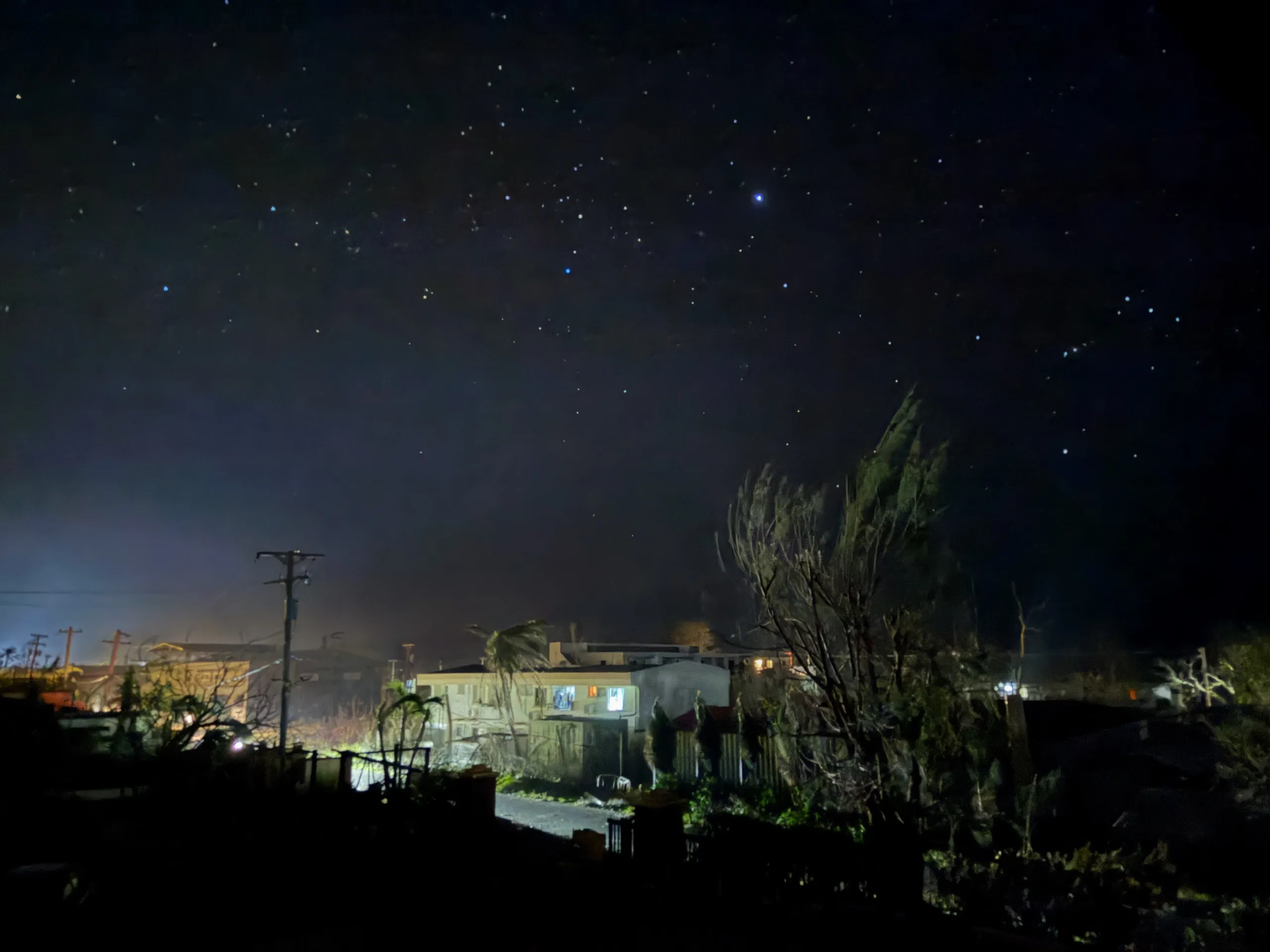
Night brought a different kind of gift. With no streetlights to compete, the stars came out in force. They spilled across the black velvet sky above damaged rooftops and leaning poles, so clear and close it felt as if you could reach up and brush them with your fingers. A single palm tree, stripped and battered, stood outlined against the Milky Way like a quiet sentinel. The island may have been knocked down, but the heavens above it refused to dim.
Even in the deepest dark, walking down a hallway lit only by a small flashlight, there was something honest and human about it. No pretense. Just neighbors checking on neighbors, flashlights bobbing like fireflies, voices low and steady. Life continuing in small, necessary ways.
This is Saipan after Sinlaku.
I don’t post photos much these days. Life gets busy, time slips away, and my last nature post on Instagram or Facebook was years ago. But after Sinlaku, something made me pick up my iPhone again.
Many trees still stood, though their leaves had turned brown and dry, losing the lush green luster they once had. The utility poles stood tall and solid—concrete reminders of how CUC, with federal assistance, rebuilt the island’s infrastructure after Super Typhoon Yutu eight years ago. Aside from some dangling wires and a few bent lamp sections, the posts held strong along this stretch of Beach Road.
Even after the storm, the surreal beauty of Saipan’s coastline remained. The turquoise water was still there, and the sunset continued to awe anyone who took the time for a drive-by, a jog, or a quiet walk.
Later that night, standing on the second floor of my apartment in the quiet darkness, I looked out at the vast sky. Most of the island was still without power. Only a few lights flickered — the front desk office keeping the night worker company, and farther down, the Federal Court building glowing softly in South Garapan. Above it all, the stars shone brighter than usual, unmasked by streetlights.
It was still dark and humid, with the power outage continuing. I took these photos during the second, third, and fourth nights after Sinlaku — not to post right away, but for myself, quiet keepsakes of these strange days.
The typhoon scratched and bruised the island. It curled roofs and thin awnings, scattered debris, and left many without power and water. But it could not erase Saipan’s beauty. That beauty is ingrained—only scratched for now. Soon, it will heal.
We lost power. We lost roofs. Some of us lost sleep and a sense of peace we may not regain for a while. But the island itself — its light, its colors, its stubborn beauty — was never the typhoon’s to take.
The sun still sets in pinks and purples. The stars still wheel overhead. The sky, somehow, still knows how to heal the eyes and lift the heart.
And so do we.
