






By Emmanuel T. Erediano
[email protected]
Variety News Staff
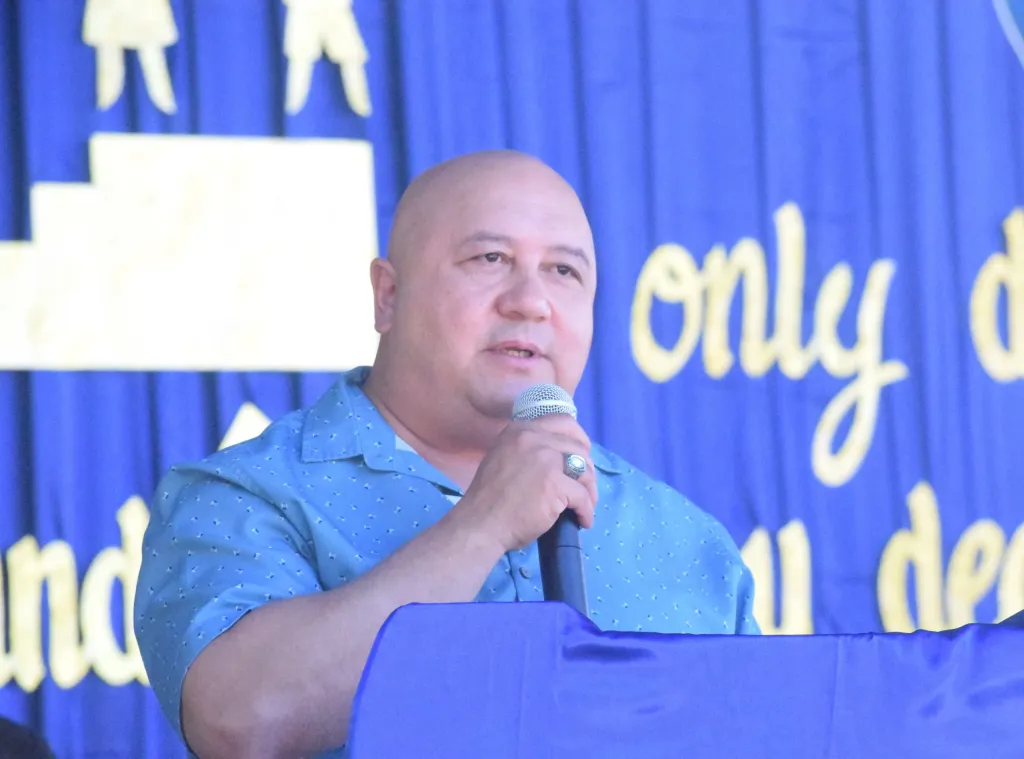
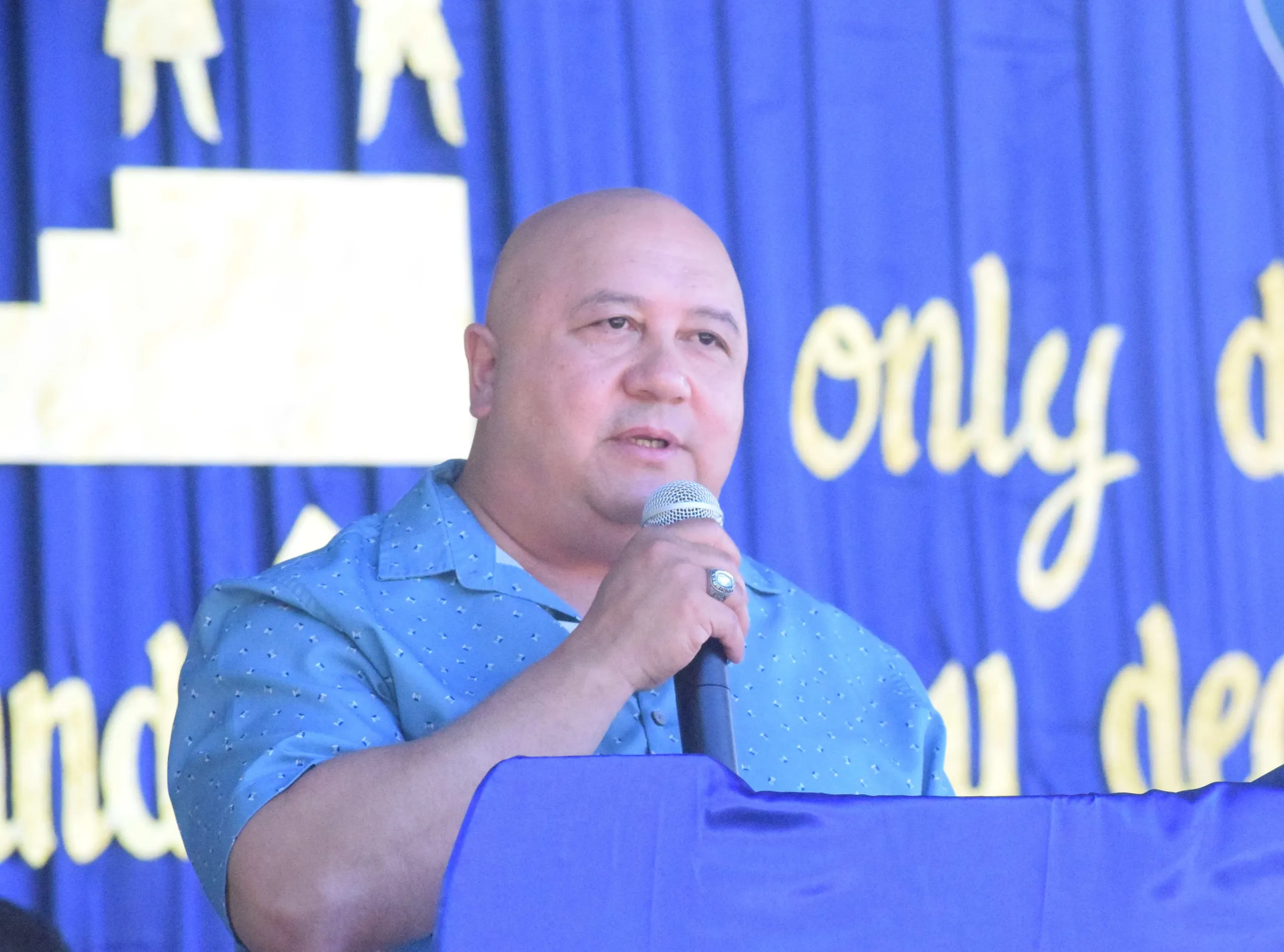
EDUCATION Commissioner Dr. Lawrence F. Camacho wrapped up his nearly two and a half years as head of the Public School System this week, crediting educators, administrators and support staff whose work, he said, defined the accomplishments of his tenure.
“We’ve accomplished a lot, together as a team,” Camacho told the Board of Education during what was his final meeting Tuesday afternoon before stepping down to pursue a bid for governor. He ends his term today, June 11.
He said he was not expecting to leave this soon, but that his heart had led him elsewhere.
Camacho, the 10th education commissioner since the Public School System became an autonomous government entity in 1988, is running for governor as an independent candidate alongside former Senate President Edith Deleon Guerrero.
A public school student returns home
Camacho attended San Roque Elementary School, Hopwood Junior High School and Marianas High School before leaving the islands for a military and academic career.
Years later, he returned to lead the same school system that educated him.
A retired U.S. Army lieutenant colonel, Camacho served more than two decades before moving into higher education leadership roles, including positions at Drexel University and the University of Guam.
When the Board of Education announced a vacancy for commissioner in 2023, he applied.
“I always wanted to come home and serve our people,” he said.
He was hired in late November 2022 and reported for duty on Jan. 8, 2024.
From the beginning, Camacho argued that education could not be separated from the Commonwealth’s future. He pushed for stronger collaboration among the Public School System, Northern Marianas College and the Northern Marianas Technical Institute, believing students should graduate with clear pathways to college, trades, military service or the workforce.
That vision helped shape several initiatives during his tenure, including the Strategic Planning Institute, which brought together educators, government leaders and business representatives to discuss workforce development and student success.
A system under pressure
The first full year of Camacho’s tenure produced a series of milestones for the school system.
In May 2024, PSS secured reaffirmation of its Cognia accreditation through 2030, extending 25 consecutive years of accreditation.
Under his administration, the district also became the first school system in the Pacific region to obligate 100% of its American Rescue Plan Act allocation, representing approximately $160 million—the largest federal investment in PSS history.
Variety files show the Board of Education credited Camacho and Federal Programs Officer Jacqueline Che for helping ensure the funds were spent according to the district’s approved spending plan.
National attention followed.
The Council of Chief State School Officers’ chief executive officer, Dr. Carissa Moffat Miller, visited Saipan, Tinian and Rota in 2024, marking the first such visit to the CNMI in the organization’s 90-year history.
In March 2026, PSS was featured for the first time at the council’s legislative conference in Washington, D.C., where Camacho shared the experiences and challenges of educating students in the Northern Mariana Islands.
By the second half of 2025, the conversation had shifted.
PSS was approaching the end of the American Rescue Plan Act era, lawmakers were debating education funding and school officials were warning of a fiscal cliff.
Camacho repeatedly argued that reductions in education funding would ultimately affect classrooms and students.
Variety reports show the American Rescue Plan Act helped bridge approximately $12 million in local funding shortfalls over three years, preventing furloughs and preserving the full 180-day school calendar.
With those funds nearing exhaustion, Camacho urged lawmakers to increase support for public education.
“You want to fix the economy and advance our society?” he told senators during budget deliberations. He urged policymakers to view education as “the pathway out of the economic crisis.”
When lawmakers approved a budget allocating $31.7 million to PSS, the district implemented austerity measures that reduced employee work hours and eliminated Monday classes beginning Nov. 17, 2025.
At the same time, uncertainty surrounding federal funding forced spending reviews, temporary freezes and contingency planning across the district.
Still, schools remained open and key services continued.
Sinlaku
Super Typhoon Sinlaku struck the Northern Mariana Islands in April 2026, damaging campuses, disrupting utilities and forcing schools across Saipan, Tinian and Rota into recovery mode.
The storm came just months after PSS had endured austerity measures and funding uncertainty.
Principals, teachers, maintenance crews, administrators and support staff shifted their focus from instruction to recovery, assessing damage, clearing debris and preparing campuses for reopening.
The recovery effort became one of the final chapters of Camacho’s administration.
Yet during his final appearance before the Board of Education, he did not point to accreditation milestones, federal funding achievements, budget battles or storm recovery efforts as personal accomplishments.
Instead, he returned to the people of PSS.
“We’ve accomplished a lot, together as a team,” he said.
The comment echoed a theme that surfaced repeatedly throughout his tenure — that progress in public education depends on the collective work of teachers, principals, support staff, administrators, families and the broader community.
Leaving PSS in good hands
Before the board, Camacho offered what amounted to a final assurance: PSS, he said, is in good hands.
Board member Aschumar Kodep Ogumoro-Uludong said the working relationship between the board and administration had created opportunities that benefited students throughout the Commonwealth.
“We are also able to explore other avenues to really benefit our students. Thank you for that, and I wish you all the best,” she said.
Board Chair Maisie B. Tenorio said leading a system that serves thousands of students and employees means serving the entire CNMI community.
“When you have a system that employs over 4,000 people and educates over 8,000 children, you are literally serving the entire CNMI community. So thank you for your time and energy and your heart and generosity,” she said.
She thanked Camacho for listening to different perspectives and for pursuing ideas that challenged convention.
“I always appreciated and admire your leadership, and I wish you all the best in the new endeavor you have embarked on, and I hope that you will continue to serve our community,” she added.
Dr. Dora B. Miura praised his support for teacher leadership and professional development opportunities across the three islands.
Camacho, for his part, credited everyone but himself.
“The experience was amazing,” he said.
PSS, he added, “has been a wonderful place.”
Emmanuel “Arnold” Erediano has a bachelor of science degree in Journalism. He started his career as police beat reporter. Loves to cook. Eats death threats for breakfast.
