





By Bryan Manabat
[email protected]
Variety News Staff
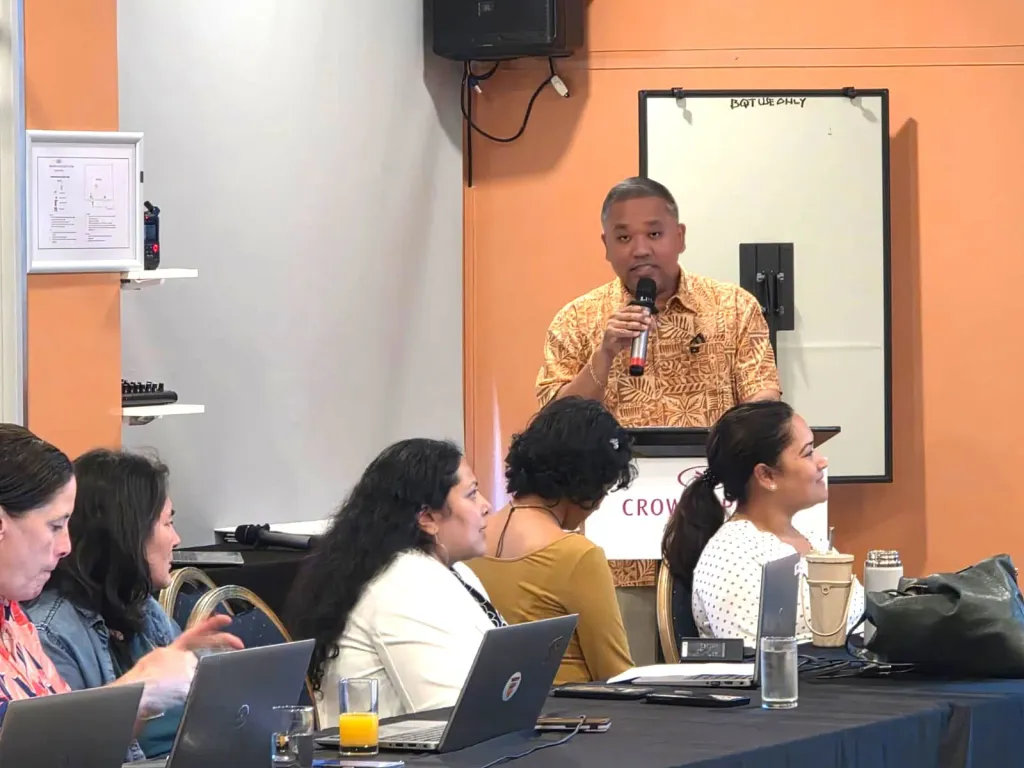
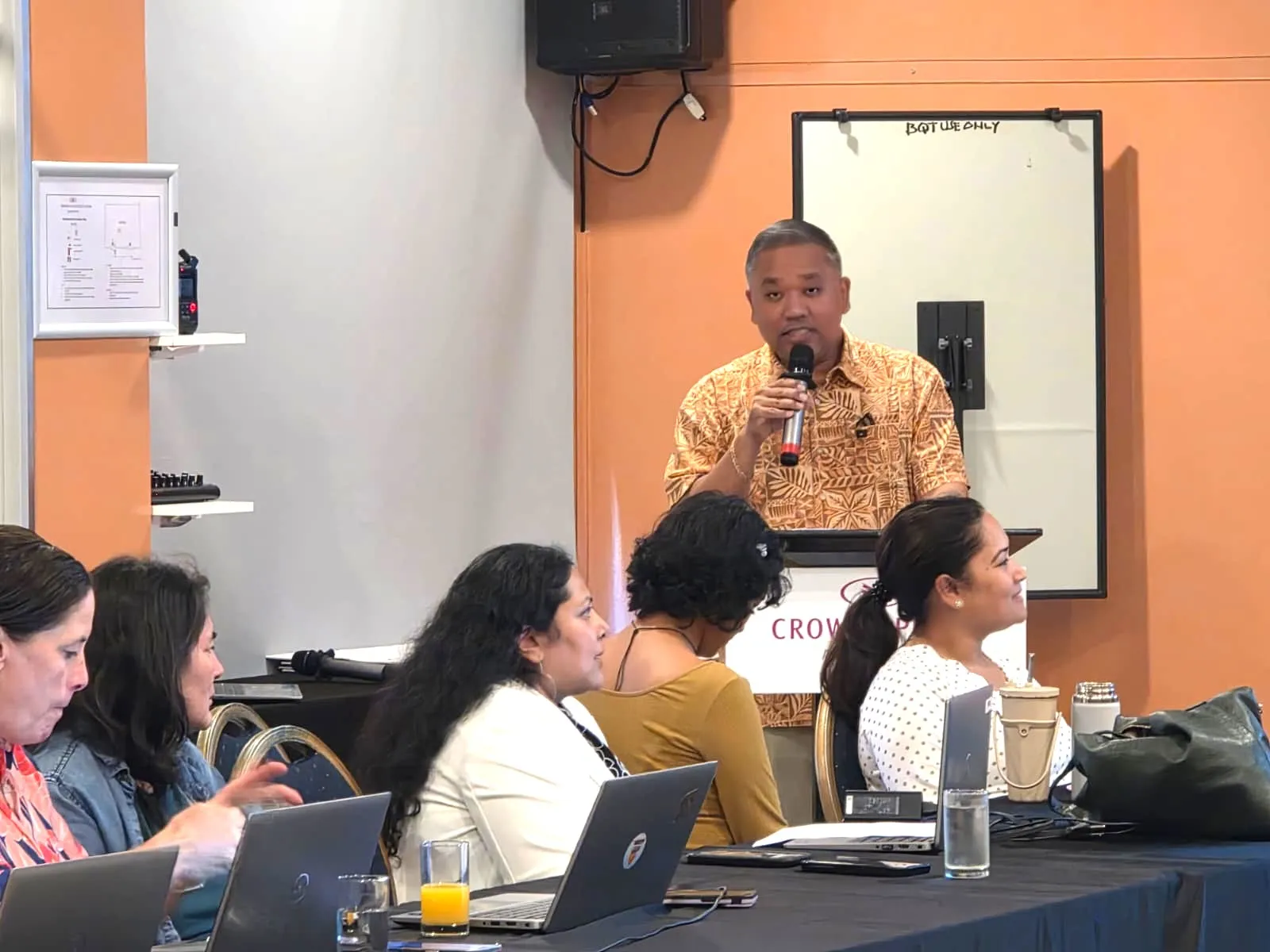
FEDERAL and regional officials opened the CNMI’s first-ever Biosecurity Forum this week, calling it a critical step in strengthening the islands’ defenses against invasive species amid increased import activity tied to major military construction projects.
Angel Demapan, deputy assistant secretary for the U.S. Department of the Interior’s Office of Insular and International Affairs, said the forum comes at a pivotal moment for the Commonwealth.
“Our office is very pleased to organize and host this first-of-its-kind biosecurity forum and to see it take place here in the CNMI,” Demapan said on Wednesday. “We have many current issues with invasive species and biosecurity threats — the coconut rhinoceros beetle, the brown tree snake — and with the volume of imports for military construction, we must be more vigilant than ever.”
The five-day forum, held April 6–10 at the Crowne Plaza Resort Saipan, brings together representatives from Fiji, New Zealand, Guam, and CNMI agencies including Customs, the Department of Land and Natural Resources, the Bureau of Environmental and Coastal Quality, and other regulatory offices.
A tabletop exercise — “CNMI Biosecurity Scenarios for Marine and Terrestrial Pathways” — was also scheduled for Wednesday afternoon, giving participants an opportunity to test response strategies and coordination across agencies.
Demapan delivered the Day 3 opening remarks for the forum. He told Variety that while the CNMI’s existing response network provides a strong foundation, regional collaboration remains essential.
“The CNMI has had a very strong biosecurity response effort,” he said. “Holding this forum with our regional partners will only strengthen those efforts — not just with Customs, but with all our partner agencies.”
Evolving threats, evolving laws
Asked whether the CNMI is keeping pace with national and international biosecurity standards, Demapan said the challenge is constant.
“Biosecurity response is an ever‑evolving issue; every time we catch up, a new threat emerges that requires a new approach,” he said. “That’s why a forum like this is important — so we don’t get blindsided by new developments.”
Demapan also addressed questions about federal and local regulatory alignment. He said there is no direct conflict between federal invasive species laws and the Covenant, but CNMI statutes need updating.
“I don’t think there’s a clash. CNMI laws need to be updated to be compatible with the federal code,” he said. “There is a bill moving through the Legislature — I believe in Sen. Jude Hofschneider’s committee — that would bring conformity and help advance the cause for biosecurity. I understand it’s up for discussion tomorrow.”
Balancing cultural practices and species protection
Demapan acknowledged that cultural practices involving traditional harvesting or consumption of certain species must be considered as regulations evolve.
“That’s a different subject, but it is something being looked at,” he said. “The CNMI needs to put forward data on cultural practices and what can be consumed. But there are also federal statutes governing endangered species. We have to make sure there’s a balance. We don’t want to suffocate cultural practices, but we also don’t want any species to become endangered or extinct.”
Demapan said OIA intends to replicate similar biosecurity forums in other U.S. insular areas.
Bryan Manabat was a liberal arts student of Northern Marianas College where he also studied criminal justice. He is the recipient of the NMI Humanities Award as an Outstanding Teacher (Non-Classroom) in 2013, and has worked for the CNMI Motheread/Fatheread Literacy Program as lead facilitator.
