






By Walter Ulloa
For Variety
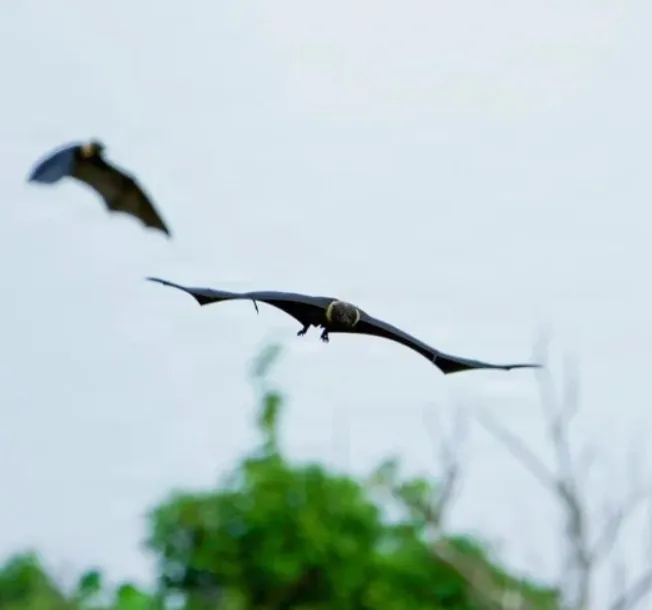
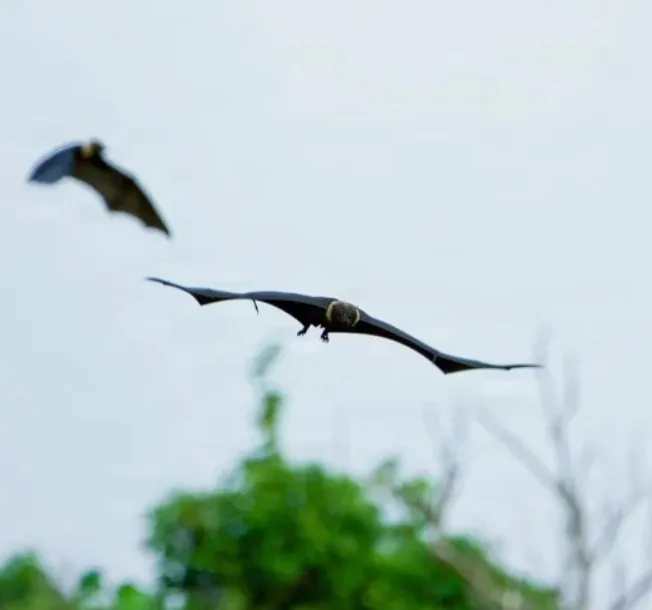
HAGÅTÑA (The Guam Daily Post) — More than a century of habitat loss, poaching and the wrath of typhoons have taken a toll on the fanihi, the Mariana fruit bat. But a growing army of volunteers, scientists and military partners is pushing back, one careful count at a time.
This past April, more than 160 volunteers from over 30 partner organizations fanned out across Guam, Saipan and Tinian for the annual Fanihi Count, recording 269 of the threatened bats — 241 on Guam, 24 on Saipan and four on Tinian — across 94 observation stations.
The count, which started modestly at Andersen Air Force Base in 2014 with a handful of observers and fewer than 50 known bats on Guam, has grown into a coordinated, multi-island effort unlike anything attempted before for the species.
“Since the fanihi can fly between islands, being able to conduct a coordinated count covering multiple islands allows us to get an accurate picture of how our fanihi population is doing,” Laura Duenas told The Guam Daily Post. She is a natural resource specialist and fanihi program manager with the 36th Civil Engineer Squadron, Joint Region Marianas, at Andersen Air Force Base.
The fanihi is listed as threatened under the Endangered Species Act in both Guam and the Commonwealth of the Northern Mariana Islands. It is the only fruit bat endemic to the Mariana Islands and is ecologically indispensable as a key pollinator and seed disperser that helps keep island forests alive and regenerating.
And yet, for years, many people on Guam had no idea it still existed.
“I was hearing a lot of people very surprised that there’s fruit bats still on Guam,” Duenas said. “We can’t conserve something if we don’t know it’s there.”
That awareness gap is one reason the annual count has become as much a community outreach effort as a scientific survey. Each year, new volunteers are trained, adding to a growing corps of skilled observers who can be called on for monitoring work throughout the year.
“We’re building this kind of crew that are basically expert fanihi observers and monitors,” she said.
The science is still catching up. Because fanihi numbers were so depleted when surveys began, researchers had to develop new techniques from scratch, adapting methods used for fruit bats elsewhere to conditions unique to the Marianas. Attention to moon phases, careful timing near dawn and ongoing training all sharpen the data year after year.
The bats are nocturnal, leaving their roost trees at dusk to forage and returning just before first light. Surveyors head out around 4 to 4:30 a.m., watching bats fly in for roughly an hour before sunrise and up to 30 minutes afterward. Ficus, known locally as nunu or tronkón nunu, ranks as both a favorite food source and roosting site. Pandanus and breadfruit round out the preferred diet, along with other native fruits.
Duenas has personally seen more than 200 bats gathered at a single location on Guam, a striking figure given the island’s total annual count. She still cautions that the actual population may be larger.
“What we see on these annual counts may not be all of them,” she said.
The timing of this year’s count turned out to be fortunate in ways no one planned. Just four days after volunteers completed the April 10 survey, Super Typhoon Sinlaku struck, devastating forests across Saipan and Tinian.
“It’s really great that we were able to get out and get that count right before the typhoon,” said Jill Liske-Clark, a natural resources specialist with NAVFAC Marianas based on Saipan. “Typhoons frequently result in population declines.”
Liske-Clark arrived on Saipan 12 years ago to find no active roosting colonies on either Saipan or Tinian. That has changed. Multiple colonies have since become established on Saipan, and in 2023, the first roosting colony in roughly three decades was confirmed on Tinian.
Sinlaku has complicated that recovery. Post-typhoon monitoring shows numbers running lower than before the storm. Liske-Clark has spotted fanihi flying in broad daylight, unusual for a nocturnal animal and a sign that stripped forests have left bats hungry and searching.
“Their tummy is waking them up when they’re trying to sleep and they’re out looking for food at any time of day,” she said.
On Tinian, where military construction is increasing, NAVFAC Marianas has implemented avoidance measures around the island’s one known roosting colony and is restoring native limestone forest with fanihi needs built into the design. A joint anti-poaching program with the CNMI Division of Fish and Wildlife operates within the military lease area.
“My agency is really happy to be able to support trying to conserve both that natural legacy and cultural legacy for the CHamoru people,” Liske-Clark said.
Henry Fandel, wildlife section supervisor with the CNMI Division of Fish and Wildlife, said quarterly roost counts across Saipan, Tinian and Rota show an average monthly minimum of 1,160 bats. He cautioned that those figures come from direct roost counts and cannot be compared directly with the annual landscape-wide survey because the methods differ.
Fandel said Rota shows a declining trend in recent years, while Saipan and Tinian are trending stable or upward. He traces the species’ broader recovery over the past two decades to reduced hunting pressure and sustained monitoring, and he links current concerns to a relaxation of that commitment.
“The annual count is a great opportunity for the community to participate in fanihi conservation,” Fandel said.
Threats remain serious, with habitat loss, poaching and invasive species universally cited as the top pressures. Typhoons compound all of them. Genetic analysis has confirmed connectivity among fanihi across all islands from north to south, meaning population changes on one island can ripple across the entire archipelago.
Reforestation, particularly the planting of native ficus, pandanus and breadfruit, offers one of the most direct ways the public can help. Private landowners who plant native fruiting trees extend the species’ recovery beyond any single reserve or installation.
“Planting trees like the ficus that our fanihi and other native species would use is definitely a way to build more habitat for them in the future,” Duenas said.
