




By Walter Ulloa
For Variety
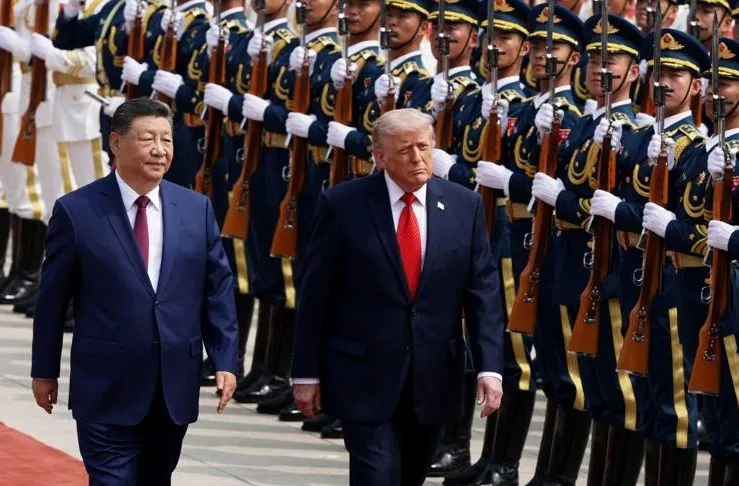
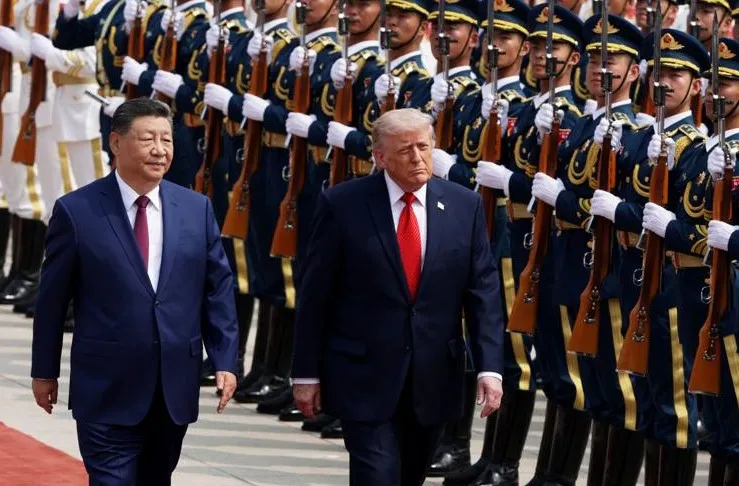
HAGÅTÑA (The Guam Daily Post) — As Presidents Donald Trump and Xi Jinping prepared to meet in Beijing over Taiwan and trade, island leaders and security experts on Guam had already spent two days this week quietly gaming out what such great‑power brinkmanship could mean for their own security and how to respond.
Xi’s warning ahead of the talks that mishandling Taiwan could push China and the United States toward “clashes and even conflicts” hung over the Pacific Center for Island Security’s Micronesia Security Dialogue, which wrapped up Wednesday at the Hyatt Regency Guam. For participants, it was less a distant diplomatic spat than a preview of the risks that could land in their backyards.
“We used to kind of discuss China as a pacing threat, as an upcoming threat,” PCIS Chair and former Guam Delegate Robert Underwood said in a Friday interview with The Guam Daily Post. “Clearly in this meeting they’re a co‑superpower. And what does that mean for the rest of us? It’s a very important consideration.”
Organizers described the gathering as the first of its kind for the subregion, bringing together government officials from Guam, Palau, the Federated States of Micronesia, the Republic of the Marshall Islands and the Commonwealth of the Northern Mariana Islands alongside security analysts. The message they heard repeatedly: Micronesian islands are no longer on the margins of great‑power competition. They are squarely at its center.
As Trump’s plane touched down in China for meetings Thursday and Friday, analysts in Washington were already parsing what the trip might mean for the region. At the Center for Strategic and International Studies, Scott Kennedy, a senior adviser on Chinese business and economics, called the emerging outline “a grand bargain on China’s terms,” arguing that Beijing appeared to secure an extended trade ceasefire, potential agricultural and energy deals, and a new AI framework built largely on Biden‑era agreements while conceding little in return.
On Taiwan, Bonny Lin, who directs CSIS’s China Power Project, said Xi’s language this time appeared sharper, particularly his use of “conflict.” “What they’re at least trying to convey to the United States is China takes Taiwan as the most important bilateral issue,” Lin said. “And if it’s not handled well, whatever the two sides agree on in terms of what they’ve achieved on strategic stability will be at risk.”
Former U.S. Ambassador to Malaysia and CSIS Freeman Chair in China Studies Edgard Kagan pointed to an off‑the‑cuff remark by Trump on Air Force One that he said should give Taipei pause. Trump told reporters, “The last thing we need is a war that’s 9,500 miles away.” Taken at face value, Kagan said, that can sound like a standard reassurance that Washington is not seeking a fight. Viewed from Taiwan, he suggested, it lands differently: as a reminder that distance can also be an excuse not to act.
Kennedy went further, casting Trump’s visit as a bookend to President Reagan’s 1984 trip to China and the decades‑long U.S. effort to nudge Beijing toward a more open system. “His approach towards governing domestically, his views about the role of the state in the economy, and his foreign policy,” Kennedy said, “looks not radically different from the kind of values and approach that the Chinese are taking.”
On Guam, that backdrop was never far from the surface. Underwood pointed to the composition of Trump’s Beijing delegation: heavy on billionaires and tech executives, including Elon Musk, Tim Cook and Jensen Huang, plus family members and close associates, and light on diplomats and senior national security officials.
“The American delegation that went to Beijing is not America,” Underwood said. “It’s a group of billionaires. It’s amazing that if you were the head of the United States of America and you were to bring a delegation of people representing your country, who would you bring with you? That reveals what you think the United States is.”
He paused, then added, “It’s not a good feeling.”
If the CSIS briefings underscored how national leaders were redefining the terms of engagement, the second day of the Micronesia Security Dialogue focused on what that meant for islands that have long relied on different tools. Appearing virtually from New Zealand, Pacific historian and AUT Law School lecturer Marco de Jong argued that the moral authority, narrative clout and multilateral consensus Pacific islands have used to exert influence are losing purchase in a world where great powers move quickly and often act alone.
“Narrative empowerment, leadership through a strong moral voice, is too easily co‑opted or disregarded and relies on the multilateral and international legal system currently under attack,” de Jong said.
In their place, he outlined what he and a collaborator call the “barrier reef” strategy, a framework for coordinated, sequenced action by Pacific nations to assert sovereignty across fast‑developing spaces such as deep-sea mining and sea drones. To make the case, he pointed to the negotiations that produced the Noumea Convention, when Micronesian states, including Guam, successfully pushed the United States and other powers to exclude nuclear waste dumping from broad stretches of Pacific high seas.
“My feeling, and what inspires the rest of this talk, is that this was likely possible because of an alignment of values and interests with leverage,” de Jong said.
He warned that Pacific sponsoring states pursuing deep-sea mining have already been played against one another and that a coordinated Micronesian stance could still reassert basic environmental protections and fair compensation. “Our sponsoring states like Tonga, Nauru, and Kiribati have been played off against each other and now risk being undercut altogether,” he said.
On sea drones, de Jong raised a concern that landed close to home for Guam and its neighbors. Pacific governments may want unmanned maritime systems for fisheries monitoring or disaster response, he said, but those same platforms plug into military targeting networks that can implicate coastal states in potential strikes without islanders ever formally consenting. “Even benign use may intentionally normalize foreign drone presence, create fragmentary consent, and weaken long‑term coastal state control,” he said.
If de Jong’s presentation spoke to sovereignty, London‑based geopolitical strategist James Crabtree zeroed in on hard power. Writing a book on America’s military posture across the Pacific island chains, Crabtree traced U.S. strategy from Secretary of State Dean Acheson’s 1950 “perimeter” speech to the present and argued that Guam, sitting on the so‑called second island chain, has become the backstop for U.S. force projection in the Western Pacific.
“Guam is the ultimate sort of regional backstop and the source of much of the U.S. military power in the region,” Crabtree said.
China’s development of long‑range “anti‑access, area‑denial” capabilities, missiles designed to push U.S. carriers and aircraft farther from any Taiwan contingency, has forced Washington to rethink how it would operate in a crisis, Crabtree said. The Pentagon’s evolving “archipelagic defense” concept leans heavily on dispersing forces across island chains and logistics hubs. That, in turn, places enormous pressure on Guam as a staging point, even as other conflicts have strained U.S. missile stockpiles.
Layered on top of those material constraints, he noted, are political instincts in Washington that appear to tilt toward accommodation rather than confrontation with Beijing, at least in public rhetoric. When Underwood asked what Micronesian governments should realistically hope for in that environment, Crabtree did not hesitate.
“In the short term, really what would be in the interests of the region is just stability,” he said, “because in the end, anything that involves change is risky.”
Stability, however, was also what seemed least assured. Trump told reporters he declined to answer when Xi asked him directly whether the United States would defend Taiwan from a Chinese attack. “I said I don’t talk about that,” Trump said aboard Air Force One.
For island leaders and officials gathered on Guam earlier in the week, that kind of studied ambiguity is no longer a theoretical debating point. It is the operating environment they must navigate. The dialogue, Underwood said, was built around helping island governments develop their own voice and their own playbook before decisions made in distant capitals become impossible to shape.
“Always the challenge is it’s easy to talk about regional collaboration, but is it really possible? Is it doable? Is it feasible?” Underwood said. “Everybody has their own issues.”
One test will come at the next Micronesian Islands Forum in Pohnpei, where leaders are expected to take up a proposal for a standing regional security committee. Meanwhile, PCIS plans to continue building out its Micronesia Security Monitor and related tools tracking military vessels, weapons ranges and maritime activity across the second island chain, pressing island leaders to pay close attention to what is being built around them and why.
As PCIS put it in closing the dialogue, “If you don’t care about these issues, these issues deeply affect you, so we should all start caring about them.”
