







By Emmanuel T. Erediano
[email protected]
Variety News Staff
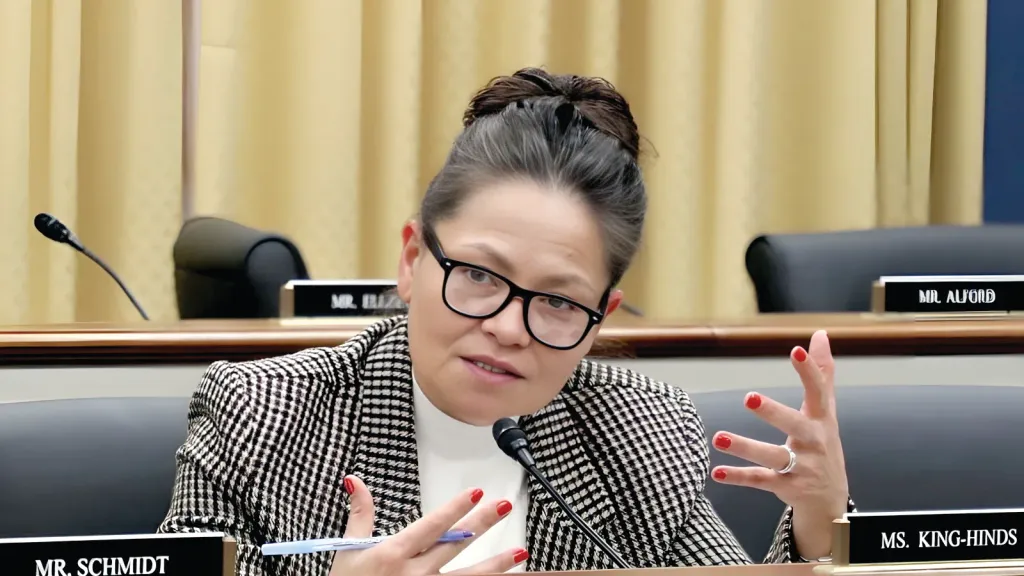
DELEGATE Kimberlyn King-Hinds on Monday requested that the U.S. Citizenship and Immigration Services implement automatic extensions of employment authorization for individuals, including foreign workers with CNMI Long-Term Resident status.
The CNMI Long-Term Resident status, established under the Northern Mariana Islands Long-Term Legal Residents Relief Act, or Public Law 116-24, and signed by President Donald Trump on June 25, 2019, allows certain foreign nationals with long-term lawful residence in the CNMI to remain and work in the Commonwealth. This population includes individuals who have resided continuously and lawfully in the CNMI since Nov. 28, 2009, including those who were present in the CNMI under prior federal immigration classifications.
In her letter to USCIS Director Joseph B. Edlow, the CNMI delegate to Congress made a request for assistance “with a matter of significant urgency.” She said businesses in the CNMI and the broader workforce are at risk of losing access to a significant share of their labor force in the coming months.
King-Hinds is also asking USCIS to provide clear and consistent guidance to ensure proper intake and adjudication of renewal applications, including fee handling and receipt issuance, and to establish an expedited adjudication process with a dedicated, prioritized processing track for EAD renewals to prevent further workforce disruption.
The delegate informed Edlow that as many as 10% of workers could be affected. This risk, she said, stems from ongoing administrative challenges associated with the renewal of EADs for those holding CNMI Long-Term Resident status.
She explained that the creation of CNMI Long-Term Resident status was intended to provide stability to a defined population that had already demonstrated long-term ties to the Commonwealth. Critically, employment authorization for them is granted incident to status under the statute. As a result, the EAD serves as documentation of that authorization rather than the source of the underlying right to work.
However, King-Hinds said current processing challenges are undermining that framework in practice. Employers rely on valid EADs to satisfy employment requirements, and delays, rejections or gaps in renewal processing are effectively rendering authorized, legally present individuals unable to maintain employment.
She said these individuals have been seeking assistance from her office. They indicate that applications for EAD renewals have been rejected, returned or not receipted, often erroneously or without clear justification, and in certain instances, multiple times, creating uncertainty for both workers and employers.
King-Hinds said her office has received hundreds of privacy release forms from individuals who have made good-faith efforts to comply with program requirements but have encountered consistent difficulties in obtaining or renewing the documentation necessary to maintain employment in the CNMI.
“We have submitted these cases to USCIS through the course of the last months, and I am prepared to provide the cumulative collection of cases to you to assist in identifying and resolving the underlying issues,” King-Hinds said.
The practical effect is that individuals who remain lawfully present and authorized to work in the CNMI are being sidelined from the workforce due solely to administrative disruption. Given the scale of this population within the CNMI labor market, the consequences are immediate and systemic, affecting private sector operations, public services and overall economic stability.
King-Hinds further explained that the CNMI labor market operates under unique structural constraints that have been repeatedly recognized in federal law and prior agency findings. Maintaining continuity for this existing, authorized workforce is essential to preventing further economic contraction and ensuring that lawful employment relationships are not disrupted by avoidable administrative barriers.
Emmanuel “Arnold” Erediano has a bachelor of science degree in Journalism. He started his career as police beat reporter. Loves to cook. Eats death threats for breakfast.
