



Text & photo
by Bryan Manabat
[email protected]
Variety News Staff
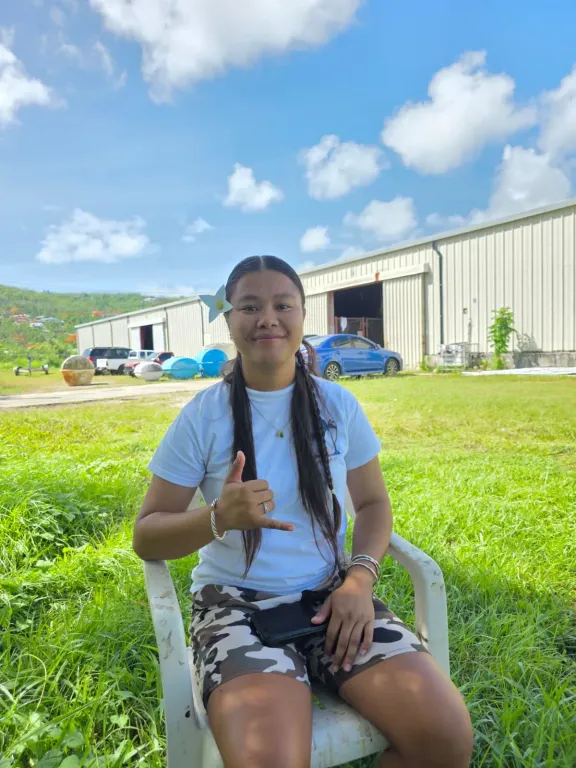
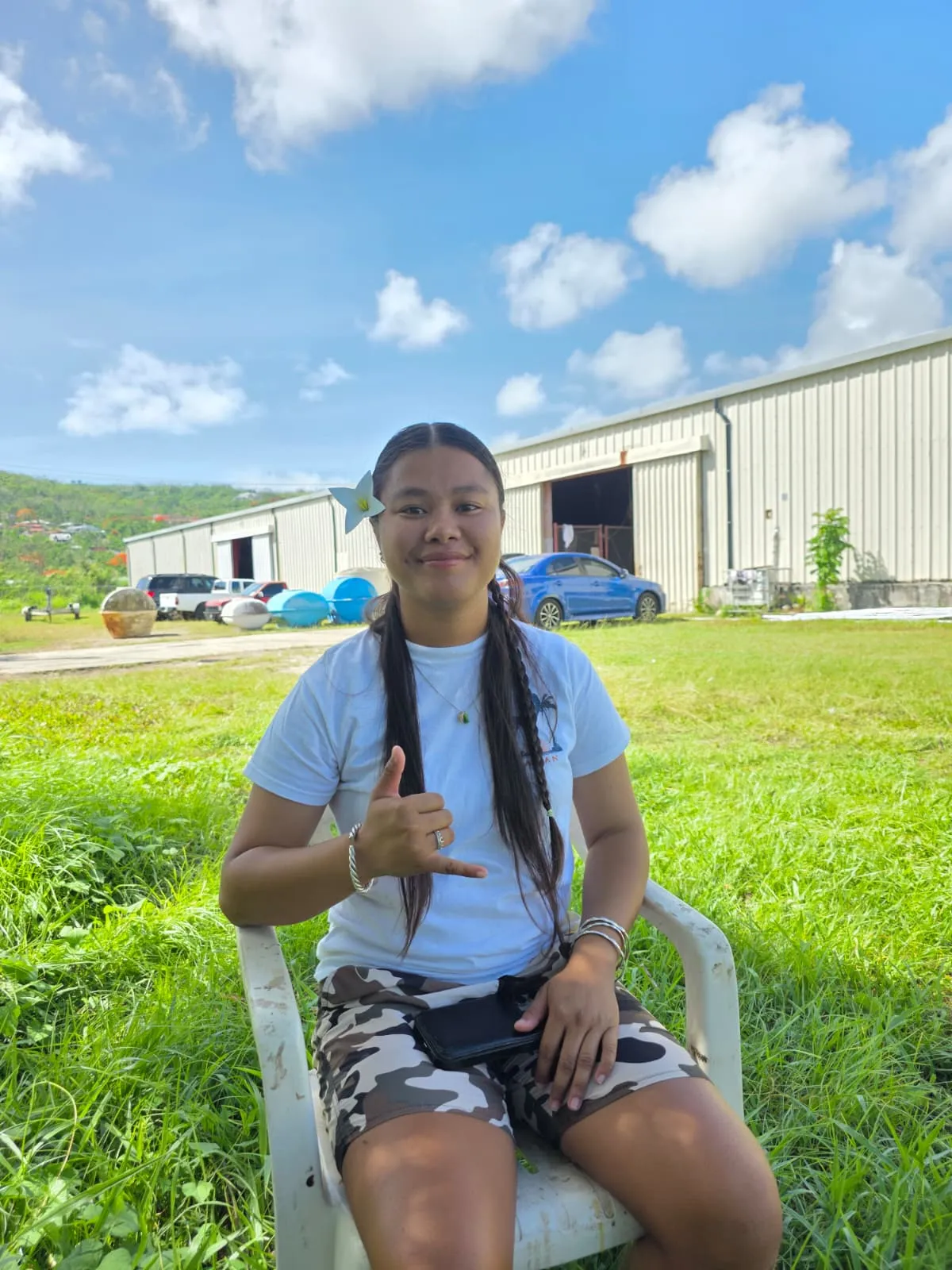
WHEN 20-year-old Lianalynn Muna stepped onto the deck of the Alingano Maisu in Okinawa, she knew she was embarking on a voyage unlike anything she had experienced before. What she didn’t know was how profoundly the 18-day, open-ocean journey to Palau would reshape her understanding of navigation, culture, and herself.
Muna, a program assistant and sailor with 500 Sails, had trained for two years on Saipan’s traditional canoes. But this was her first long-distance voyage: no land in sight, no phones, and no modern navigation instruments. Just a double-hulled canoe, a crew of 15 from across the Pacific, and master navigator Captain Sesario Sewralur, son of the late Grandmaster Navigator Mau Piailug of Satawal.
“It was quite the experience,” Muna said. “I had to adjust to living life on the canoe without seeing any land — eating, sleeping, using the restroom. Everything changes. But it was really nice to live on the canoe and just put my trust in the captain, the crew, and the canoe.”
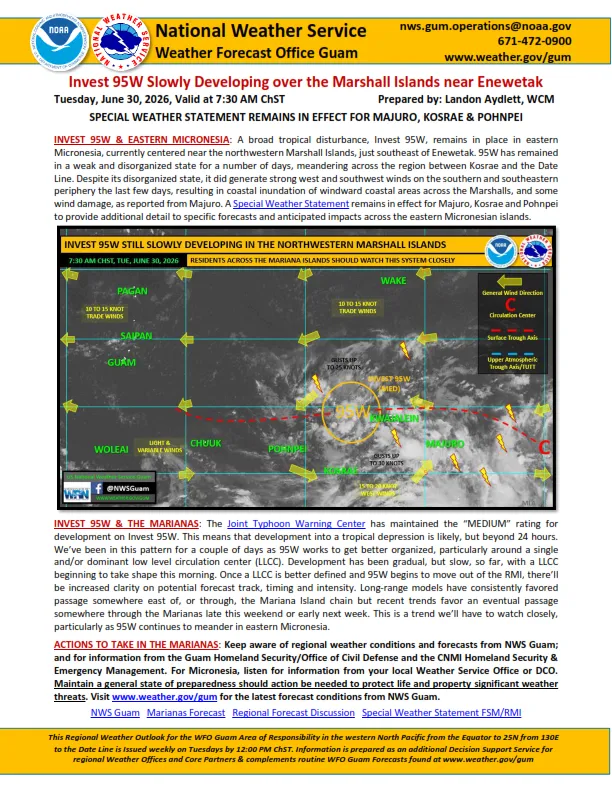
The Alingano Maisu, built in honor of Piailug and based in Palau, had originally planned to sail from Okinawa to Saipan, Guam, and Yap before returning home. But a series of storms forced the crew to change course repeatedly. At one point, they found themselves sailing through a tropical disturbance, drenched in rain and surrounded by rough seas.
“Even so, we made it,” she said. “I felt safe the whole time. That’s the trust you build on a canoe.”
One of Muna’s most vivid memories came during a night shift, when she watched Captain Sewralur prepare to guide the canoe through darkness.
“I asked him, ‘How do we find our way at night without any light?’” she recalled. “He said, ‘The stars. They’re always there. Even when you don’t see them in the morning, they’re still there.’”
Sewralur also taught the crew to read swells, winds, and birds — ancient Micronesian techniques passed down through generations.
Life at sea
The crew caught fresh wahoo for meals, slicing sashimi on deck. Dolphins appeared. Birds circled and dove for fish, becoming the group’s nightly entertainment in the absence of screens.
But the most magical sight, Muna said, came after they entered Micronesian waters.
“At night you’d see bioluminescence — glowing turquoise circles in the water,” she said. “You can’t capture it on a phone. It’s all in your memory.”
Three women, including Muna, were part of the crew. All slept in small bunks under tarps, sharing duties and rotating night shifts.
A journey of confidence
Muna admits she boarded the canoe feeling unsure of her skills.
“I was definitely iffy,” she said. “I thought, ‘Man, I have a lot to learn.’ But everyone was so welcoming. Even though I didn’t know as much as them, they treated me like family.”
By the time the Maisu reached Palau, she felt transformed.
“My greatest takeaway is living in the moment,” she said. “You can capture a lot on your phone, but on the canoe you can’t. So you just live. You connect with people. You learn.”
Asked whether she hopes to become a navigator herself, Muna doesn’t claim any titles.
“For now, I just want to keep learning,” she said. “And I want more people to keep this culture alive throughout Micronesia and the Pacific. That’s the main thing.”
Her advice to anyone curious about sailing or cultural voyaging is simple.
“Just try it,” she said. “Even if you’re scared. That’s what I did — and here I am today. Alive.”
Bryan Manabat was a liberal arts student of Northern Marianas College where he also studied criminal justice. He is the recipient of the NMI Humanities Award as an Outstanding Teacher (Non-Classroom) in 2013, and has worked for the CNMI Motheread/Fatheread Literacy Program as lead facilitator.
