





By Bryan Manabat
[email protected]
Variety News Staff
THE American Red Cross has delivered tens of thousands of shelter nights, meals, and relief supplies across Saipan, Tinian, and Rota as the organization enters what officials describe as a “critical inflection point” in the post-Sinlaku recovery.
Nick Junquera, the Red Cross executive liaison on Saipan, said Friday the scale of assistance reflects both the severity of the storm and the resilience of the community.
Since the start of operations, the Red Cross and its partners have provided 19,582 overnight shelter stays to 1,179 residents. Feeding teams have served 220,902 meals and snacks, while 59,991 relief items — including comfort kits and cleanup kits — have reached 10,398 people.
Caseworkers have opened 2,996 cases, supporting 9,202 individuals with needs ranging from recovery planning to replacing eyeglasses and prescriptions lost during the storm.
“You might have one case for a household, and that covers everything from recovery support to financial assistance,” Junquera said.
Damage assessment teams have logged more than 4,000 assessments, though Junquera noted that higher-impact categories are still being finalized.
“Things are pretty fluid right now,” he said. “We don’t just close the book. We send people out repeatedly with the staff we have.”
Staffing and volunteers
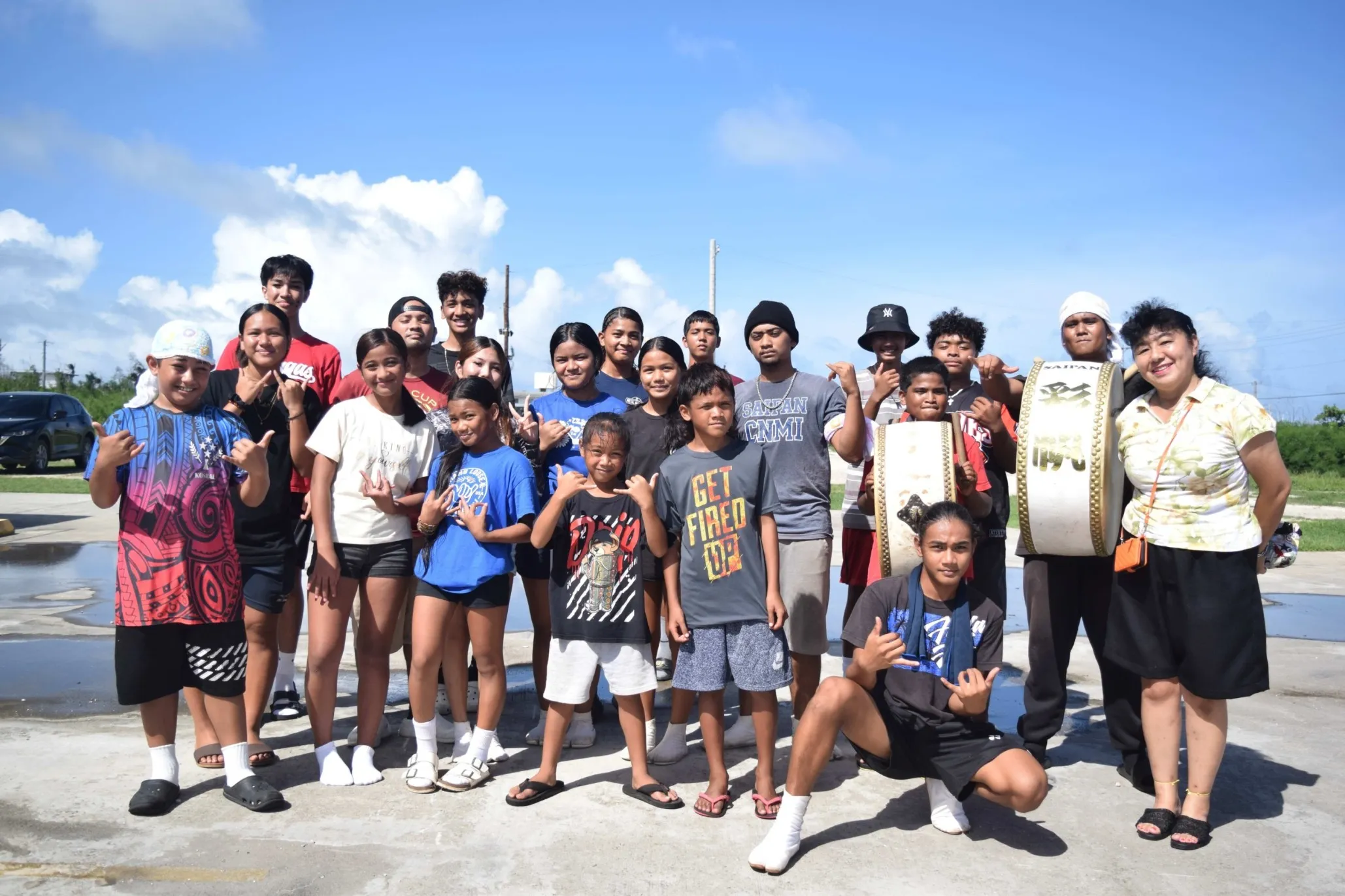
Since the beginning of the response, more than 600 personnel have been assigned to the CNMI operation. As of this week, 180 responders remain on the ground, not including more than 200 disaster event-based volunteers, many of them youth.
“These guys are absolutely incredible,” Junquera said.
The Red Cross is also supported by more than 50 virtual caseworkers and 20 to 30 regional staff already stationed in the Pacific region.
Financial assistance enrollment window
Junquera emphasized that the Red Cross has no set pull-out date, and operations will continue as long as needs remain. However, he clarified that enrollment for financial assistance is expected to close in early June, though the timeline may shift.
“That’s just the beginning of the process,” he said. “If you’ve started your case, you’re fine. But we want people to come in today or tomorrow if possible.”
Financial assistance, he stressed, is not the same as FEMA or SBA programs.
“We’re not FEMA. What we provide makes the landing a lot softer,” he said. Assistance levels depend on damage severity and household composition.
Where to apply
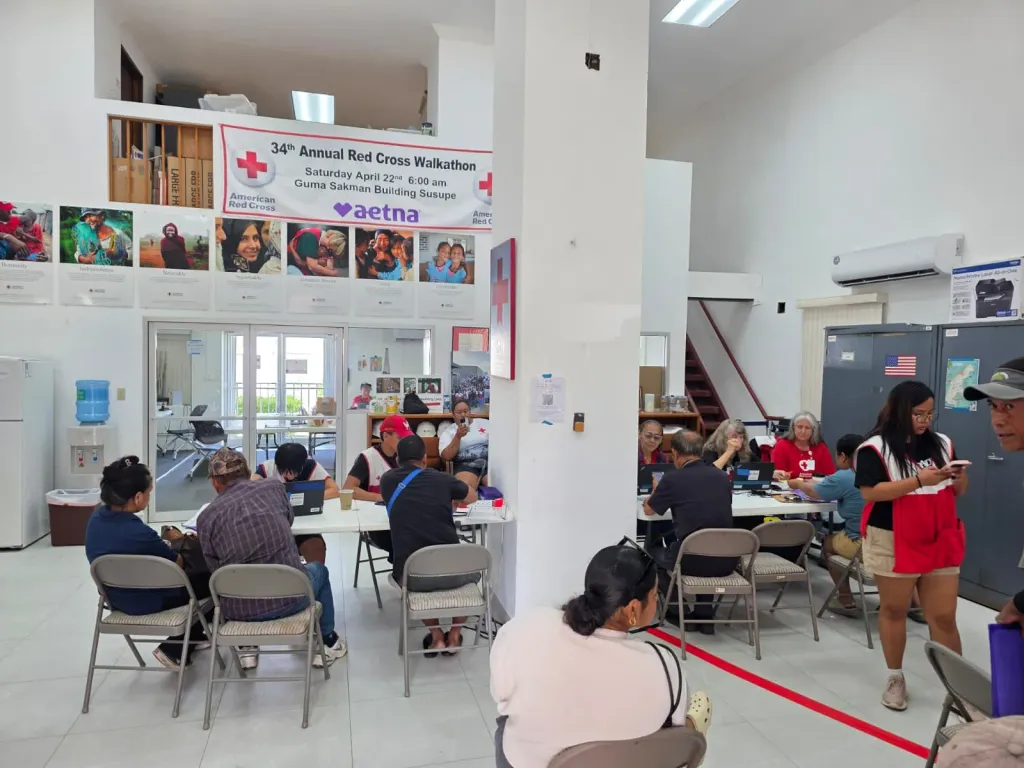
Residents seeking to open a case should visit the Red Cross chapter office in Saipan, open from 9 a.m. to 6 p.m. The organization has closed its station at the Saipan Recovery Center for now, though Junquera said that may change.
Eligibility for Red Cross financial assistance is based on destroyed or major damage.
Challenges: addresses and documentation
Junquera said the biggest challenge for survivors — and caseworkers — has been confirming physical addresses, especially in areas without formal numbering systems.
“Every disaster has its own challenges. This is one we’re working through with our governmental partners,” he said. “Having a full address, or even longitude and latitude, is really helpful.”
He encouraged residents to bring complete household information and, when needed, obtain residential certification from mayor’s offices or other officials.
“We match what people tell us with the damage assessments we’ve done,” he said.
Despite the hurdles, Junquera praised the community’s patience.
“People have been incredibly gracious in the wake of such a tremendous disaster,” he said. “We’re working with all of our power, all of our time, and all of our resources to get the job done.”
Funded mainly through donations, grants, and volunteer support, the American Red Cross is a non-governmental humanitarian organization that provides emergency assistance, disaster relief, and disaster preparedness education across the United States and internationally.
Bryan Manabat was a liberal arts student of Northern Marianas College where he also studied criminal justice. He is the recipient of the NMI Humanities Award as an Outstanding Teacher (Non-Classroom) in 2013, and has worked for the CNMI Motheread/Fatheread Literacy Program as lead facilitator.
