




By Bryan Manabat
[email protected]
Variety News Staff
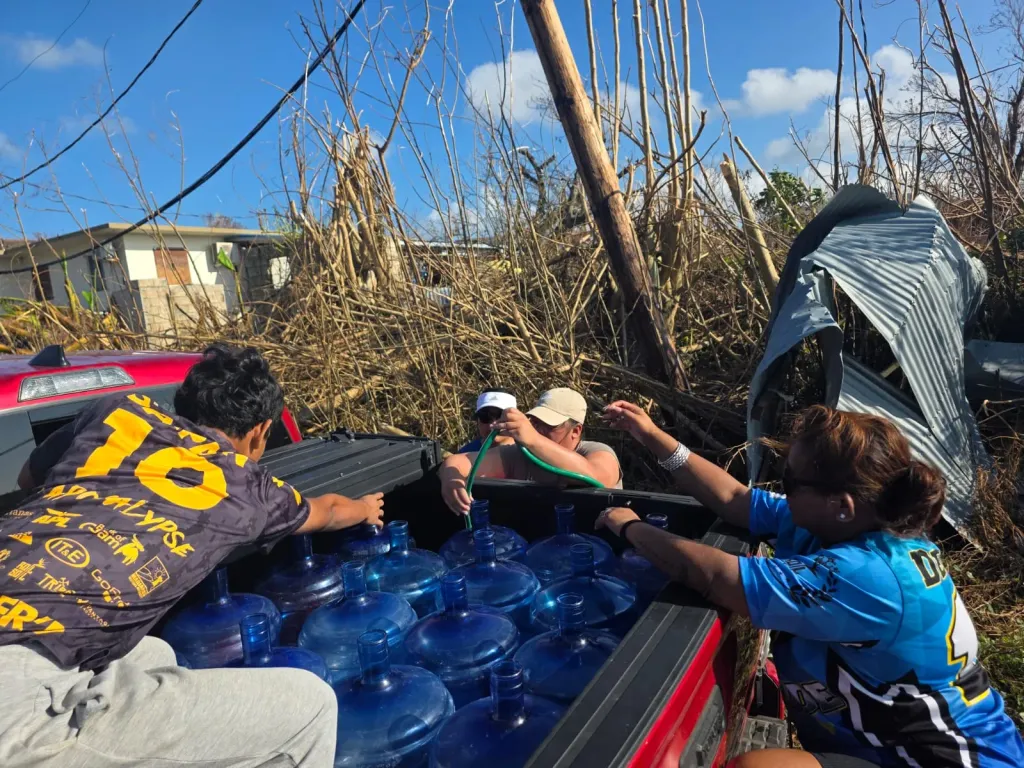
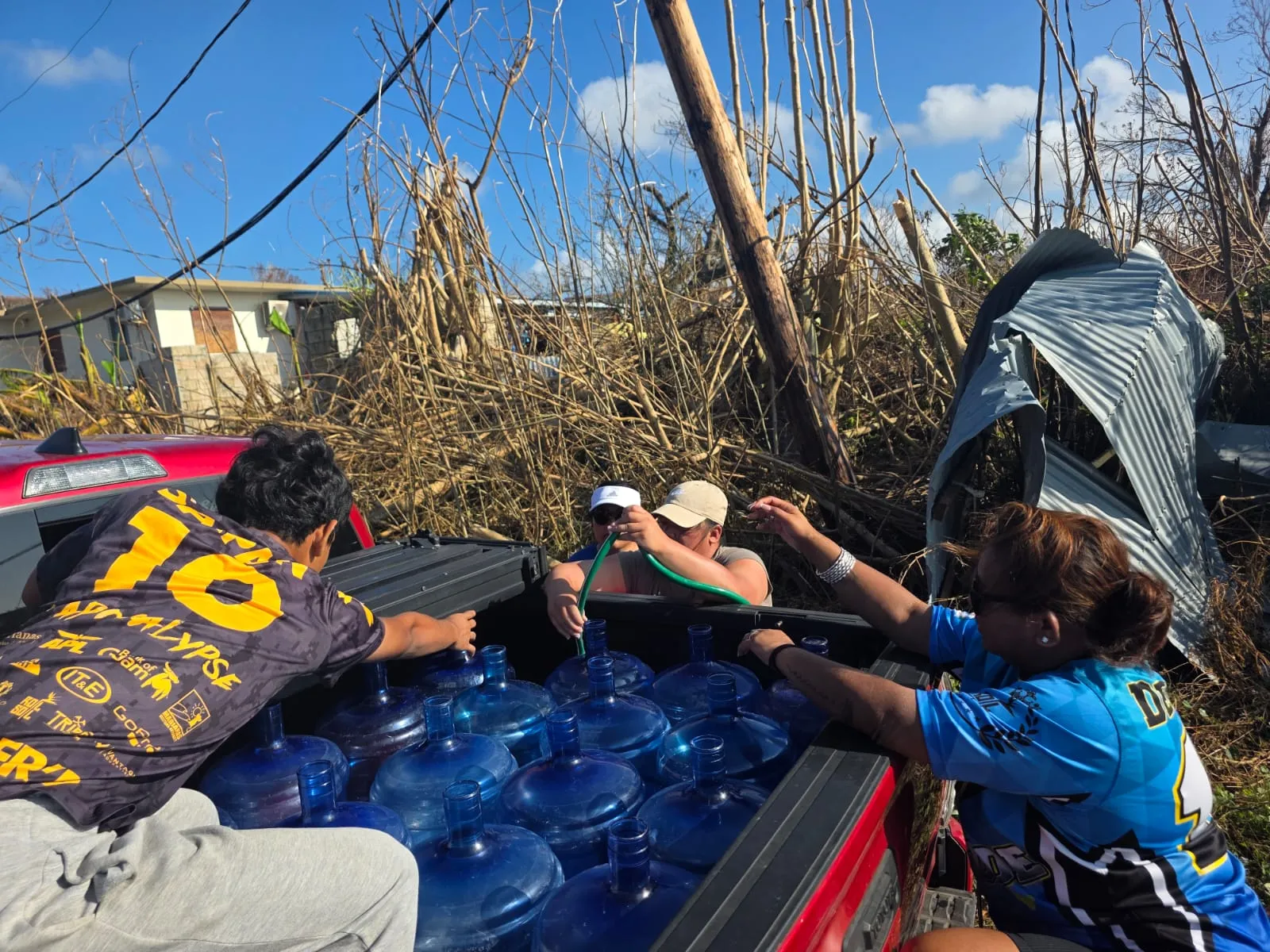
WITH most homes still without running water one week after Super Typhoon Sinlaku, the Commonwealth Utilities Corporation has opened public water filling stations in four Saipan villages. The stations operate daily from 8 a.m. to 11 p.m. and are staffed by administrative personnel so water crews can focus on repairs.
The stations are located in Puerto Rico in front of the Governor Eloy S. Inos Peace Park; in Chalan Kanoa on Dr. Torres Drive in front of William S. Reyes Elementary School; in San Vicente on Tuturam Drive behind San Vicente Central Park; and in Kagman on Chacha Road across from Santa Soledad Church. All four sites are open daily until 11 p.m., according to the Joint Information Center.
Most residents on Saipan still have no power or running water one week after Sinlaku tore across the Northern Mariana Islands on April 14, crippling the island’s electrical grid and shutting down the water system that serves thousands of homes.
CUC officials said restoration efforts have been slowed by snapped power poles, fallen trees, and debris that damaged power lines as strong winds swept across the island. As of April 21, 604 power poles were confirmed down, according to the latest CUC situation report.
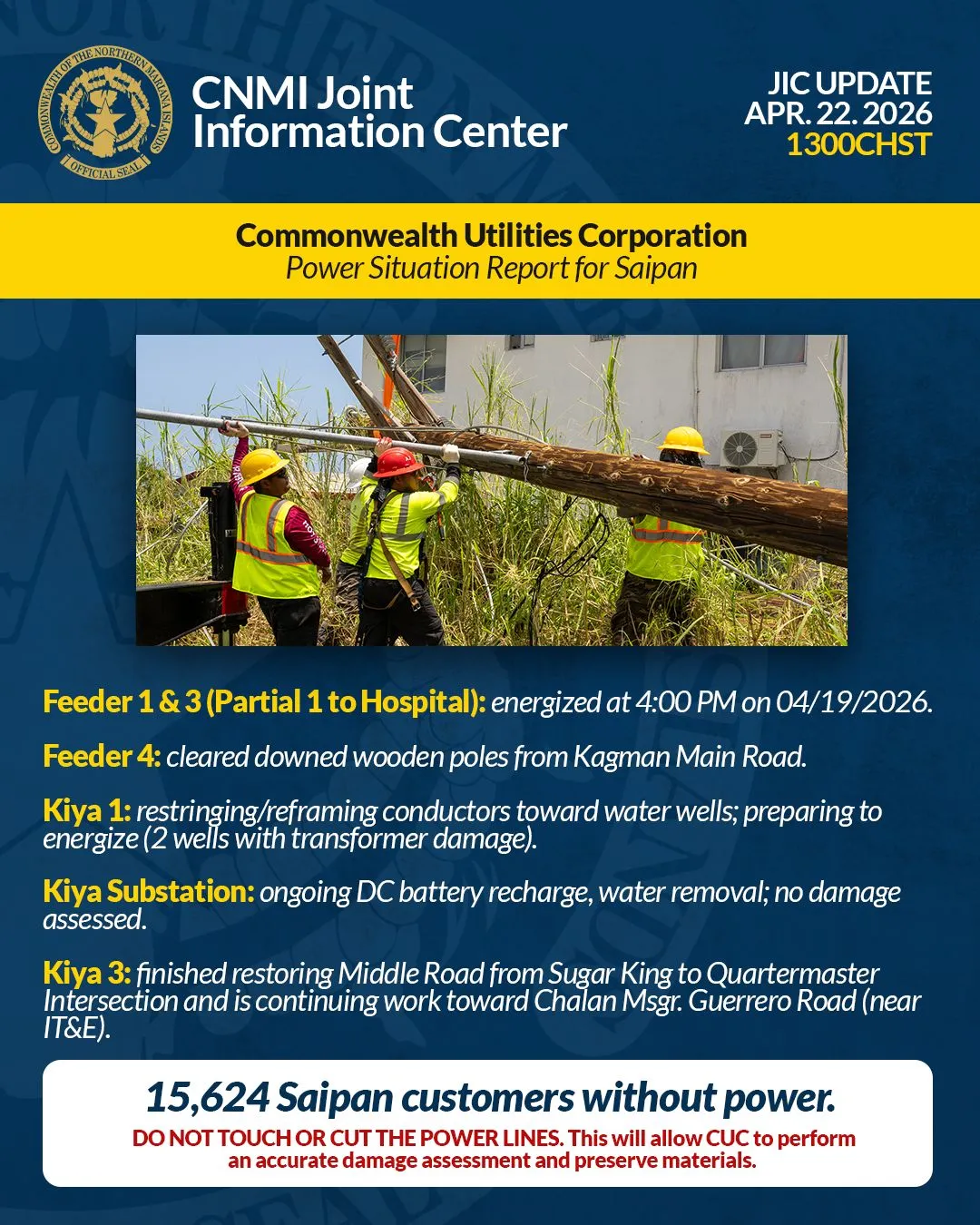
Saipan has 15,624 CUC power customers, including 11,769 residential homes, all of whom lost electricity during an islandwide outage on April 13 — the day before Sinlaku made landfall. While some businesses and households are operating on private generators, the vast majority remain without grid power.
CUC restored its first major circuit on April 19, energizing Feeder 1 to bring the Commonwealth Healthcare Corporation back online. Crews have since cleared downed poles along Kagman Main Road on Feeder 4 and restrung conductors along portions of Middle Road under Kiya 3, but most feeders remain offline. Damage assessments of primary lines are complete, while secondary line assessments are nearing completion.
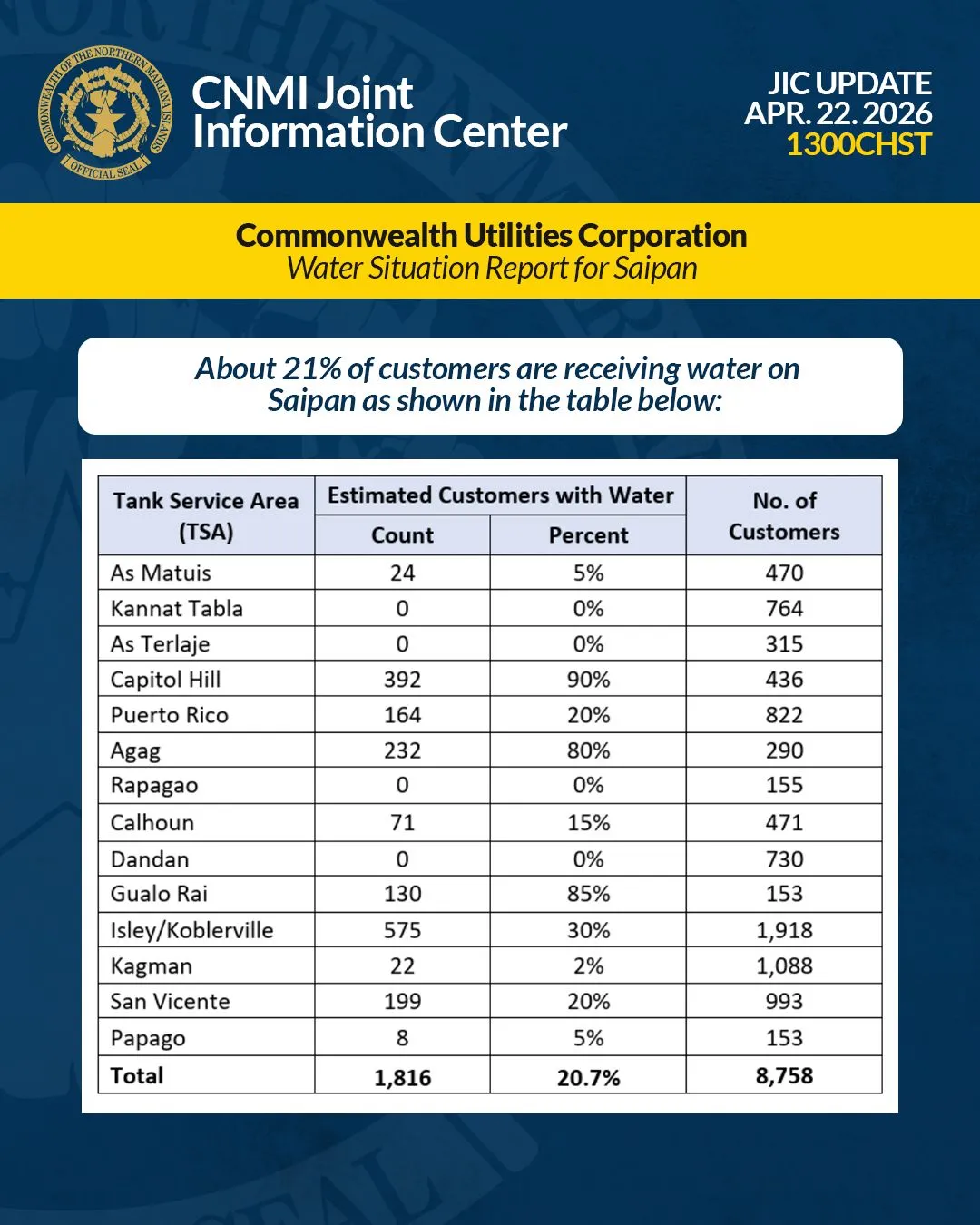
Water service remains even more limited. Saipan has 9,433 residential water customers, but only about 21 % currently have running water, according to CUC’s Tank Service Area report. Water production is at 4.1 million gallons per day, roughly 40 % of normal output.
CUC Executive Director Kevin Watson told Variety he will provide updates as they become available, noting that crews are working across multiple sites to assess damage, clear debris, and restore both power and water systems.
CUC’s board of directors has scheduled a special meeting on Thursday to provide an update on restoration efforts and address other urgent matters related to post-typhoon recovery.
Saipan’s water system depends on 13 aquifers, 13 Tank Service Areas, and 127 wells capable of producing up to 10.3 million gallons per day. Fourteen large storage tanks distribute water across the island, but nearly all require electricity or generators to pump water uphill to homes. FEMA generators have begun arriving to power critical wells, and CUC has deployed a backup generator to the IF-28 well to restore water to the Francisco C. Ada/Saipan International Airport.
Tinian
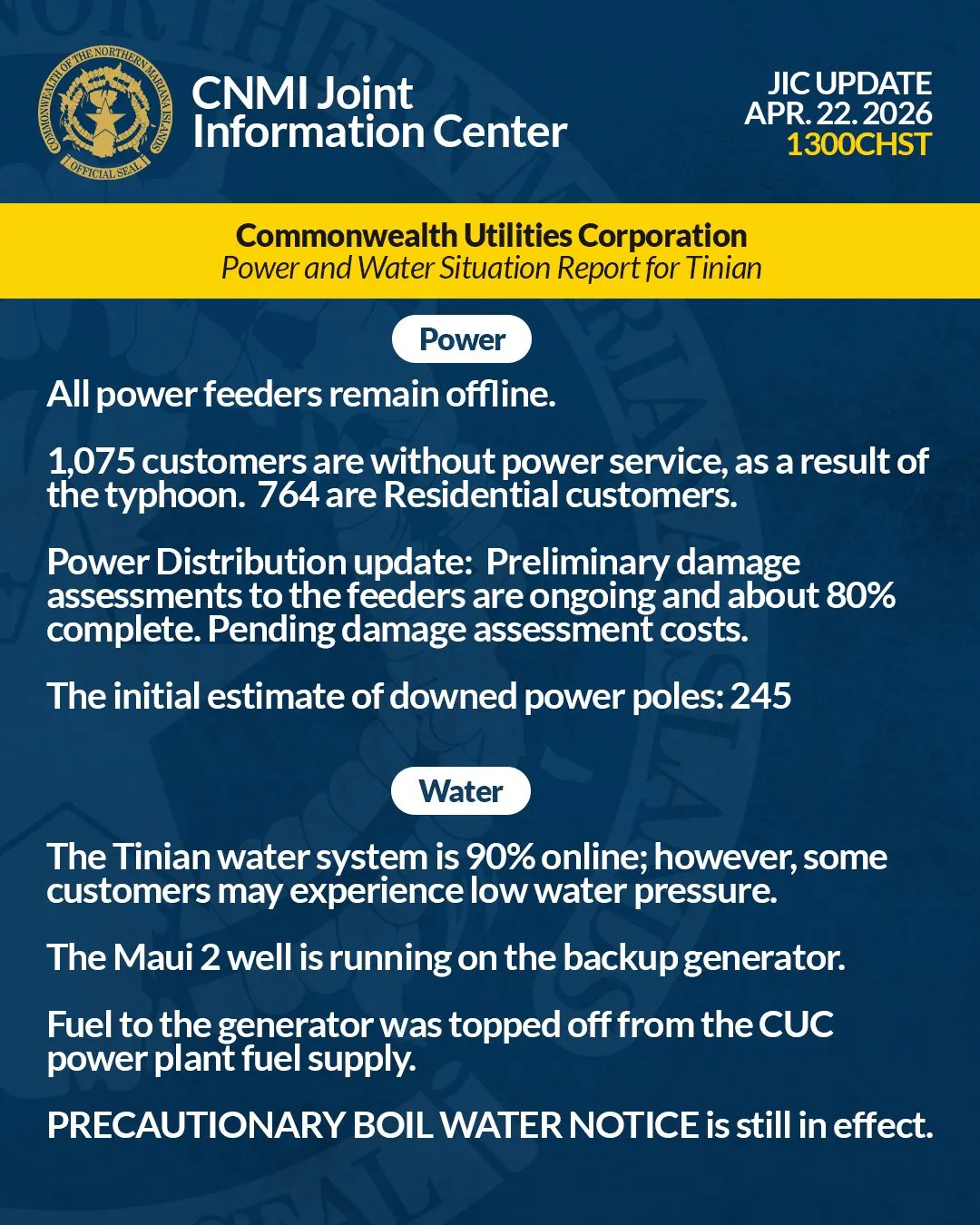
Tinian remains without power. All feeders are offline, and preliminary damage assessments are about 80% complete. The island has an estimated 245 downed power poles. Water service is about 90% online, though some customers may experience low pressure. A precautionary boil water notice remains in effect.
Rota
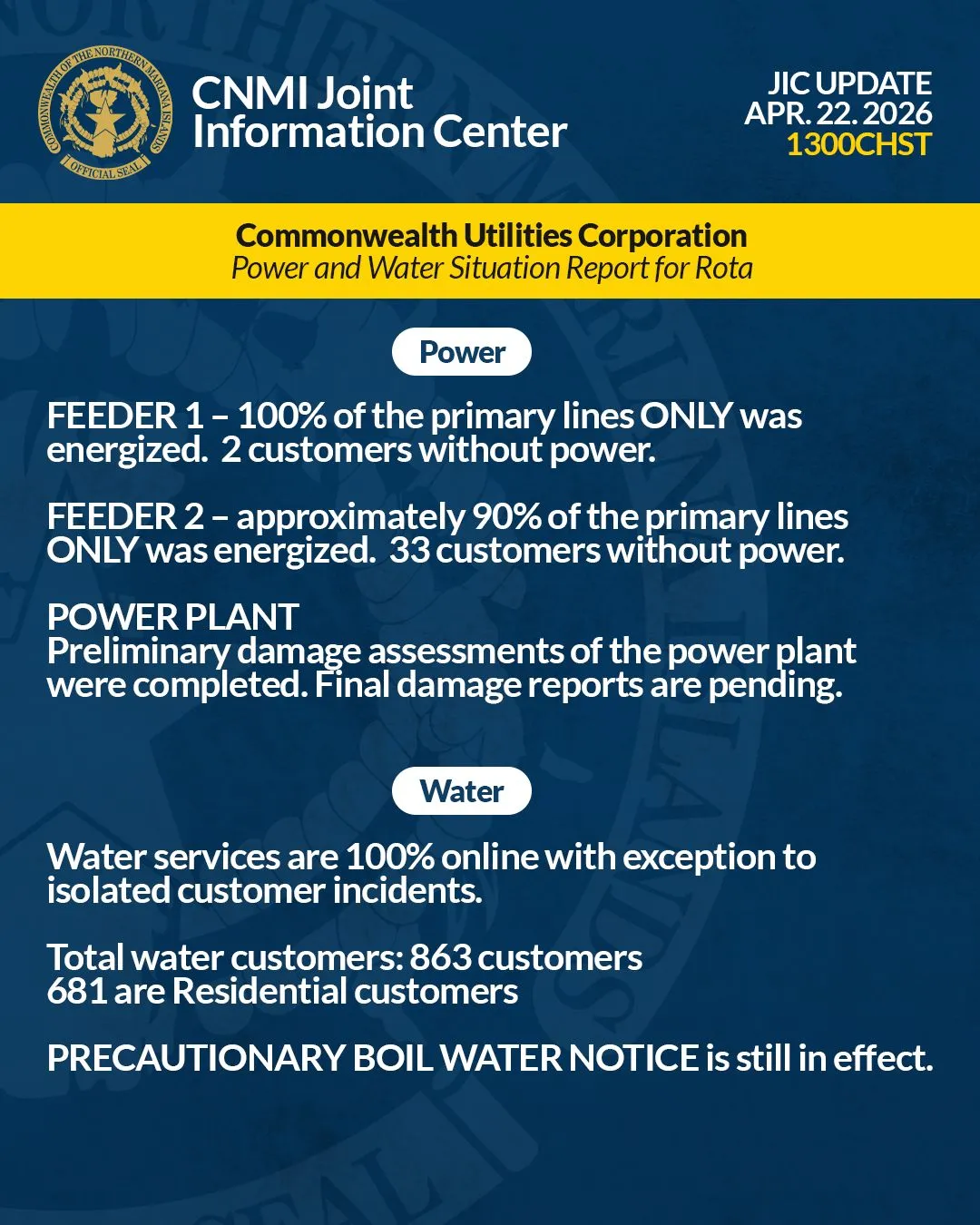
Rota continues to see the fastest recovery. Feeder 1 is fully energized on primary lines, and Feeder 2 is about 90% energized. Only 35 customers remain without power. Water service is 100% online, aside from isolated service lateral leaks caused by uprooted trees. A boil water notice remains in effect.
A long road ahead
With Saipan’s grid heavily damaged and its water system dependent on electricity, officials warn that full restoration will take time. For now, most residents remain without basic utilities, relying on generators, bottled water, and community support as recovery operations continue across the Commonwealth.
Bryan Manabat was a liberal arts student of Northern Marianas College where he also studied criminal justice. He is the recipient of the NMI Humanities Award as an Outstanding Teacher (Non-Classroom) in 2013, and has worked for the CNMI Motheread/Fatheread Literacy Program as lead facilitator.
