

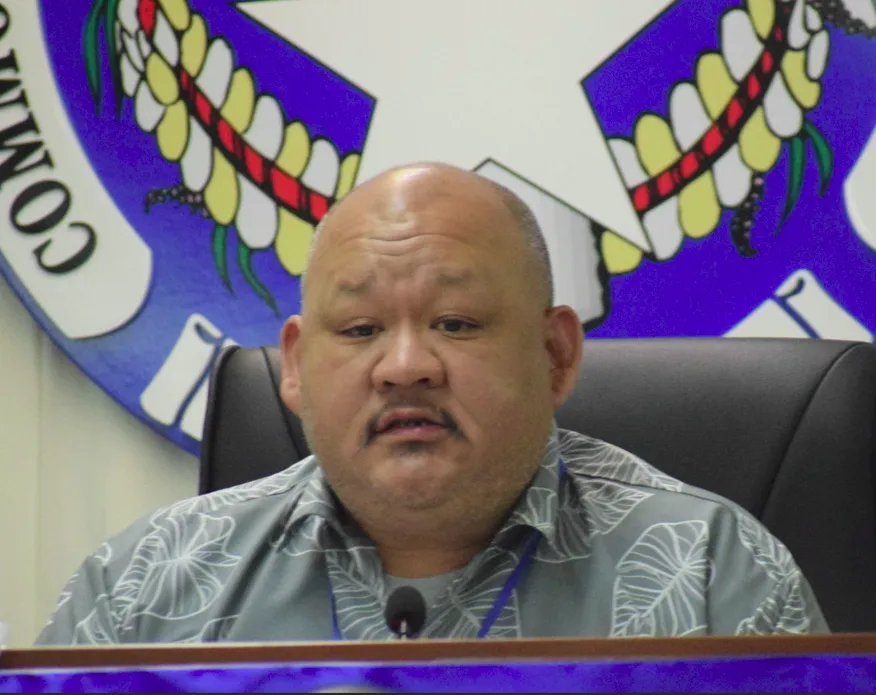


“And these included the panelists and organizers — there seemed to be more of them than the participants,” she said in an interview. “But there were more people during lunch, which was free.”
Sablan said the “really low” turnout was “very disappointing.”
“Some government agencies and cabinet members weren’t there. The whole community should have been involved. There were people who flew in from the states, Palau and Guam. It was a great and exciting opportunity to network and share ideas, but it just didn’t happen.”
Sablan said apparently, not a lot of people were aware of the clinic.
“Some people I talked to didn’t know about it but they were interested,” she added. “I just heard about it when we got the memo that a [U.S. Department of Labor official] would meet with us in the House chamber a day before the clinic.”
The U.S. Labor official from Hawaii was one of the speakers during the clinic.
According to Sablan, “A lot of the people, even those invited to be panelists, said they didn’t know until that day that they were expected to speak. I myself was asked to participate minutes before one of the panels opened.”
She added, “There should be better planning and community outreach next time.”
The Fitial administration and Northern Marianas College recently signed a memorandum of understanding with the U.S. Department of Labor Hawaii-Pacific Office of Apprenticeship for the implementation here of the USDOL Registered Apprenticeship Program.
The program, which also involves the Workforce Investment Agency, aims to develop a skilled local workforce.
“This is a really important goal, considering that federalization will be implemented in November,” Sablan said.
Under the federalization law, the CNMI can only hire guest workers through U.S. immigration rules which impose several restrictions.
Sablan believes that the current lack of interest in trade skills among local residents is due to low wages.
“And wages are low because of our dependence on foreign workers,” she said.
Under the CNMI’s labor and immigration system, “we somehow lost the value of working your way from the bottom up.”
The current system, moreover, “created a stigma” that discourages the local youth from coming back to the islands after college, she said.
Most locals prefer to work for the CNMI government, which pays higher wages and better benefits.
“I know young locals who are in the states working for the private sector because of better wages,” Sablan said.
She recalled that as a high school student on Saipan, she worked as a waitress for a year.
“Every now and then I would get harassed, because they didn’t realize I was their niece — it really opened my eyes to what my coworkers were going through every day. I was being treated poorly from time to time because I was thought to be a contract worker.”
But Sablan is optimistic that as wages go up — as mandated by federal law — and with immigration under federal control, there will be more locals joining the private sector.
