








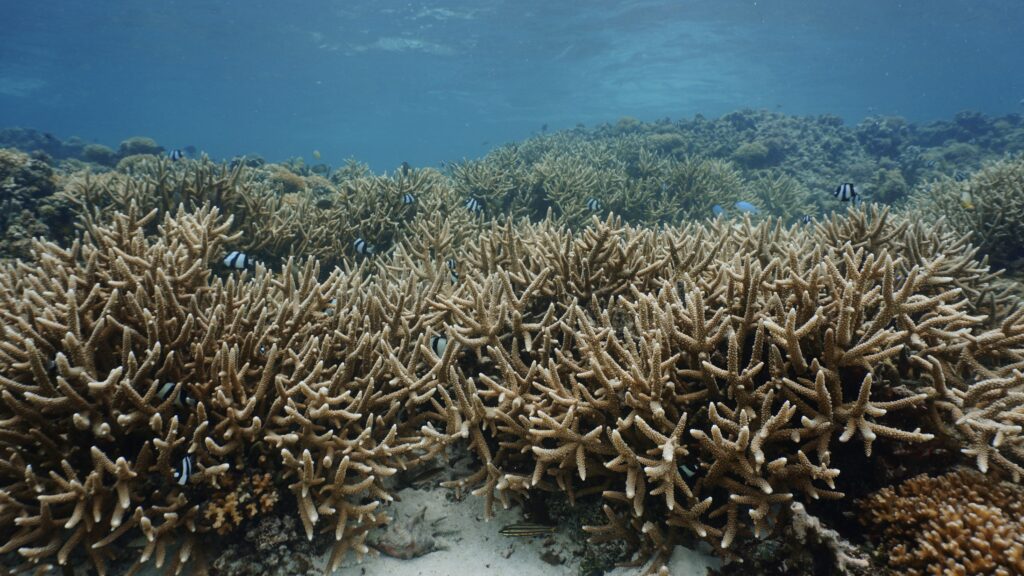
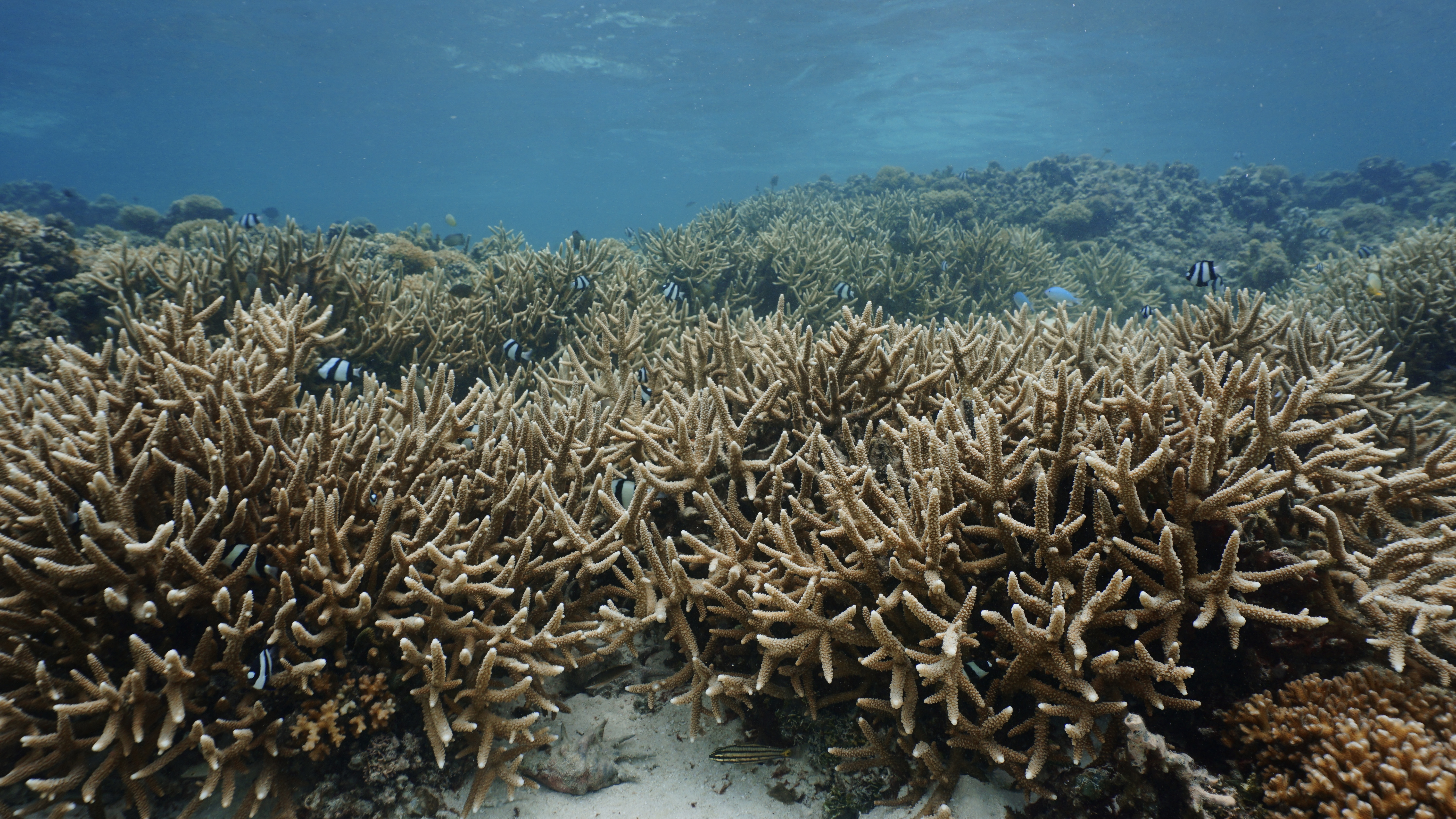
Healthy branching corals in the Tanapag lagoon.
ACCORDING to the latest CNMI Current Coral Reef Conditions Report of the Division of Coastal Resources Management, the Commonwealth remains at “moderate risk” for coral bleaching through September.
According to the report, corals in the CNMI historically encounter increased heat stress from August to October, and that the peak of heat stress is usually in September.
The report states that the current El Niño season brings with it extremely low tides that pose a threat to corals in shallow waters around the lagoon.
However, the report stated that the regular rain and cloud cover of the past few weeks had been “good” for heat-stressed corals.
The report’s author, Elly Perez, said so far, she had witnessed “minimal” bleaching on the west side of Saipan.
“The bleaching we witnessed is typical of what you might see in the summer,” Perez said, adding that she and a team at DCRM surveyed coral habitats off the coast of Paupau, Tanapag, Quartermaster and San Antonio.
“In the summer, temperatures are hotter than usual. So it is not uncommon to see a few pale corals during the summer months, especially in the shallow lagoon areas where sea temperatures are easily affected by excess solar radiation,” she said.
At the four survey locations, Perez said her data came from observing branching corals, better known as staghorn corals.
Perez said branching corals are known to be particularly vulnerable to heat stress, and are among the first to show signs of bleaching, if bleaching events are occurring in an area.
“The long-term outlook projects a minimal amount of heat stress in the next four months, but it’s still important to be on the lookout and prepare for the worst,” Perez said.
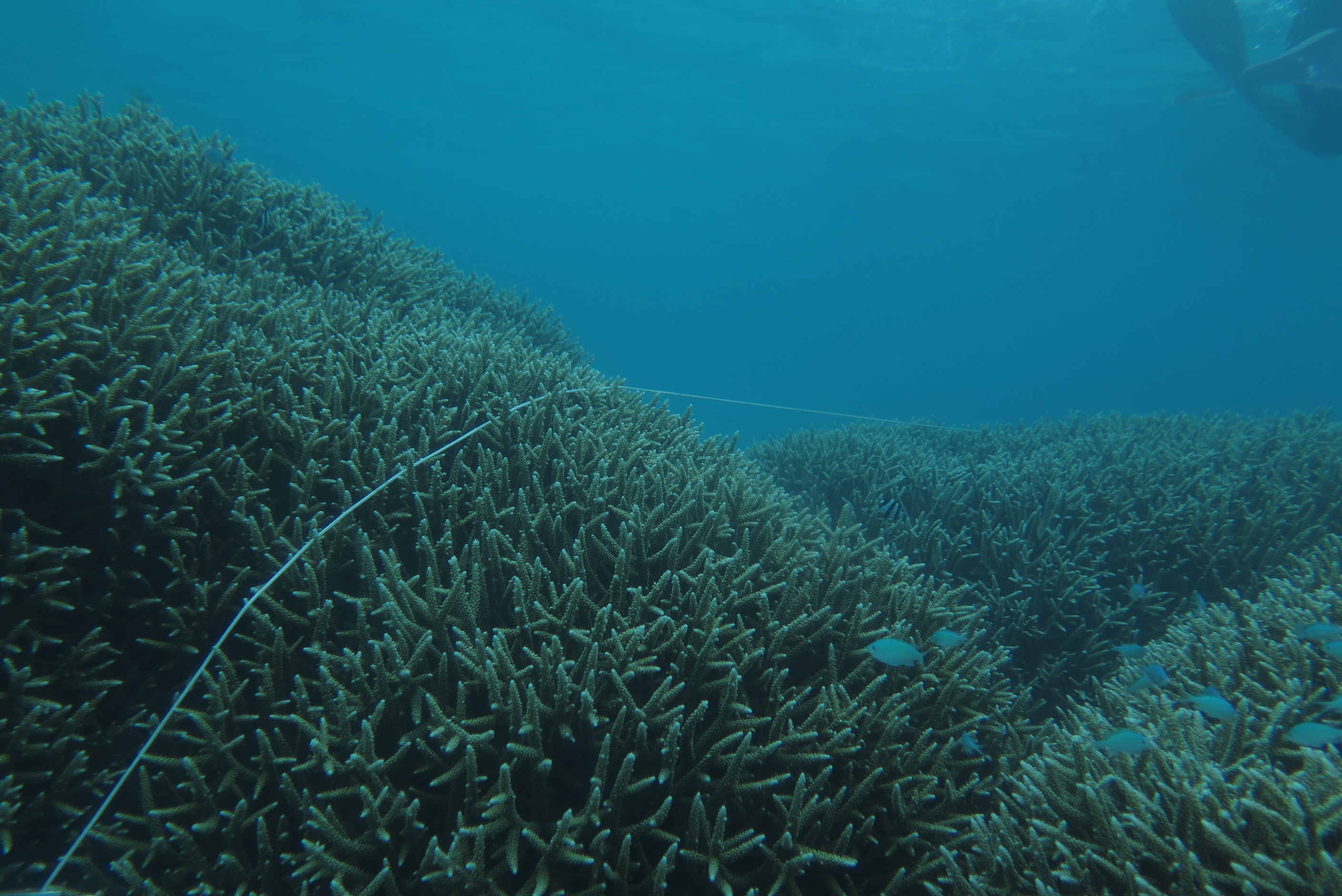
The corals photographed off Quartermaster are in good health.
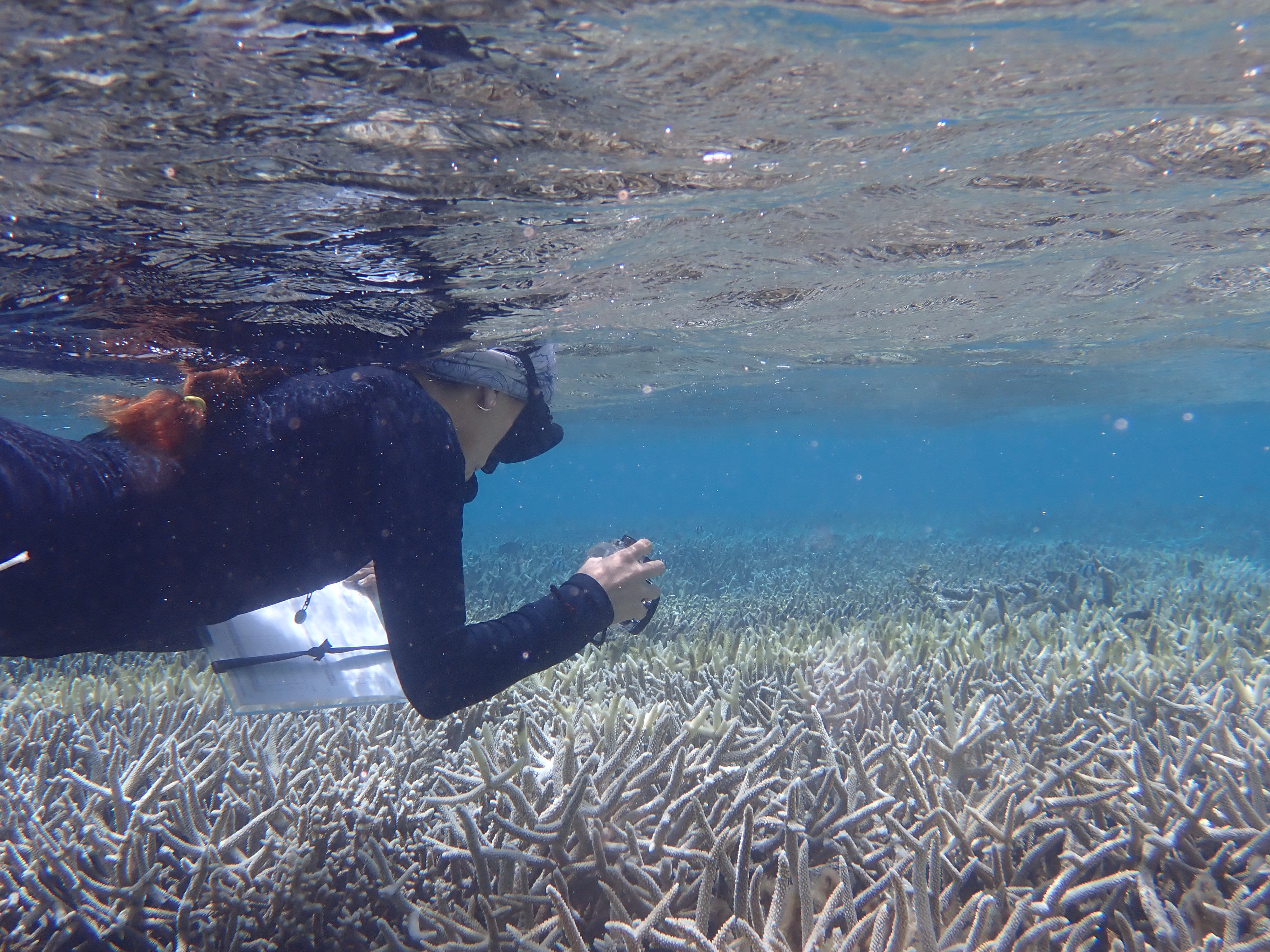
Elly Perez surveys the coral off San Antonio.
