




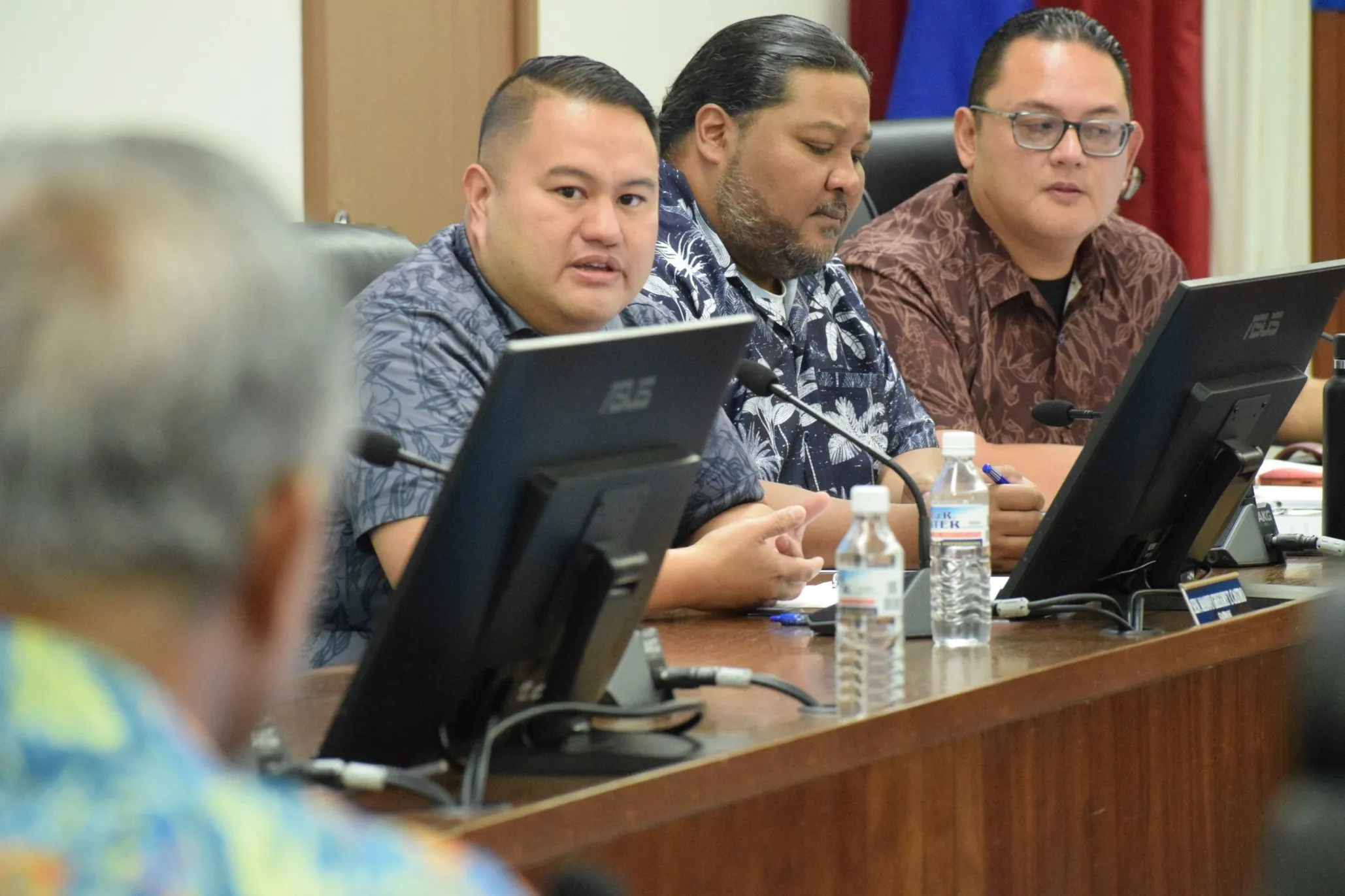


HANMI president Nick Nishikawa who was yesterday’s speaker at the Saipan Chamber of Commerce meeting at the Pacific Islands Club said in April last year, CNMI hotels posted 54 percent occupancy but this month, they project only 34 percent hotel occupancy. In May last year, the hotel occupancy was 52 percent, and they are projecting 50 percent occupancy next month.
These figures, Nishikawa said, are supposed to go up with the coming Golden Week celebration at the end of April up to the first week of May, where hotels enjoy from 90 to 100 percent hotel occupancy.
“With the way things are going, the Japanese are very hesitant to travel overseas. We can hope for about 40 to 45 percent occupancy,” Nishikawa said.
Nishikawa said as of now, an atmosphere of uncertainty hangs in the air as to when tourism will return to normal.
“Because of the disaster, thousands of tourists cancelled their bookings to the CNMI. We don’t know how or when tourism will pick up again. It could be next summer, fall or next year, who knows?” he added.
Nishikawa, who went to Tokyo and stayed for five days after the devastation, said he noticed first-hand how the number of foreign tourists dwindled down to the bottom.
“Major hotels in Tokyo ran low in occupancy from 10 to 50 percent,” he said. Hotels near the Disneyland only got hotel occupancy rates of five to 10 percent after the Disneyland closed after the earthquake and tsunami.
Nishikawa, who is also the Hyatt Regency Saipan general manager. said like the other major hotels on island, they feel the impact of the disaster that hit Japan. He said from the start of the year until March 10, the Hyatt had been doing quite well, in fact better than last year but after the earthquake and tsunami in Japan on March 11, bookings were cancelled.
“I don’t think we can achieve our 2011 Business Plan,” Nishikawa said.
Hyatt has to reduce hours of operation at three of its restaurants and reduce the work hours of the staff to meet the operation costs, he added.
Economic impact on Japan
Nishikawa said according to the Euro monitor international, the best case scenario for international departures from Japan would be a decline of 11 percent in 2011. The worst case scenario would be departures would fall by 21 percent, and a decline of 17 percent in tourist expenditures.
Nishikawa said 30 percent of Japan’s economy depends on the nuclear power plant, 60 percent on thermal power station, and 10 percent on other industries.
Nishikawa said because of the devastation, several leading automobile companies and industrial technology spare parts supply factories have temporarily stopped operations, affecting the operations of automobile companies worldwide.
He said Japan’s coastlines which supply 25 percent of the Asian nation’s fishery supplies are now completely damaged. There will be a shortage of supplies coming from this area such as Chinese food dried abalone and shark fins. Nishikawa said it will take a long time for the six prefectures in the northern part of Japan to recover their losses in fishery, agriculture, dairy farms, and other major industries.
“It will take a few months for things to go back to normal operations, but people in this region are known as very patient and diligent. They will recover faster than we think,” Nishikawa said.
He said as of April 2, 11,938 fatalities had been reported, 15,478 were reported missing while 16,600 people lost their houses and are now temporarily housed at the schools, and gymnasiums, community halls in Iwate, Miyagi and Fukushima prefectures.
Nishikawa said several countries offered these evacuees temporary shelter but many of the evacuees don’t want to leave or even move to the next village or town.
“They are elderly people who have grown up together with neighbors, friends and relatives in the same community area. They are very loyal to their hometown and would not want to leave other people behind,” Nishikawa said. He added that kind of mentality among elder people in Japan is one of the challenges that the local government is trying to meet.
Nishikawa said the central government of Japan is trying to build over 62,000 temporary houses by the end of May, and to continue supplying the evacuees with beverages, water, clothes and daily necessities.
He said Japan received a total of $130 billion of Japan Disaster Relief Fund from 130 countries and the government will decide the fair distribution of the donations.
