






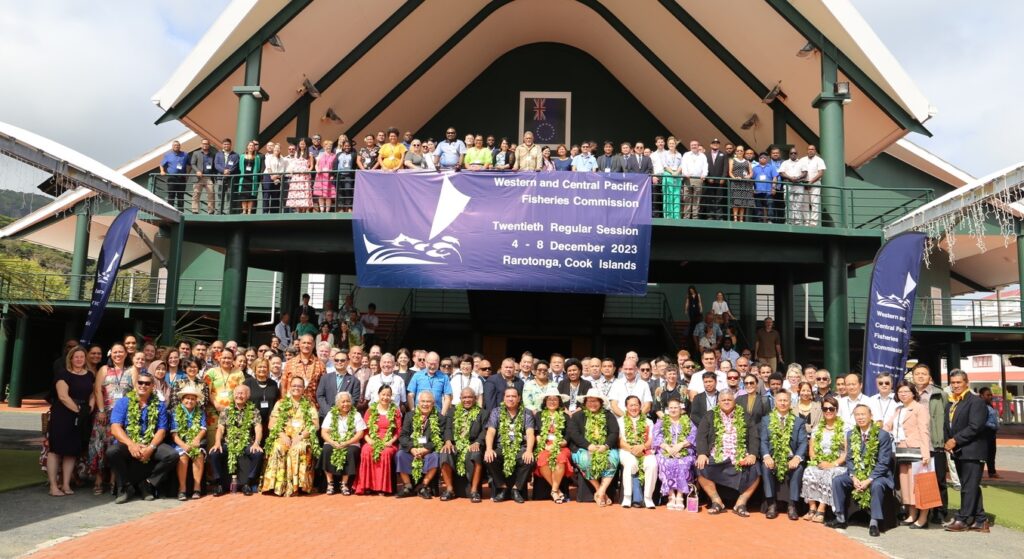
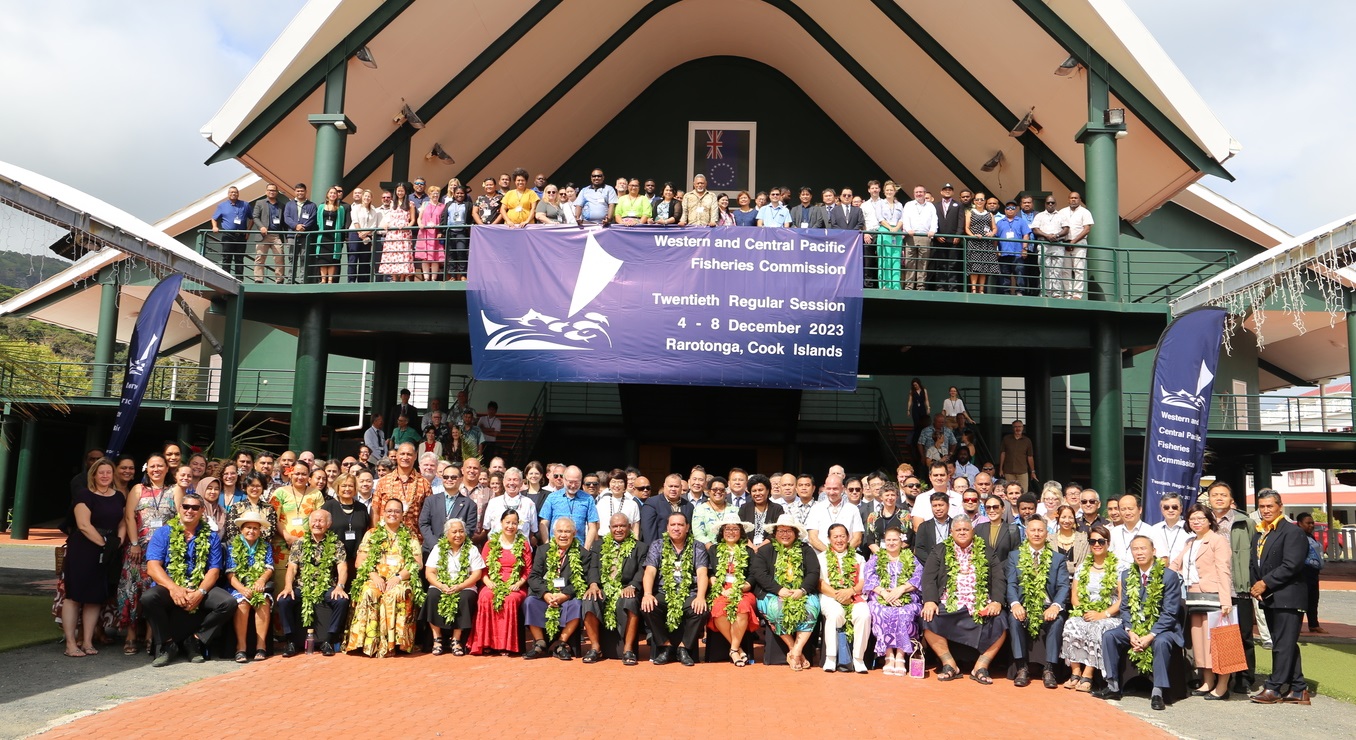
The annual meeting of the Western and Central Pacific Fisheries Commission was held recently in the Cook Islands.
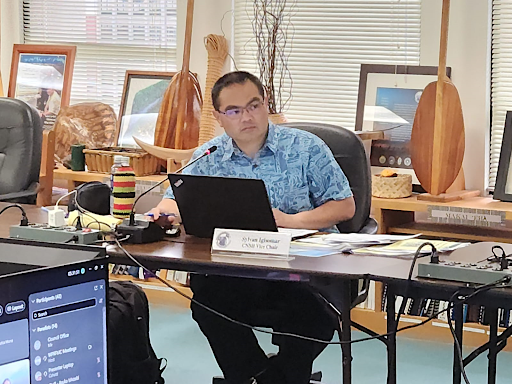
Sylvan Igisomar
RAROTONGA, Cook Islands — The annual meeting of the Western and Central Pacific Fisheries Commission held recently in the Cook Islands was deemed a success as there was a consensus on a revised tropical tuna conservation and management measure or CMM for 2024 through 2026. Covering almost 60% of the world’s tuna supply, this measure establishes global regulations governing the fishing of bigeye, skipjack and yellowfin tuna. The WCPFC increased the U.S. Hawaii-based longline fishery bigeye tuna annual catch limit from 3,554 to 6,554 metric tons after considering the healthy stock status.
“Although this is a win for the Hawai‘i longline fishery, it is a loss in fishery development funding opportunities for the Pacific territories,” said CNMI delegation head Sylvan Igisomar, who is also the secretary of the Department of Lands and Natural Resources. The United States was unsuccessful in preserving a provision in the tropical tuna CMM allowing for the transfer of catch portions to the Hawai‘i longline fishery in exchange for funds under specified fishing agreements. These agreements and funding have supported critical fishery development initiatives in the CNMI since 2010. American Samoa and CNMI leadership expressed frustration that plans were not in place to make up for lost fishery development funding before the possible removal of this provision.
The specified fishing agreements have funded initiatives from the CNMI Marine Conservation Plan or MCP like the Garapan Fishing Base shoreline revetment project, efforts to improve fishery data collections for stock assessments, and bottomfish workshops and training for the fishing community to name a few. The Magnuson-Stevens Act mandates that the MCP comprise conservation and management objectives such as marine and fisheries research, and conservation, education and enforcement activities related to marine and coastal management. The MCP must also be consistent with the Western Pacific Fishery Management Council’s Fishery Ecosystem Plans.
“No sense in crying over spilled milk, what’s done is done and now we must work with our federal partners on a replacement for this critical resource that will no longer be available,” said Igisomar during the regular session of the 197th Western Pacific Regional Fishery Management Council.
Igisomar recommended to the council to activate the provisions of the Pacific Insular Area Fishery Agreement or PIAFA authorized under the Magnuson-Stevens Act.
Council members also recommended that the National Marine Fisheries Service and other relevant federal agencies provide funding for projects under the territorial MCPs.
Looking ahead, funds for MCP projects can also come through a PIAFA, authorized under the Magnuson-Stevens Act and negotiated and signed by the secretary of State. A PIAFA would allow foreign fishing within the 200-mile U.S. exclusive economic zone around the CNMI with the concurrence of the governor. These foreign vessels would be required to abide by U.S. conservation and management laws, including at-sea observers.
