






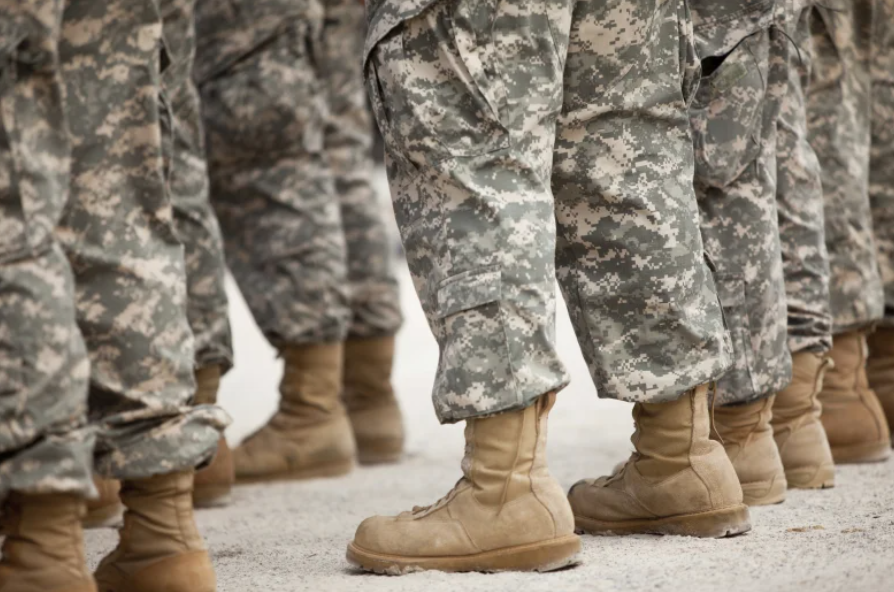
THE chair of Our Common Wealth or OCW 670 is unhappy with the administration’s plan to turn the CNMI into a military “pleasure ground.”
Born and raised on Saipan, Dr. Theresa “Isa” Arriola said she is concerned about the “pivot toward more militarization.”
OCW 670 is a non-profit community group that aims to “protect our ancestral lands, seas and skies from irreparable damage caused by military practices and other developments that pose a threat to our health, physical environment and livelihoods by increasing awareness of current military planning and the policies that affect us the most.”
Arriola, who earned her PhD from UCLA, is currently an assistant professor at Concordia University, Montreal, Canada where she teaches indigenous studies, militarization and Oceania.
“I want to state outright that my concern over the reliance on military tourism has nothing to do with this administration or any other administration for that matter,” she said in an email. “I am writing alongside many other protectors before me out of a deep concern to protect our lands, our families, our culture and future generations from irreparable damage to our environments and livelihoods.”
She said, “Short-term economic gains pale in comparison to long-term sustainability for our islands and people.”
She added, “Yes, our economy is not in good shape, but instead of running to improve the situation by relying on military spending let’s take a step back and ask why we continue to find ourselves in such dire economic straits to begin with. Where are we located in the broader and much longer story of military involvement in the Pacific? It’s not just us. The United States is investing millions more into Compact of Free Association states, increasing base access in the Philippines and Palau, opening embassies in places like Honiara, Solomon Islands.”
“While we are strategic to the military, let us not confuse this with being special,” she added.
Arriola said she is “alarmed” over the CNMI’s reliance on military funding. “Two-thirds of Tinian is under Department of Defense–divert airfield agreement lease, the entire island of Farallon de Medinilla [which is leased by the U.S. military from the CNMI] has been bombed since 1971, parts of Saipan [are available to the military], not to mention the intense buildup on Guam.”
She said the newest military projects are “happening so fast we barely have time to digest the immensity of these changes.”
“In fact, many still are unaware that the CNMI is facing a number of major military projects including the Mariana Islands Training and Testing Study Area, CNMI Joint Military Training, Tinian Divert Infrastructure improvements (which include a fuel pipeline) and much of this is connected to the broader framework of the Guam and CNMI military relocation. Although these activities are pitched as separate projects, for the sake of their impact on our community, they all overlap,” Arriola said.
“With so much going on, it’s tempting to think our community will be at the receiving end of millions of dollars, but will we have access to the figures of the economic promises that militarization brings? Do the figures outweigh the costs to our people?” she asked.
Arriola believes that “increasing reliance on military spending, especially by combining the CNMI’s main economic pillars into ‘military tourism,’ leaves little wiggle room for a future outside of endless militarization.”
“Is this sustainable?” she asked, “The attention we are being paid by the United States is connected to their desire to build up our islands in case of an attack. The problem is that we will have to bear the social and economic costs of this buildup whether their estimations about China are correct or not.”
According to Arriola, “We are being asked to ‘take the hit’ when we know deep down the same military strategists would never advance these kinds of plans in their own homes. Even in the event of an attack, which is never guaranteed, a massive military buildup like this comes at a tremendous cost to our people and environment. We see the United States investing more in the military and Pentagon spending than at the peak of the Iraq and Afghanistan wars.”
Arriola wants to know “what…our end goal [is], and are we making these decisions for ourselves or is someone making them for us?”
“Just as in World War II,” she said, “we are seeing our community flung into the crosshairs of another conflict that is not of our own making. This time our islands are being promised a lot of money to act as island shields against outside aggression. Wargames, which are military strategy games, are on the rise. This means military planners are literally playing games to figure out scenarios where the Pacific would be attacked, specifically Guam. The problem is, this isn’t a game.”
Arriola is proposing “a different narrative that swims against the powerful tide of militarization.”
“Imagine if the island stood up and said no to future wars? Imagine being a bastion of peace alongside our Micronesian brothers and sisters? What does that look like to you? If we can envision it first, then we can get there. Our ancestors gifted us a genealogy of peace, let’s pass it on,” she said.
Another local educator, Ignacio “Kimo” Dela Cruz, agrees with Arriola.
He is also concerned that military tourism will result in preferential treatment for military personnel at the expense of local residents.
He believes that military tourism “is a Band-Aid solution to the CNMI economic wounds that have been festering for many years.”
“We only need to look toward Guam and see how militarization has affected them,” he said. “The CNMI is much more than a military getaway, but that is what we will be known as. This will only turn the CNMI into another military hub without much consideration for the local population.”
He said the CNMI should consider “the ramifications and negative impact to the environment, infrastructure, local culture and society of becoming a military destination.”

