



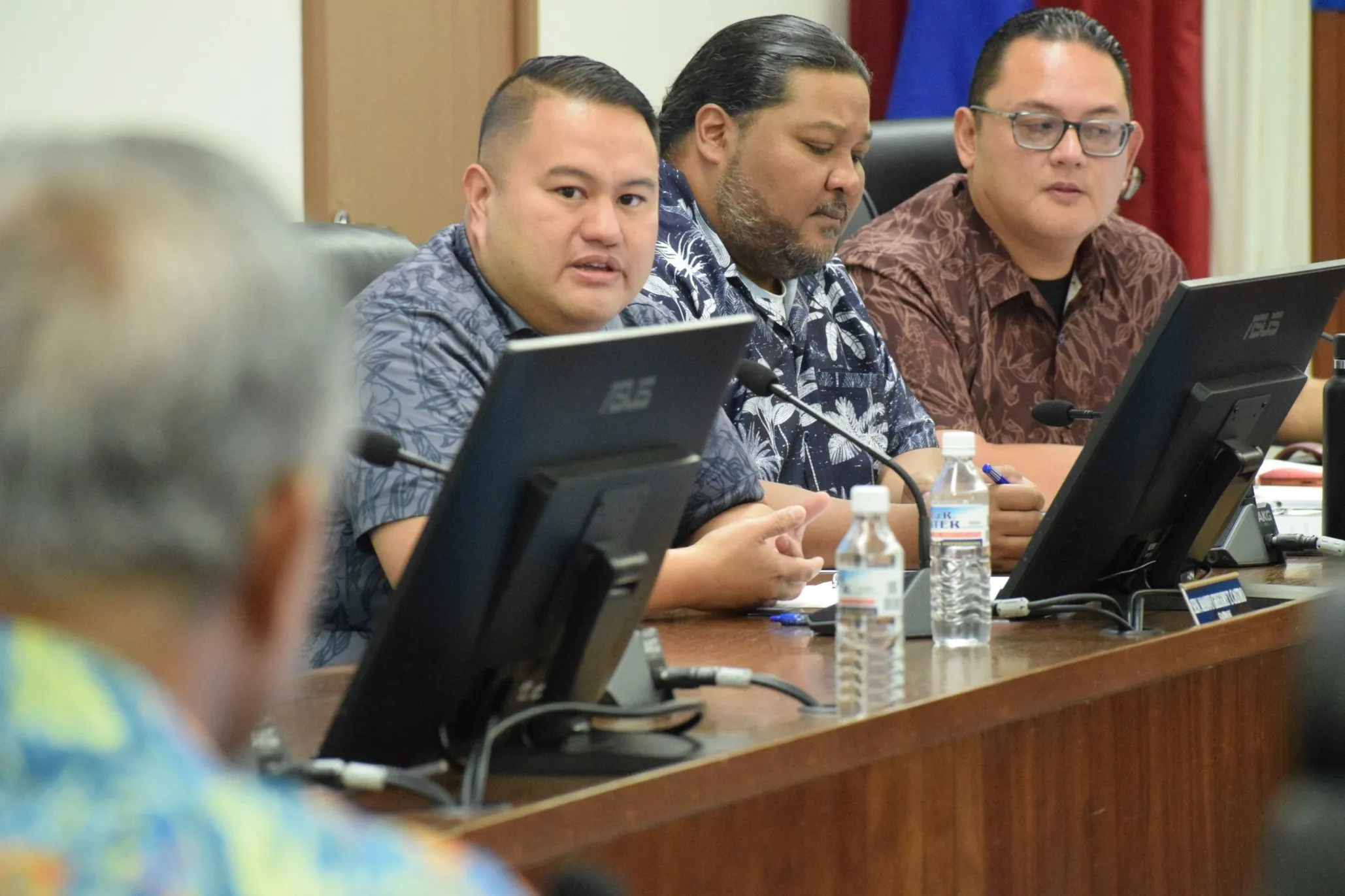



Errolflynn T. Kloulechad and Calvin Emesiochl of PHPO were on Guam from November 17 to 29 to attend the training that was conducted by the Advisory Council on Historic Preservation (ACHP); and they successfully completed the requirements of the training and were awarded certificates.
The National Historic Preservation Act is a United States legislation that was enacted in 1966 and intended to preserve historical and archaeological sites in the United States of America – which has been extended to include US territories and freely associated states. The act created the US National Register of Historic Places, a listing of US National Historic Landmarks, and the State Historic Preservation Offices – that now includes PHPO.According to Kloulechad and Emesiochl, they had spent the first week of the training learning about Section 106 of NHPA – inclusive of the requirements of Section 106 of the National Historic Preservation Act, which applies any time a federal, federally assisted, or federally approved activity might affect a property listed in or eligible for the National Register of Historic Places.Kloulechad said that training essentially allowed for the participants to review Section 106 as it pertains to their responsibilities under NHPA as HPO officers, interpretation, and implementation of the provisions of the section – not excluding accountability of HPO officers.During second week of the training, Kloulechad and Emesiochl were introduced to using the Global Positioning System (GPS) and Geographic Information System (GIS) to enhance their work.GPS is a satellite-based navigation system that utilizes 24 satellites to pinpoint a distinct location on Earth. GIS, on the other hand, is a system that integrates computer hardware and software, and data in order to capture, manage, analyze, and display all forms information that are geographically referenced.Kloulechad and Emesiochl had participated in practical excavation exercises using GPS and GIS. As part of the practical exercises, they had visited various historic excavation sites on Guam to apply what they had learned – including surveying, mapping, and collecting, identifying and cataloguing artifacts.Emesiochl said that learning to use GPS and GIS is a “big plus” for PHPO.“Use of GPS and GIS will make our work so much easier and would allow us to identify and map Palau’s historical sites accurately,” he said.Kloulechad added that the use of both systems would allow PHPO to organize, analyze, and display the data it has collected with a little more ease.Kloulechad and Emesiochl said that they are grateful for the people at the Micronesia Area Research Center, University of Guam for their patience, guidance, and support during the GPS and GIS training.Further, both said that they are thankful and appreciative of the trainings they had received, which they added, “would lead to a better and more precise understanding of our heritage and historic past.”
