






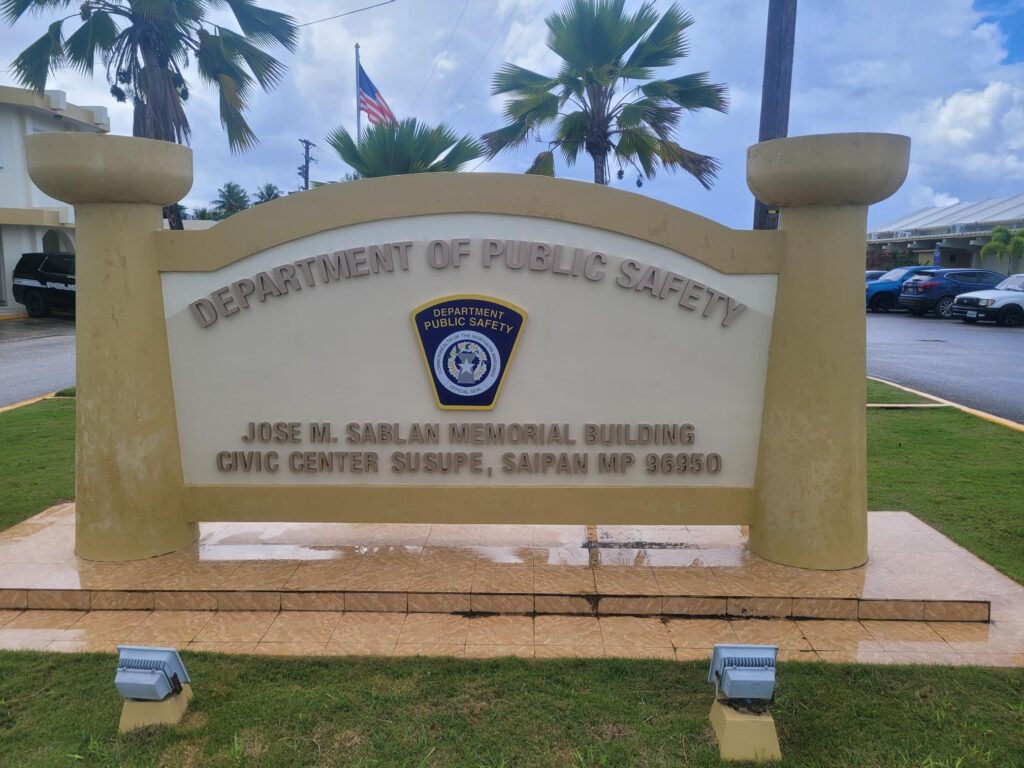
FORMER Department of Public Safety Commissioner Robert Guerrero turned the police department into a political tool, according to the final report of the transition team assigned to DPS.
Guerrero “had no law enforcement experience or training prior to taking charge of the DPS,” the report stated. He “disrupted the department’s command structure by appointing 14 assistant chiefs and placing certain sections of DPS directly under his control rather than under the director of police,” the report added.
“Guerrero turned DPS into a political tool and created a hostile, politically charged environment that was stressful for many officers,” the report stated. “Mr. Guerrero was known to pressure officers to attend political campaign events and targeted them for retaliation if they were perceived to not be in political alignment with him and the Torres administration.”
According to the report, Guerrero “showed little regard for the resources offered by federal law enforcement partners, or for the importance of thoroughly vetting prospective DPS officers and ensuring that all officers are well-trained for their missions, properly equipped, and given the care they need after responding to traumatic incidents.”
As an example, the report stated, “during the active shooter/hostage taking incident in San Antonio village in March 2020, the former DPS commissioner rejected offers from the FBI to bring in a team of specialized federal agents, including hostage negotiation experts.”
“At the time,” the report said, “most of the officers in DPS’ Rapid Response Team were still in training, and in general poorly vetted, handpicked for the assignment by the former commissioner and retained on the team even after they were found to be physically unfit for the assignment. Most of the officers had not experienced a crisis event like the San Antonio standoff before, and needed mental healthcare services afterwards, particularly after being shot at multiple times by the suspect and after the incident ended with both the suspect and the hostage dying.”
None of the officers involved in the San Antonio incident received adequate mental health services afterward, the report stated.
“Guerrero authorized counseling for less than half of the responding officers through the Community Guidance Center. Though DPS had on staff a mental health counselor, she was known to be close to the former commissioner and was distrusted by many of the officers. The former commissioner abruptly terminated all counseling services after none of the officers attended a political campaign event that occurred approximately a week after the San Antonio incident,” the report stated, adding that the officers were subsequently “posted” to Covid-19 sites.
Recommendations
Among the recommendations of the transition team to Gov.-elect Arnold I. Palacios and Lt. Gov.-elect David M. Apatang is the appointment of a DPS commissioner with law enforcement background.
Moreover, the report stated, the next DPS commissioner should be a trustworthy, ethical, and qualified individual.
“The next DPS commissioner must ensure more diligent vetting and recruiting of officers; revisit Standard Operating Procedures and policies and ensure continual training and development of officers; empower officers to do their work free from political coercion and retaliation; and engage more effectively with federal partners.”
The next DPS commissioner “must also care for the wellbeing of officers, including their mental health, and establish protocols that ensure access to mental health services for all officers, especially after responses to traumatic incidents like the San Antonio standoff of 2020.”
According to the transition team, “The commissioner must ensure DPS officers are never pressured to attend political functions, and that any supervisor who commands his officers to do so may face punishment leading to termination. Police officers have enough pressure at their jobs, and they should not be subjected to political pressure, or ever face political retaliation again.”
Payroll, OT issues
The DPS transition team also found payroll and overtime issues, according to Rep. Edwin Propst, the head of the team.
“The overtime pay is a big issue. You have high ranking officers who were making more on overtime than front line officers,” he said.
“They aren’t even supposed to be eligible for OT, but they used Covid-19 [pandemic emergency declaration as an excuse], even though we are at the end of the pandemic,” he added.
The report stated that upon reviewing timesheets and OT requests from Jan. 2022 to present day, it was learned that DPS has been “paying out excessive OT accruals for the same group of officers (some higher-ranking officers and certain lower ranking ones as well — specific to certain sections).”
“For pay period 26 (12/04 to 12/17/22), DPS requested approval to payout 11,127.25 hours (about 1 and a half years’ worth of regular hours worked) of OT for 174 officers out of 192,” the report stated.
“Additionally, about 40 officers (both high ranking and low ranking) alone accrued an estimated total of 4,000 hours (about 5 and a half months of regular hours worked) of OT.
“There is evidence of possible fraud/theft of government time in terms of excessive OT within the same group of officers every pay period,” the report stated.
“First responders that are lower ranking officers are only allowed 30 – 40 hrs., OT maximum, whereas higher ranking officers were allowed to accrue OT past 40 hrs., usually amounting to 60 or more each pay period, with one officer clocking in over 200 hours of overtime in one single pay period.”
The DPS transition team said the Office of the Public Auditor should audit the overtime at DPS for potential fraud.
“The incoming DPS commissioner should restrict higher ranking officers from accruing OT, and only allow the lower ranking officers who are legally eligible to accrue OT,” the report stated.
The DPS transition team also recommended the hiring of one additional staff member to assist in the payroll section.
“I am most grateful to the DPS transition team and DPS officers and administrators for the countless hours they put into interviews and research and writing,” Propst said.

