





HAGÅTÑA (The Guam Daily Post) — Japan’s ongoing discharge of radioactive water from the Fukushima Daiichi Nuclear Power Plant disaster into the Pacific Ocean met stiff criticism from island residents Tuesday at the Guam Congress Building in Hagåtña.
One Japanese diplomat defended the Japanese government’s handling of the discharged water, promising that continuous monitoring and safety checks would be in place.
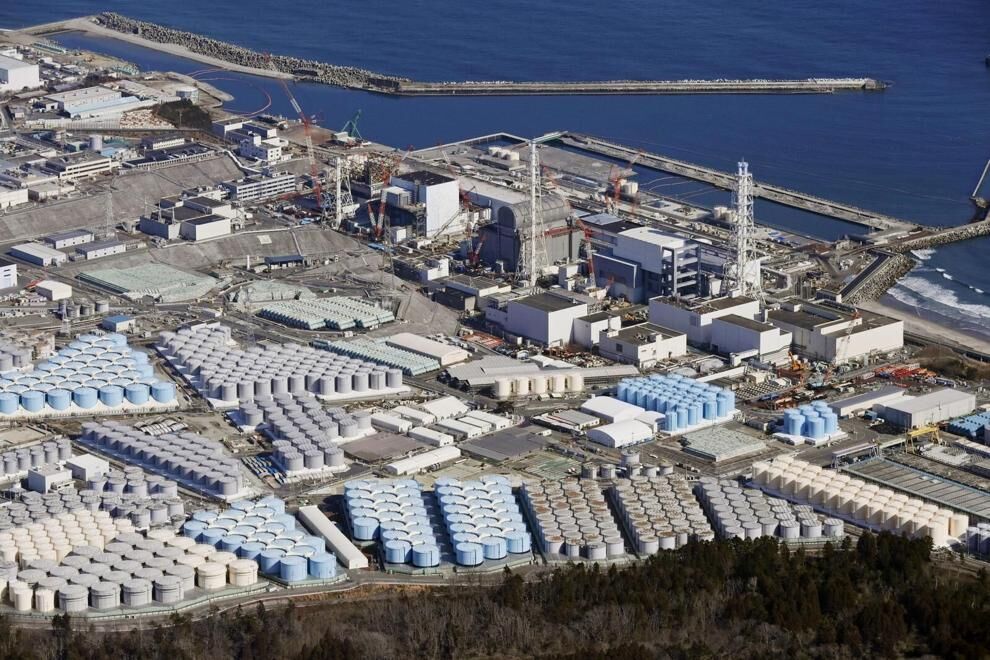
Japan last month began releasing into the ocean treated radioactive water from the disabled Fukushima plant, which melted down after it was hit by an earthquake and resulting tsunami in 2011, The Associated Press reported. Over 1 million tons of water used to cool the plant were being held in storage tanks that slowly will be discharged over the course of 30 to 40 years.
Guam senators are considering Resolution 93-37, which, if passed, would officially join Guam to Palau, the Commonwealth of the Northern Mariana Islands and other Pacific nations in opposing the dumping of water from Fukushima into the Pacific.
Maria Hernandez, of Ritidan landowner group Hita Litekyan, said Guam families already have to worry about a myriad of illnesses linked to contamination of the island. She said she didn’t want to see nuclear wastewater become yet another cause for concern.
“As the CHamoru mother bringing my kids around the island deciding where to swim, where we can eat our fish from, you know. I go to the store and I see fish at the supermarket, I’m like, ‘Can I buy this fish to feed my children?’” Hernandez said.
“Just the expense that our people are suffering already, it would just not make any sense to move forward with any projects that have the potential to continue to harm our oceans, harm our land, harm our people,” Hernandez said.
Ben Meno said he lived through the Japanese invasion of Guam in World War II and now had to think about Japan contaminating the island’s waters.
“I forgive them because I am a Christian, a Catholic. My parents taught me to forgive. … I forgive the people of Japan,” Meno said. “But that’s a war. Now, what I’m seeing right now is that they don’t have no gun, but it’s liquid. I went to work and I suffered tremendously with all the atrocities. I don’t want to see these again coming out from the Japanese government.”
‘Safety is guaranteed’
Osamu Ogata, deputy consul general for the Japan Consulate on Guam, assured senators the discharge was safe, though he didn’t take an opinion on the resolution.
Ogata provided materials outlining the process by which the water from the Fukushima plant was being treated by the Tokyo Electric Power Co., or TEPCO, the organization servicing the plant. He also read into the record an assessment from the International Atomic Energy Agency, which concluded the Fukushima discharge met international safety standards and would be continually monitored.
Ogata made an emotional appeal, noting Japan is the only country in the world in which not just one, but two, nuclear weapons were used.
“Japanese citizens, including myself, are all sensitive to nuclear issues,” he said. “I personally have concerns and worries about treated water, emotionally, as you do.”
Japan was taking every step to remove harmful radioactive substances from the water and had been transparent throughout the process, he said.
“We all share the same Pacific Ocean, and Japan cannot survive without clean water. I can assure you that discharge is safe. If by monitoring, the level of safety is not guaranteed, the discharge will be discontinued. But as of now, that safety is guaranteed,” Ogata said.
Raising doubts
Sen. Sabina Perez, prime sponsor of Resolution 93, expressed doubt about the safety of water released at Fukushima, especially over the long run.
“According to (United Nations) experts, scientists and other entities, TEPCO continues to allegedly misrepresent and selectively ignore basic scientific evidence on radioactive tritium,” Perez said, referring to an isotope found in Fukushima’s water.
“There is no way to be sure of the kinds of adverse effects that will occur 30 years into the future. And once damage to the ocean food chain or people has occurred, it cannot be easily rectified – not with money, not with apologies,” Perez said.
With nuclear wastewater being dumped into the ocean already, the local government needs to take matters into its own hands, according to Robert Celestial, president of the Pacific Association of Radiation Survivors.
“The water has already been released. Now it’s our responsibility as a people to protect ourselves by monitoring systems. And if they do find it, then it’s up to this Legislature and our government to do what’s right,” he said. “I don’t know what the future holds, but if these monitoring systems find out that there’s radioactive contamination in our fish and in our waters, that is the responsibility of our government to address it.”
The Guam Environmental Protection Agency should begin testing local water and fish for dangerous levels of tritium on a regular basis, he said, adding that people on Guam were already dying of various cancers linked to radioactive contamination.

An aerial view shows the storage tanks for treated water at the tsunami-crippled Fukushima Daiichi Nuclear Power Plant in Okuma, Fukushima prefecture, Japan, on Feb. 13, 2021.
