







IN a session last week, the Senate passed a bill to authorize the Department of Public Lands to issue licenses, use permits, and charge fees for the use of the public lands located within 150 feet of the high-water mark.
The high-water mark described in the bill refers to the highest water stand reached by the lake or river, or the highest level reached by the sea at high tide.
The bill would authorize the DPL to issue encroachment permits, charging for encroachment of existing structures only.
The bill proposes that the DPL may not transfer an interest and may prohibit the erection of any permanent structure in public lands located within 150 feet of the high-water mark of a sandy beach.
It can, however, authorize the construction of facilities for public purposes, and may grant a non-exclusive license or permit provided the use does not interfere with the public’s access to the property.
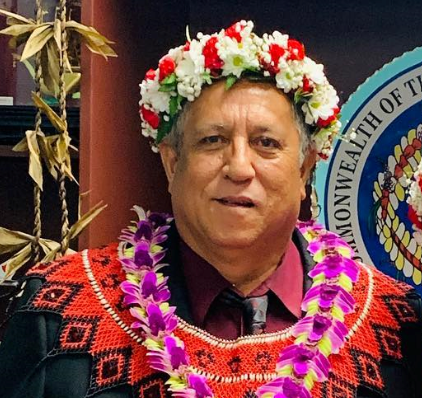
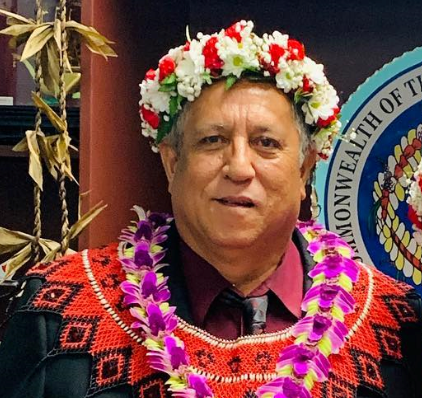
All eight members present voted to pass House Bill 22-31, House Substitute 1, authored by Rep. Joseph Leepan T. Guerrero.
Sen. Paul A. Manglona was excused.
Having already passed the House on Sept. 1, the bill now goes to Gov. Ralph DLG Torres.
Revoking homestead permits
The Senate also passed a bill that seeks to prohibit DPL from revoking a village or agricultural homestead permit after it is already approved and issued and after the applicant met all the requirements, including even if the applicant has no interest in the land at the time the permit is approved.
All eight senators present adopted the report of the Senate Committee on Resources, Economic Development and Programs that recommends passage of Senate Bill 22-22 in the form of Senate Substitute 1, then voted yes to the passage of the bill.
The bill, authored by Sen. Francisco Q. Cruz, now heads to the House of Representatives.
According to the committee report, upon approval, the current village homestead regulations require eligible applicants or homesteaders to comply with a three-year permit period upon issuance of the homestead permit.
The homesteader is required to use and improve the lot within 120 days, build a single-family residence within two years, commence to reside in an issued homestead no later than the end of the second year, and continually reside throughout the third year.
The committee said that major concerns were raised regarding the revocation of lots during the three-year permit period due to the homesteader’s acquisition of land through marriage, receipt of a deed by land by a parent or an estate; or purchase of affordable real property after the issuance of a homestead permit.
Citing the NMI Administrative Code, the committee said to be eligible, the applicant must not have an undivided interest in land.
The committee said that “interest in land” is determined at the time the application is reviewed and approved, and that “interest in land” has to be a “possessory interest in land” at the time DPL approved the permit.
Thus, it is evident that DPL determines whether the applicant has an existing interest in land at the time of approval rather than basing it on interest in land that may occur in the future, the committee said.
The committee added that revoking a permit during the three-year permit period because the applicant acquired an interest in land during the three-year permit is contrary to DPL’s regulation, is unfair and unjustified.
Furthermore, the committee found it necessary to prohibit the DPL from revoking permits after it is approved regardless whether the applicant acquires another piece of land after the time the permit is approved.
The Commonwealth Code mandates the village homestead program for all three senatorial districts, and also provides for the Rota Village Homestead Reservation Act and for the Tinian Agricultural and Village Homesteads.
The committee found it necessary to combine the village homestead provisions for Rota, Tinian, and Saipan, and to provide for a Saipan agricultural homestead like Rota and Tinian.
The committee, however, found that it is not necessary to touch the recently passed legislation that provides for the homestead program in the Northern Islands.
It does agree with DPL in that homesteaders who have already received the conveyance of the homestead and leased the property are no longer eligible for a new homestead lot in order to provide opportunities for other applicants awaiting issuance of a homestead lot.
DPL voiced several concerns to the bill, including the establishment of an agricultural homestead program for Saipan due to the dense population and challenges faced in identifying public lands available to satisfy the pending applicants under the village homestead program.
The committee, however, found that it is within DPL’s authority to determine the reasonable size of an agricultural lot, and that DPL does not have to issue one-hectare plots if there are inadequate available agricultural plots.
The committee found that the permit revocations are unfair to those who were approved and complied with all the homestead requirements but were found [ineligible] at a subsequent time that they had acquired land.
It is the intent of the legislation to prohibit such revocation, the committee added.
A section of the bill provides for retroactive application to undo the revocations made by DPL in order to be fair to those permittees.
Article 11, Section 5 of the CNMI Constitution mandates DPL to designate certain portions of public lands for homestead programs in the CNMI.
An applicant with no interest in land at the time of application may be issued one agricultural and one village homestead lot.
Joseph Leepan T. Guerrero
