





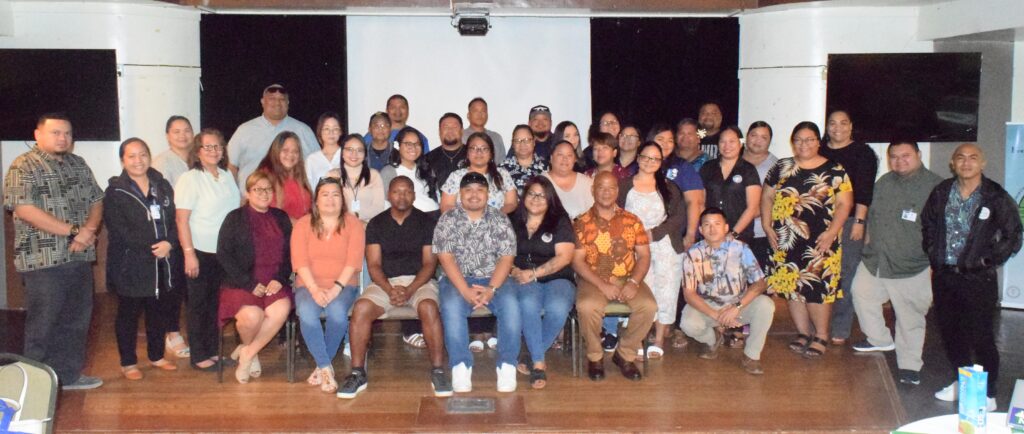
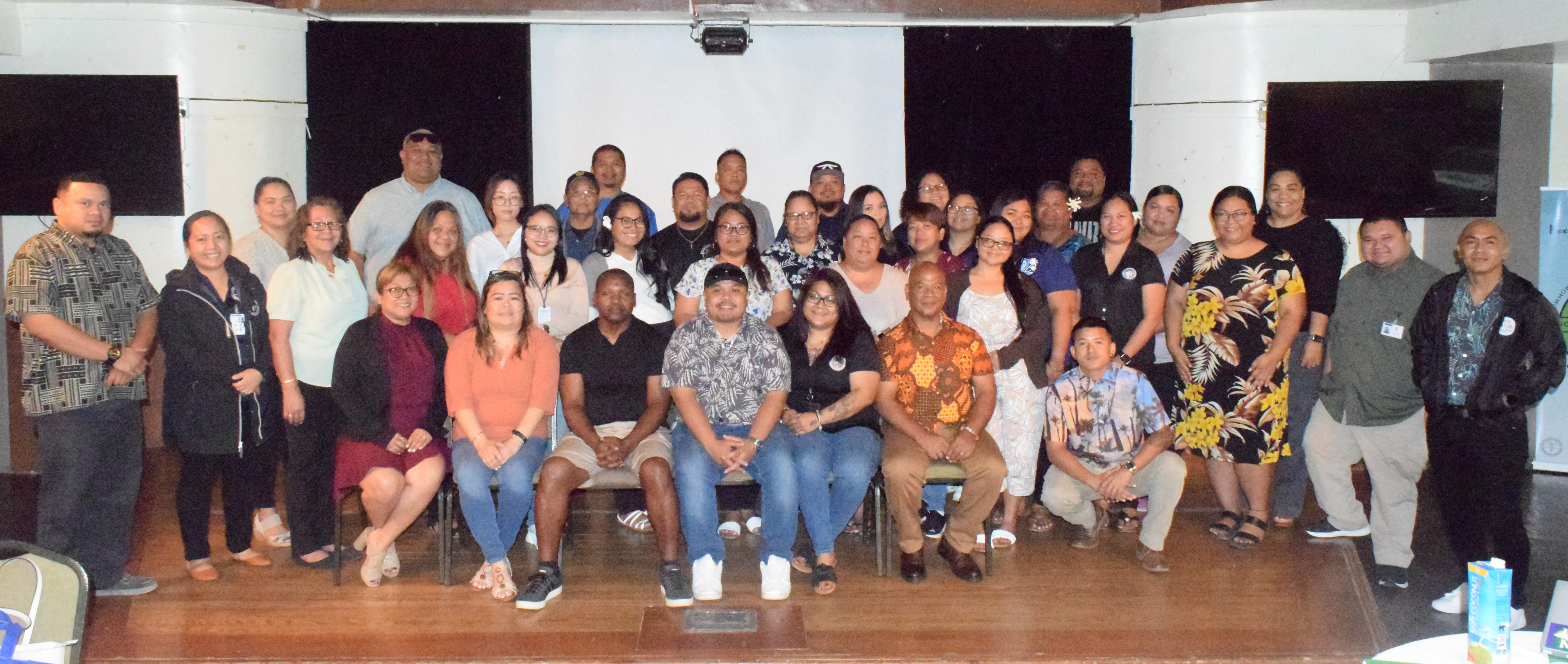
Behavioral Health Planning Council Chair Tai Doram, right seated, with other council officers and participants a workshop at the Pacific Islands Club’s Charley’s Cabaret on Friday.
ADVERSE childhood experiences or ACE are traumatic events that a child can carry with him/her as he/she grows to become an adult.
This was the topic of a workshop hosted by the Commonwealth Healthcare Corp.-Community Guidance Center’s Behavioral Health Planning Council at the Pacific Islands Club’s Charley’s Cabaret on Friday.
The participants included various government and community organizations such as the Public School System, the Department of Public Safety, the Division of Youth Services, Systems of Care, and the Northern Marianas Protection and Advocacy Systems Inc.
Behavioral Health Planning Council Chair Tai Doram said there have been individuals in the CNMI who have attended ACE conferences in the U.S. mainland, buy it was the first time they were holding a local workshop.
“We want to make sure that here in the CNMI, we are aware of the traumas and ACE and how these affect us and how they can become a generational trauma that affects the way we treat other people,” Doram said.
Adverse childhood experiences, he added, affect a person’s outlook, growth and productivity as well as the government.
During group discussions, the workshop participants on Friday tackled various subjects such as alcoholism and other detrimental conditions experienced by members of the island community.
Doram said a lot of these can also be attributed to colonialization and other traumatic experiences such as World War II which was followed by the introduction of beer and canned meat products
He said these traumas can genetically affect the health of people and their ability to cope and manage.
“So we want to make sure that we introduce the ACE concept and hopefully next year, we’ll be able to spread this to the entire Micronesian region,” he added.
During the workshop, the level of eachparticipant’s ACE was measured at a scale of 1 to 10.
Doram said normally, a score of 4 is not something to be worried about, but now it can indicate that one is in the danger zone.
“We are hoping to change the way we work with individuals with mental health and other disabilities so we can be more productive rather than trying to just change their behavior,” he said. “Let’s look deep inside and see what are the pains of individuals and hopefully we can change that pain to help them become better citizens and better individuals dealing with mental issues.”
