






By Jolene Toves
For Variety
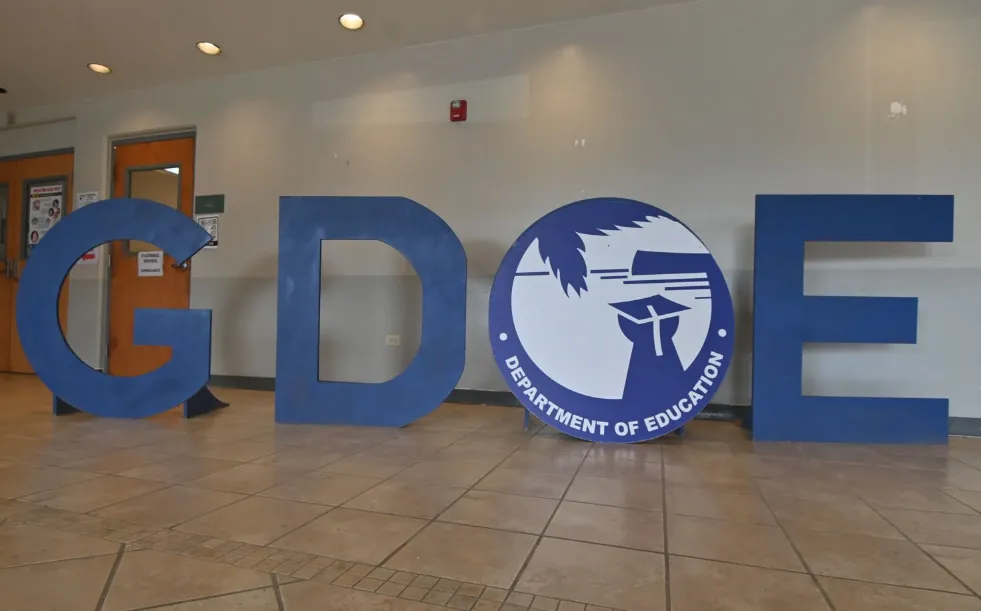
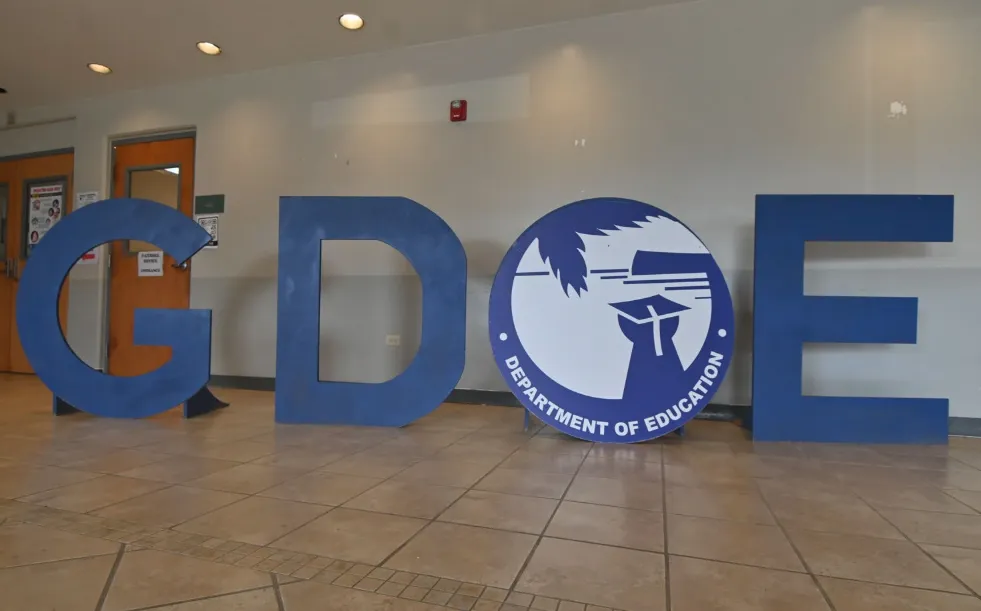
HAGÅTÑA (The Guam Daily Post) — An audit of the Guam Department of Education’s fiscal year 2024 finances revealed that despite receiving millions in federal funds, a $64.7 million surplus and a clean unmodified opinion, recurring breakdowns in basic financial controls expose Guam’s public education system to the risk of losing federal funding.
The audit released by the Office of Public Accountability on Jan. 2 emphasized that GDOE has remained a “high-risk” grantee with the U.S. Department of Education for the past 22 years.
“FY 2024 marked the 12th year that GDOE incurred local expenditures associated with addressing its high-risk grantee status by (USDOE). The high-risk designation and imposition of specific conditions only pertain to (USDOE) grants awarded to GDOE,” the audit states.
The third-party fiduciary was removed in July 2024. The milestone, according to Post files, was celebrated as the removal brought GDOE $3 million in savings. It meant that GDOE was complying with the conditions of the federal receiver in managing federal funds.
Without the third-party fiduciary oversight, USDOE updated conditions require a periodic audit of GDOE’s finances by an independent team. According to the OPA, this audit was done in fulfillment of that requirement.
Ernst and Young LLP, the auditors who reviewed GDOE’s fiscal 2024 finances, found systemic financial control failures including over-depreciation of leased buildings, unrecorded lease liabilities, and no formal process for “doubtful” receivables.
“Capital leased buildings for certain schools, warehouses, and offices were over-depreciated by $1.92 million,” the audit management letter states. “We recommend GDOE management to establish internal control policies and procedures requiring depreciation expense be recorded based on established capital asset policy.”
The audit identified that a lease contract under Governmental Accounting Standards Board Standard 87 was not reported. GASB 87 mandates state and local governments recognize most leases as financing activities, requiring lessees to record a right-to-use, or intangible, asset and a lease liability, while lessors record a lease receivable and deferred inflow of resources on their balance sheets, improving transparency by capitalizing previously off-balance-sheet operating leases.
“Unrecorded lease asset and lease liability as of Sept. 30, 2024, amounted to $1.48 million and $1.53 million, respectively,” the audit states in the management letter. “We recommend GDOE management evaluate and correctly assess lease contracts in accordance with GASB 87, leases.”
Evidence of GDOE’s inability to accurately track millions in assets, liabilities and receivables raises questions over fiscal stewardship, as the audit notes there is no provision of allowance for doubtful accounts on its federal receivables.
“We recommend GDOE to develop and implement a formal process in providing allowance for doubtful accounts on its federal receivables with consideration of the grant’s cost allowability principles, period of performance, and liquidation period,” the audit states.
It also indicated that federal funds meant for public school students were repeatedly misreported by hundreds of thousands of dollars.
The audit revealed misreporting under the Child Nutrition Program, noting “variances between the expenditures reported…and the underlying accounting records.” According to the audit, while GDOE reported $637,359 in unobligated federal funds, total expenditure detail showed $797,270, a variance of $159,911.
Auditors also found discrepancies with the Consolidated Grant funds. According to the audit, GDOE reported $2,007,302 in cash receipts and cash disbursements. However, total expenditure details showed $1,656,069.
“Auditors found that out of 317 items totaling $28.9 million in cash draws, 42 items amounting to $9 million were not paid to vendors on the same day or within 24 hours of fund receipt, resulting in questioned costs of $112,652,” the audit states.
This is important because as part of the conditions to remove GDOE’s high-risk designation by USDOE, the department must comply with specific conditions, one of which is to accept/reject goods or services and draw funds for vendor payment within 24 hours, Post files state.
According to the audit, “GDOE lacks the necessary internal controls and procedures to ensure timely disbursement of funds from (USDOE). Current standard operating procedures do not adequately address the roles and responsibilities of (third-party fiduciary agents), leading to management’s unawareness of this requirement.”
Auditors recommended, “Responsible personnel should establish and implement controls over compliance with applicable reporting requirements relative to accurate reporting of expenditures.”
The audit also showed that millions in school spending occurred under procurement processes that violated GDOE’s own rules, opening the door to favoritism, waste and corruption.
“According to GDOE’s procurement policy, vendors are given a minimum of three working days to respond to solicitation, and all vendors should be given the same number of days to submit quotes. However, for the following procurement, (the) solicitation period was less than the minimum of three days,” the audit states, referencing eight purchase orders totaling $645,497.
The audit also identified equipment and real property mismanagement of items, namely electronics, noting that equipment is unaccounted for, misclassified, or improperly disposed of.
“Assets (were)…tagged as ‘A’ or active in the property record. However, assets have been disposed (of). We noted the records appropriately reflect the disposition information. However, status field information is outdated,” the audit states. “Assets (were) … tagged as ‘GO’ or good condition in the property record. However, based on our physical sighting, assets are noted to be not working/obsolete. We noted the records do not appropriately reflect the condition of the property, and the ultimate disposition is not yet determined by GDOE.”
The audit also identified issues that could impact employee retirement benefits, specifically errors in reporting employee census data.
“For eight out of 25 samples tested, GDOE inaccurately reported the gender information of census data submitted to the Department of Administration, which was used by…actuaries for valuing…liability with a Sept. 30, 2022, measurement date,” the audit states.
Auditors suggested that GDOE establish review controls to ensure that accurate census data is submitted to DOA.
The audit’s findings are critical to GDOE, which has been working to remove the high-risk designation on its federal funds. Post files show that in July 2024, GDOE successfully completed a six-month probationary period set by the federal education department, which also provided updated conditions for compliance.
Legislative Committee on Education, Libraries, and Public Broadcasting Chair Sen. Vincent Borja said the audit raises “renewed” concerns and emphasized that “We cannot gamble with federal education funding. … If Guam loses federal dollars, it will not be policymakers who suffer; it will be students and teachers.”
Borja noted that the Legislature will pursue clear benchmarks and timelines, public compliance reporting, regular oversight hearings, and meaningful consequences if deficiencies are not corrected within the fiscal year.
