





By Nestor Licanto
For Variety
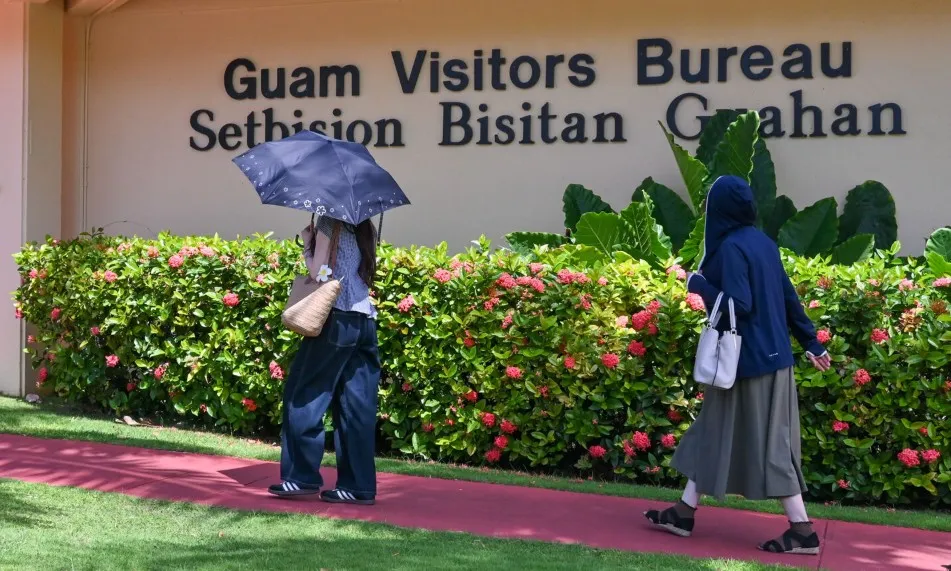
HAGÅTÑA (The Guam Daily Post) — The Guam Visitors Bureau board of directors has approved a $30.4 million budget request for fiscal year 2027, which is a $1.5 million increase over the current year’s $28.9 million budget.
But similar to fiscal year 2026, GVB may seek millions in additional funds for a key program to maintain airline seat capacity it sees as critical to continued recovery.
At Friday’s board meeting, Director Ho Eun noted that the war in Iran and the ensuing Middle East oil crisis have triggered shifts in the global airline industry that may affect Guam.
Ho chairs GVB’s Korea marketing committee and said carriers may redeploy planes to more profitable routes, “and Guam definitely is not one of them.”
“We may need to get some help from the Legislature about additional airline subsidy considering the current situation,” he added.
At a Guam International Airport Authority board meeting Thursday, GIAA Executive Manager John Quinata reported that Korean seat capacity next month is expected to plunge by 25%.
He reported that capacity from Busan will see the biggest drop, from 12,819 seats in March to 3,909 in April, a loss of 8,910 seats, or a 70% decrease month over month.
GVB had requested $11.5 million this fiscal year for an airline incentive program to preserve seat capacity amid a global aircraft shortage that prompted air carriers to more carefully scrutinize which markets to serve. The legislature ultimately approved a reduced $10 million appropriation.
Meanwhile, GVB Chief Financial Officer Rudd Gudmalin went over the specifics of the FY27 budget request.
He said the projected revenue from the Tourist Attraction Fund, which funds GVB, is $34.8 million, but with bond payments totaling $2.9 million, the available balance that can be appropriated will be $31.9 million.
GVB plans to spend $13.3 million on marketing, which is a $704,950 increase over this year; it has allocated $8.5 million for destination development, or $644,475 more than fiscal year 2026; and for administration and research, it expects to spend $8.6 million, a $138,834 rise from the current year.
The bulk of the marketing budget, or about 80%, will again be spent on the top two markets of Korea and Japan, with allocations of $5.6 million and $5.0 million, respectively. That represents nominal increases of about 2 to 3% over this year.
