

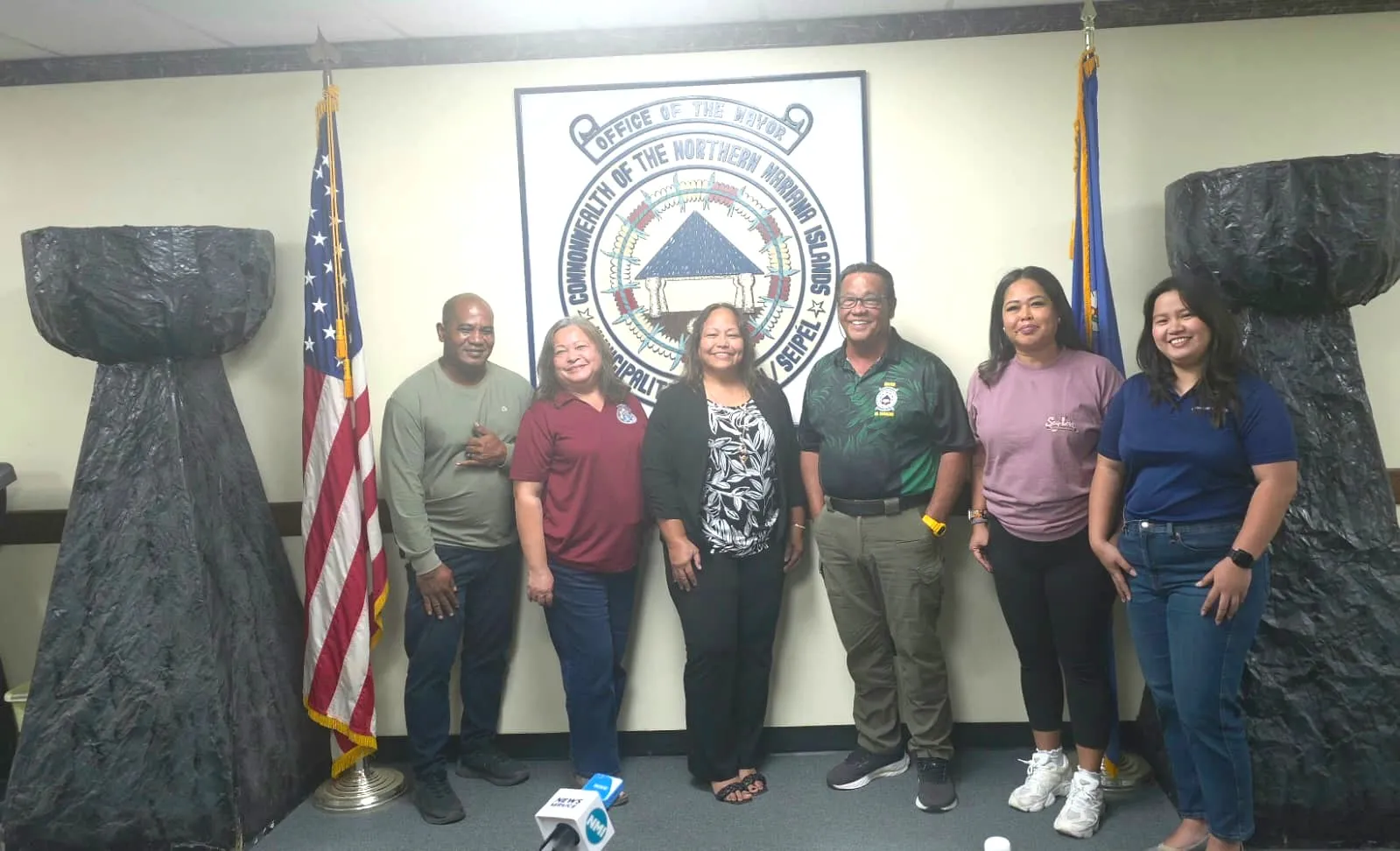



They have made clear that the worker rule will not grant improved immigration status. They have explained that there is no assurance that a CW application will be approved. They reminded employers that the hiring of U.S. workers remains the priority. They told nonresidents that they cannot remain here without legal status.
What USCIS should do now is to enlighten everyone about the H1B visa — and why it is extremely difficult to obtain in the CNMI. USCIS should also point out that H1B visa applications submitted by CNMI employers have been rejected because of the low wages here.
USCIS has finally laid to rest the most persistent myth regarding the federalization of local immigration — that it would result in green cards for nonresidents. The feds must now realize that a new myth is born, this time involving H1B visas. Many nonresident workers — especially those who are nurses, accountants, engineers, architects, journalists, etc. — have assumed that their employers can and should file H1B petitions for these employees. USCIS should mention that an employer seeking an H1B visa for his nonresident worker must assure the U.S. Department of Labor that he will provide the employee “with a fair salary and equal benefits, similar to those…provided to a U.S. citizen” (my italics). This refers to a U.S. citizen in the states or Guam who are getting much much more than their CNMI counterparts. It will also help if USCIS explain how a CNMI prevailing wage survey can address this issue.
Jobless nonresident parents of U.S. citizen children with disabilities are likewise wondering how they can be allowed to remain here so their kids can continue receiving federally funded services. What should be done? New legislation from the U.S. Congress? Amendments to the rule? An executive order from President Obama? Who should they approach?
It is, in any case, refreshing to hear government representatives reminding members of the public that a government agency, USCIS, can neither dispense special favors nor violate rules.
Which brings us to the root cause of all this supposed “confusion” over federal immigration rules: nonresidents are “confused” because their frame of reference is the CNMI’s permissive immigration law under which most foreigners could enter the commonwealth. Applications to hire guest workers were seldom denied, rules could be ignored, and the “right” strings could be pulled. Basically, local immigration law was what the governor said it was.
Most nonresidents thought that under federal immigration law, the only “change” would be that this time they would have to deal with the feds, whose “generosity” knew no bounds. What many are now realizing is that federal immigration law is strictly enforced and implemented, and that hiring guest workers is considered a last resort by the feds. It is a stringent, expensive and lengthy process whose outcome is not a “slam dunk.”
Some say that those who advocated for federalization are getting what they “deserve.” Well. I did not, and still do not, agree with their methods, which I consider ineffective, but the advocates of improved status certainly did not advocate for the muddle that nonresidents and their employers in the CNMI now find themselves.
No. We’re in this mess because of the administration’s “my way or the highway” stance regarding federalization. The administration never missed an opportunity to miss an opportunity. When it was already certain that the Bush White House and Democratic Congress would federalize local immigration, Interior approached the governor and asked for his input. Interior told the governor that although the feds knew he opposed federalization, what did he think should the federalization law do or not do once it was implemented? The governor’s response was to work with Guam and Hawaii officials, especially the pro-union Democrats, and ask for the deletion of the only provision that could have cushioned the impact of federalization in the CNMI: the granting of FAS-like status (not green cards or any “pathway” to U.S. citizenship) to qualified, long-term guest workers. And so it was scrapped. The governor then sued the feds over the federalization law which resulted in an embarrassing court loss and a two-year delay in the announcement of the final CW rule. He also granted all nonresidents an umbrella permit and now complains about unemployed nonresidents who have remained here precisely because he allowed them to do so.
Under the watch of this “pro-Covenant” and “pro-business” governor, in short, the CNMI lost its special privileges granted by the Covenant — and almost all of its businesses.
No gud dis gob.
Send feedback
