




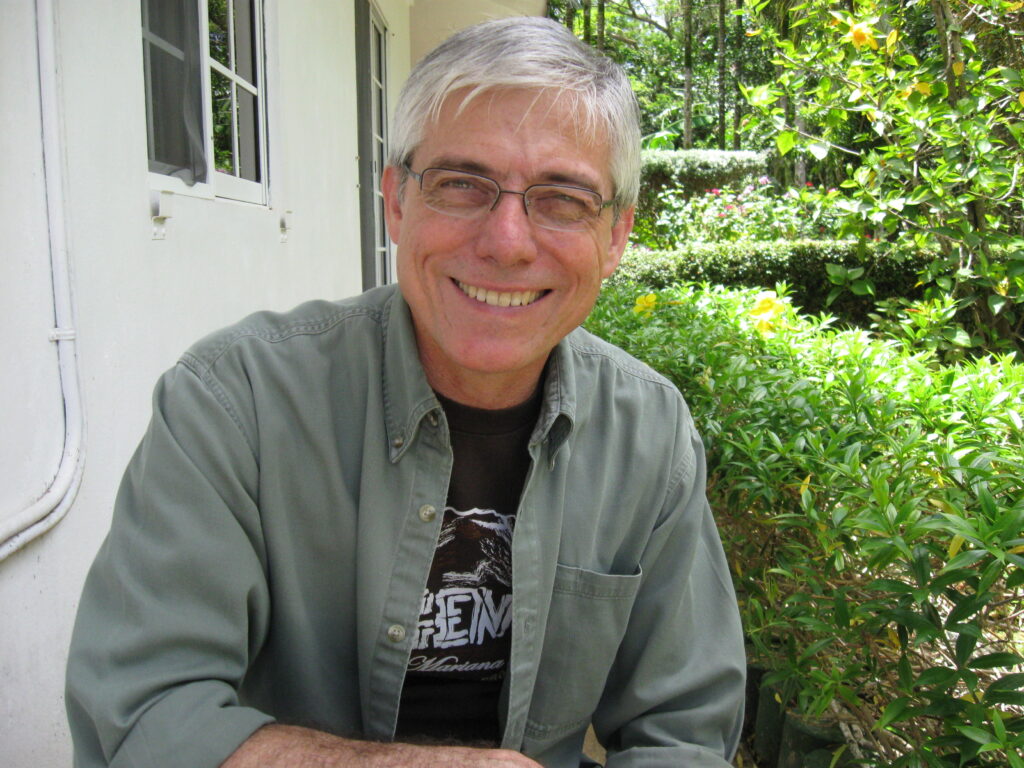
ATTORNEY Stephen Woodruff’s petition for reinstatement to practice law was granted by the federal court on Oct. 13, 2021.
Chief Judge Ramona V. Manglona of the District Court for the NMI allowed Woodruff to practice law in the federal court with conditions.
Judge Manglona said she will issue a written order.
In a supplemental status report to the federal court, Woodruff said that on Sept. 30, 2021, the CNMI Supreme Court granted his petition for reinstatement to practice.
According to the CNMI Supreme Court’s reinstatement order, Woodruff has been reinstated in Hawaii and continues to practice before the U.S. Court of Appeals for the Ninth Circuit.
The Supreme Court of Hawaii, for its part, issued an order reinstating Woodruff to practice on July 23, 2021 on the condition that he contact the Hawaii State Bar Association to ensure he is in compliance with all the requirements for attorneys practicing in the state.
The Ninth Circuit imposed an 18-month period of probation on Woodruff on Nov. 15, 2017, and granted his motion to be restored to unrestricted practice on Nov. 12, 2020 based on his compliance with the rules and orders applicable to his cases.
The CNMI Supreme Court order signed by Chief Justice Alexando C. Castro, Justice John A. Manglona and Justice Perry Inos noted that a hearing on the petition was held on July 26, 2021, at which the court questioned Woodruff on whether he engaged in the unauthorized practice of law during his disbarment.
Woodruff stated that he performed paralegal work for attorneys Joe Hill and Michael Evangelista and consulting work for attorney James Sirok but that he had no client contact.
He also acknowledged having assisted a pro se appellant with drafting court documents, but he maintained that the scope of this aid was restricted to nonlegal scrivener’s work.
“Jurisdictions vary in the extent to which they permit disbarred attorneys to engage in paralegal or similar work, but the CNMI has no established precedent prohibiting such work,” the CNMI justices said.
“On the record before us, we find no evidence that Woodruff engaged or attempted to engage in the unauthorized practice of law during his disbarment,” they added.
At the hearing, “Woodruff expressed appropriate understanding of his professional responsibility to communicate with clients and remain abreast of their matters. He averred that he will have a less busy practice than before his disbarment, that he will be attentive to rules and deadlines, and that he is able to meet the particular needs of clients in the Commonwealth requiring representation.”
The local high court “deems that Woodruff has met his burden to convey an understanding of his professional responsibility and of the wrongfulness and severity of the conduct which led to his disbarment. Woodruff has met his burden of showing that he did not engage in any unauthorized practice of law, and that he appreciates the wrongfulness and severity of his actions leading to his initial disbarment. Together with testimonials from prominent members of the Commonwealth legal community to his ability to maintain an effective practice, Woodruff has presented clear and convincing evidence that he is qualified to practice law.”
The CNMI Supreme Court imposed conditions on Woodruff’s reinstatement.
“For a period of one year following his reinstatement, Woodruff shall monthly submit under seal to the Supreme Court Clerk of Court’s Office a list of active clients and cases in the CNMI courts. If, under the Court’s supervision, he demonstrates the ability to maintain his practice free of the problems that led to his disbarment, he will be unconditionally reinstated one year from the date of entry of this order.”
In 2018, the local trial court imposed sanctions against Woodruff similar to the same order disbarring him to practice law in the district court for one year by designated federal Judge Frances M. Tydingco-Gatewood on March 28, 2017.
Stephen Woodruff
