






HAGÅTÑA (The Guam Daily Post) — “It’s been a mess; it’s going to be a mess for a while.”
That may be a mild description of the pandemic’s economic effects for some on Guam, including the thousands of businesses struggling through a decimated tourism industry and tens of thousands of workers who have lost their jobs or have had their hours reduced.
Joe Bradley, the Bank of Guam’s chief economist, made the remarks during a presentation to the Rotary Club of Northern Guam on Wednesday.
Although he was there to provide an economic forecast, he said there isn’t enough data to put one together. Rapidly changing circumstances mean that 2020 can’t be compared to 2019, nor can 2021 be compared to 2020. While this level of uncertainty hasn’t happened often, Bradley said the closest event he could compare the ongoing pandemic to was World War II, another period of prolonged, global economic upheaval.
“Economies are very, very, very complex machines. Usually, you can rely on large parts of the machine to do the same thing year after year. But not anymore,” he told Rotarians. “Now there are too many moving parts to even try to pretend to forecast what’s coming down the pike in Guam’s economic future.”
But one sure bet is that the cost of goods will continue to rise.
America is in the midst of a supply chain disruption, which Bradley told the Rotarians began before the pandemic with trade sanctions imposed on China. Decades of outsourcing labor and components resulted in a dive in U.S.-based manufacturing.
Companies stateside couldn’t build cars, because small parts like motors for windows couldn’t be imported from China, Bradley explained. Sectors like food and information technology are also experiencing similar supply chain disruptions, he said.
Prices of local goods affected by the global trade situation will only increase further when fuel oil is factored in, according to the economist, who said a barrel of West Texas crude oil is now trading at $75.10, up from $20 just last year.
“Because energy is such a large component of the cost of living in Guam — shipping, airfare, gasoline, fuel for the power plants … I think this is going to be one of our obstacles going forward,” Bradley said. “One of the elements of our local rate of inflation is going to be energy costs. And then energy, of course, goes into the production of pretty much everything we consume anyway from plastics to farm products.”
Tourism and military not ‘totally compatible’
Bradley touched on two major legs of the island’s economy: spending from tourists and the military.
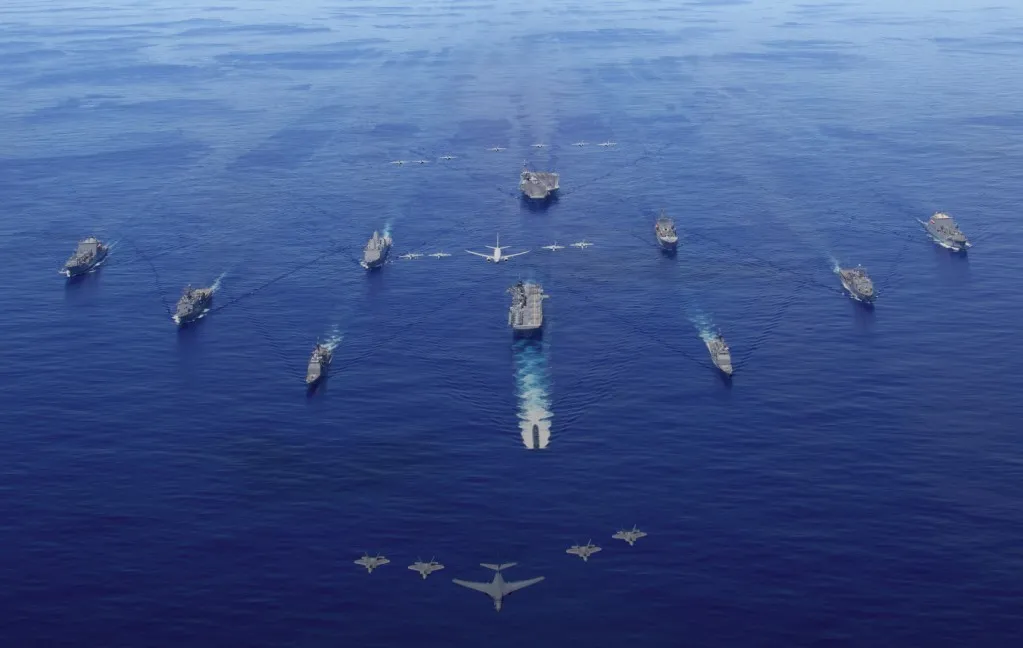
While federally funded construction projects were a major source of government revenue and jobs in 2020, Bradley said the military could have contributed more, had it allowed its visiting service members, particularly from the Navy, to enjoy liberty off-base sooner.
“Sailors have been out to sea for six months. When you let them out in town, they have lots and lots of money to spend, and it burns a hole in their pocket. But their shore leave has been out on a (Navy) pier until fairly recently. And even now, a lot of them seem reluctant to come out into the community because our infection rates have been rising in the last couple of weeks.”
Variants of Covid-19 and low vaccination rates in visitor source markets are beyond the island’s control, which also complicates trying to predict the rebound of the local tourism industry.
“It will return. I think it will look different when it returns and I don’t know how quickly we will gain traction in this. I think the Guam Visitors Bureau is doing a good job. I think the Guam Hotel and Restaurant Association is doing a good job. But they are up against a serious problem,” he said.
Bradley also said these two industries aren’t “totally compatible” with one another. Increased military presence during both Gulf Wars was met with softening visitor arrivals, according to the economist, which is one of the reasons Guam’s economy is volatile.
“I was asked to talk about Guam’s economic future,” he said. “I have typed out in all caps at the end of this page: ‘I DON’T KNOW.’”

Economist Joe Bradley was the featured speaker at the Rotary Club of Northern Guam at the Hilton Guam Resort & Spa on Wednesday, July 14.
