


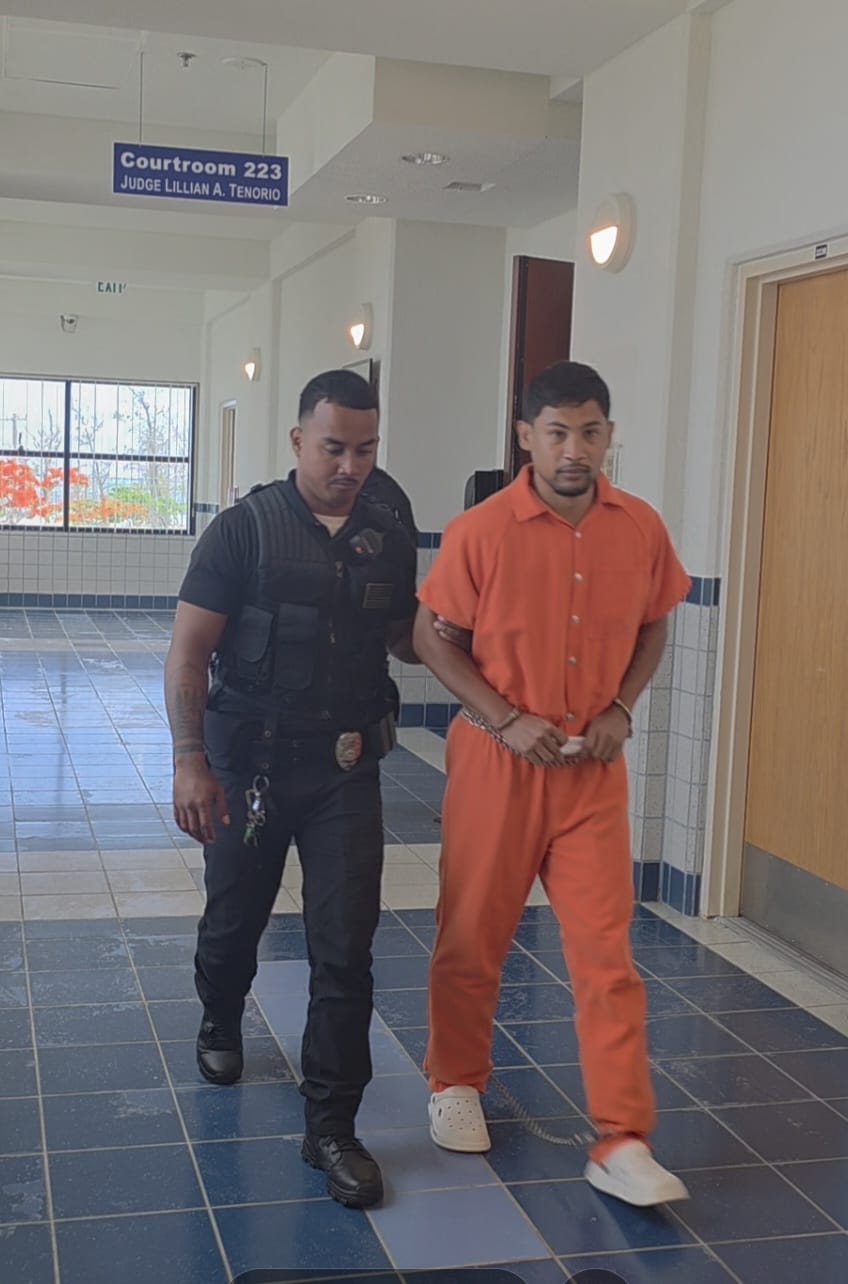


CHIEF Judge Ramona V. Manglona of the District Court for the NMI has denied the Department of Corrections’ motion to dismiss the lawsuit of Francisco Basa, an inmate, who has alleged deprivation and violation of his constitutional rights.
But the judge said Corrections can amend its motion and refile it.
Basa sued Corrections officials Jose Pangelinan and Georgia Cabrera in their official capacities as well as Alfred Celes of the U.S. Marshals Service.
On June 30, 2020, Basa self-surrendered to the CNMI Department of Corrections to begin serving his 11-month prison term for violating his supervised release by using methamphetamine.
On July 30, 2020, the Federal Bureau of Prisons transferred Basa to Guam Corrections from where he was transferred to Hawai’i where he is now incarcerated.
During his 30-day incarceration at CNMI Corrections, Basa began writing sick call requests to the department’s medical unit, petitioning to see a psychiatrist.
He said he had been “hearing voices again telling [him] to hurt himself, [and] hurt those people who [treated him] like [an] animal.”
According to Basa, he was receiving psychiatric medication in the form of Adderall and Seroquel.
He said he did not receive a response until he filed a grievance on July 18, 2020 and alleged that he was being deprived of access to adequate medical care.
Two days later, Basa said he was brought to Cabrera who “apologized for all the medical delays and assured [Basa] that everything was be[ing] tak[en] care [of].”
After Cabrera informed Basa that medical appointments and transportation for those appointments were being arranged, Basa said he decided not to pursue his complaint.
Two days after his meeting with Cabrera, Basa met with a CNMI Corrections mental health counselor. Basa expressed his desire to see a psychiatrist, but due to his erratic and angry behavior, the meeting with the mental health counselor lasted approximately 10 minutes only.
He said the mental health counselor told him that she would speak with Cabrera so Basa could be “stabilized,” adding that Corrections lacked access to adequate medical care.
On July 30, 2020 — 12 days after his meeting with Cabrera — Basa said he was transported to Guam by the U.S. Marshals Service. He said he was never brought to his medical appointment so he filed a complaint with the court.
Supporting documents
In denying CNMI Corrections’ motion to dismiss Basa’s lawsuit, Judge Manglona said the defendants did not provide any supporting affidavits or documents.
For instance, the judge said, “they state that Basa did in fact have an appointment scheduled with a psychiatrist, that Basa did not inform anyone he was hearing voices, and that Basa did not articulate any sense of urgency. Yet no affidavit, medical or administrative record, or any other documents were offered attesting to the veracity of their claims.”
The judge said the defendants’ counsel told the court that she had gone through Basa’s sick call requests and “found no evidence of a request to see a psychiatrist.”
But even these sick call requests were not submitted to the court either before or during the hearing, the judge said.
She added that the defendants should “present their evidence in support of their assertions and thereafter give the court the opportunity to exercise its discretion whether to consider such evidence.”
The judge also reminded Basa “to be mindful of his representations to the court.”
She said, “Pleadings submitted to the court must have evidentiary support and must not be presented for the purposes of harassment, delay, or increasing costs of litigation.”
The judge said Basa should ensure that his allegations “are not misrepresentations….”

