



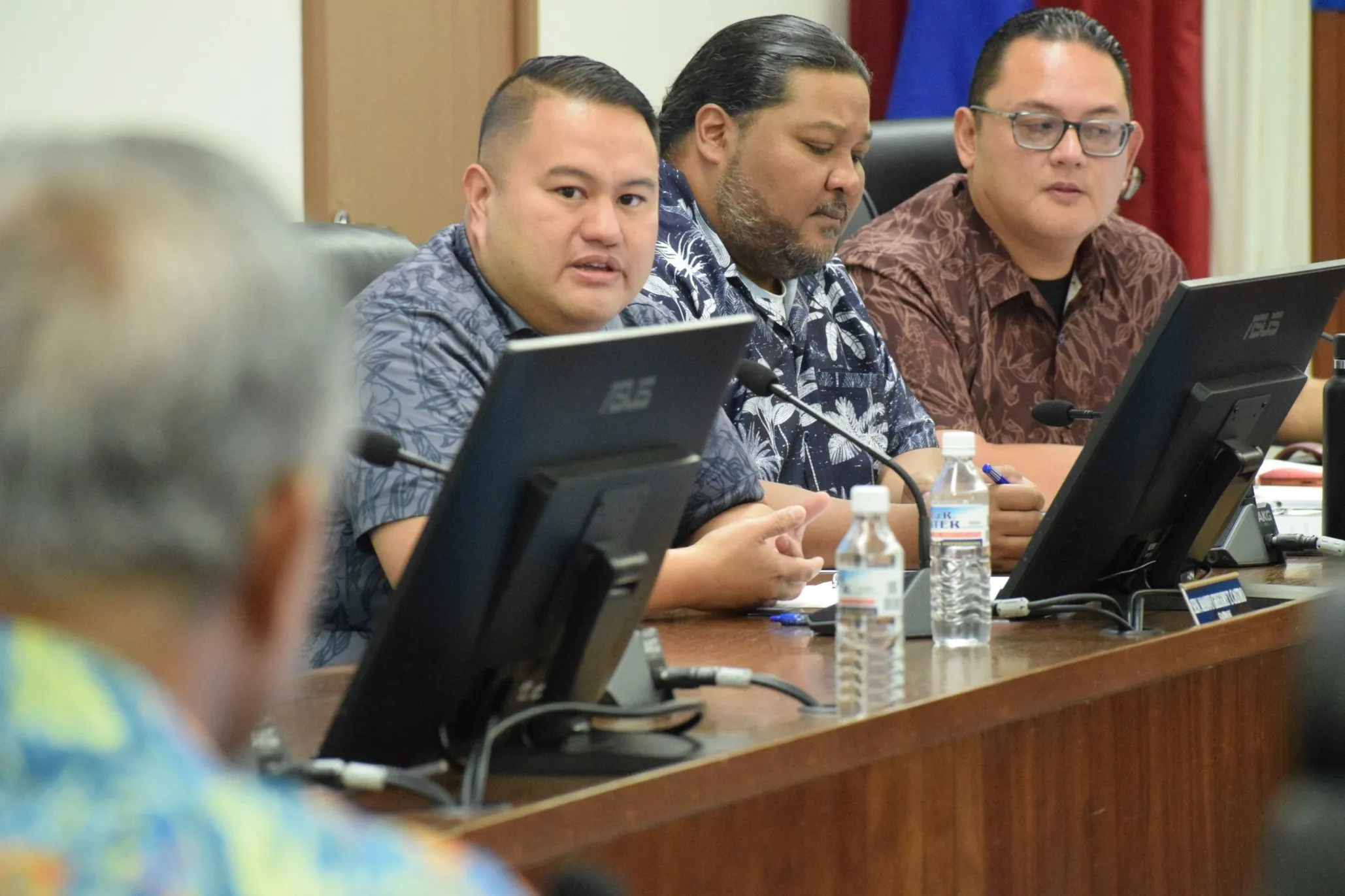


She said House Bill 17-33, which she introduced, will amend section 3 of Public Law 12-14, or the Fair Fishing Act of 2000, and is “very significant” to the residents of Rota.
“This piece of legislation is very significant as the use of chenchulu is a cultural way of fishing and it can be used as a basis in knowing/determining what types of fish are being caught, their quantity, the areas where the fish are caught and which data/survey can be shared among fishermen or conservationists,” said Santos, Ind.-Rota.
On Tuesday, the House of Representatives unanimously passed the bill, which now goes to the Senate.
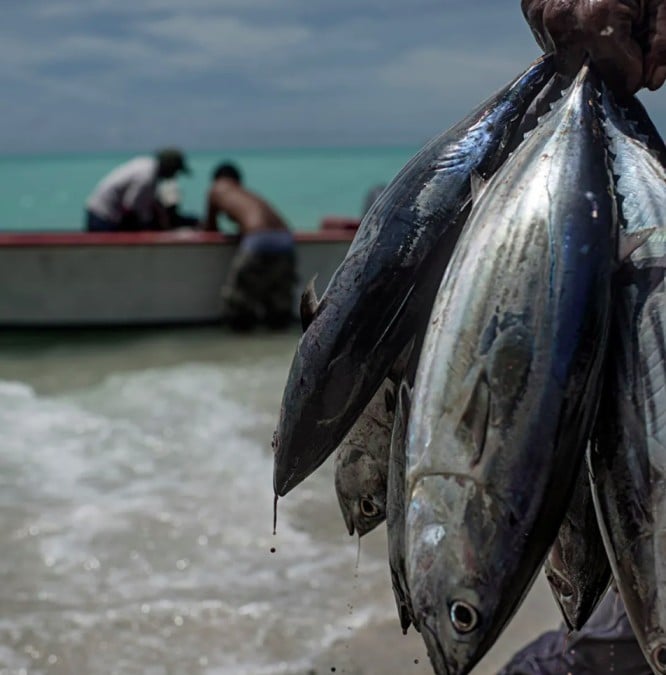
H.B. 17-33 proposes to legalize in the waters surrounding Rota the use of throw nets, or talaya, or other types of nets that are not smaller than two inches. These include drag nets or chenchulum lagua, surround nets or chenchulum umesugon, or trap nets or chenchulum managam.
However, these fishing methods can only be used for non-commercial purposes, the bill stated.
“Non-commercial purpose means fish caught for personal or immediate family use. Any sales or distribution beyond one’s immediate family shall be a violation of this law,” the bill stated.
In an e-mail interview, Santos said it’s easy to know if this prohibition will be violated.
“We don’t have commercial fishermen and on a small island with a small population, it is easy to monitor/discover if the fish caught are being used for sale or personal consumption,” she said.
Santos’ bill proposes a fine of $200 for first violation, $400 for second offense, and $1,000 for third violation.
All subsequent violations will be punished by up to $1,000 fine and up to 10 days in jail.
Santos said her bill will “further enhance socialization in the community and augment subsistence living as prices of goods on Rota are exorbitantly high.”
She hasn’t heard of any illegal fishing activity on Rota.
The Division of Fish and Wildlife, in furtherance of P.L. 12-14, recently proposed the promulgation of regulations banning the use of many forms of nets for fishing throughout the CNMI.
According to Santos’ bill, “The Legislature finds that such proposed regulations fail to take into account the economic and social realities of the CNMI and the need for non-commercial net-fishing as a source of food for the people of the CNMI that have traditionally relied on such fishing methods to support and sustain themselves and their families.”
