




Most people, even those who don’t know anything really about Guam, would agree that Guam is truly just a little spot, and that in the context of global events and human history, it doesn’t really matter that much. Even for those of us who live on Guam and love Guam, we might be inclined to agree that even if this little spot is great, it’s still just a little spot.
The book “Destiny’s Landfall” by Robert Rogers is something where we see this smallness of Guam and its people at play. This book is by far the most comprehensive history of Guam written and is an excellent resource for anyone looking for an informative overview of Guam’s past. But as the title alludes to, it is ultimately a book about Guam meeting its “destiny.” This destiny over the course of hundreds of pages becomes a quaint metaphor for talking about how history comes from the outside of Guam and not the inside.
One core message of this text is that the history of Guam does not belong to the Chamorro people. Sometimes this is stated as a critique of previous histories. Sometimes it is stated as a tragedy and something that is not necessarily right, but simply the way that events have mistreated this people. And finally sometimes it is made clear that this is the way it should be. Rogers creates early on in his book categories of people, those who adapt and persevere and those who are peaceful and beautiful, but tend to get conquered by others. Chamorros, as a peaceable people, become the victims of those who come from big countries, big empires, big militaries; they are the ones who cause shifts, transform things, and make history happen. They are a people and this is an island that history happens to, not a place from which it is made. So it is possible that after reading through such a comprehensive history of Guam, you might still conclude that, tragically, Guam is just a little spot, and really doesn’t matter that much.
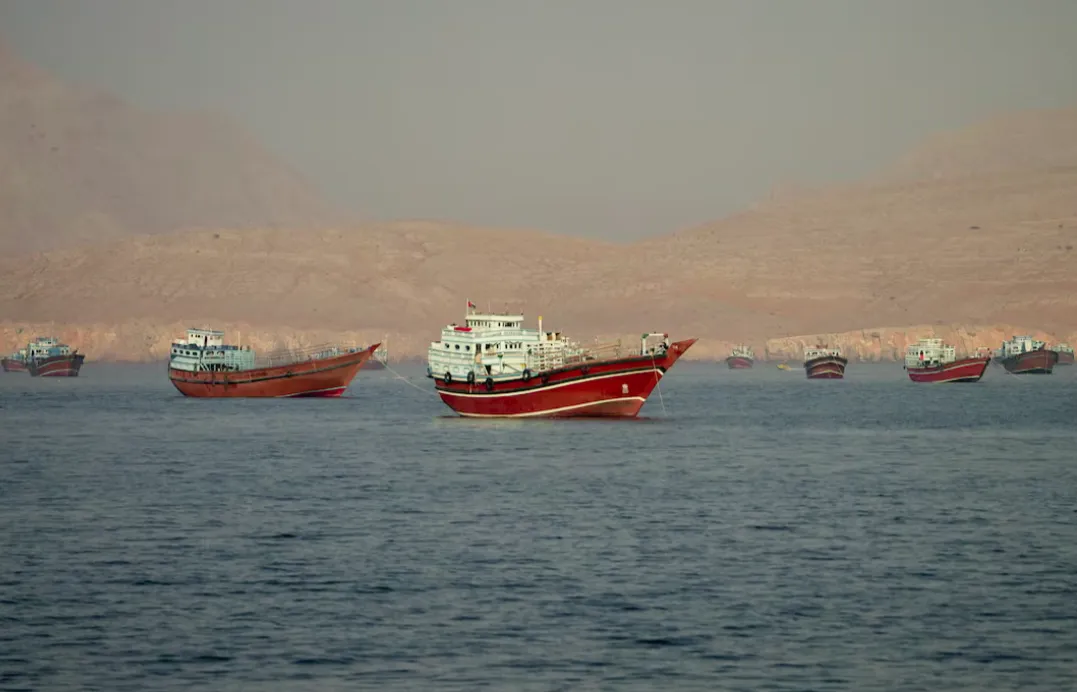
But this way of seeing Guam is not only unfortunate, it is also inaccurate. Take for instance the 2009 book “Island of Shame: The Secret History of the U.S. Military Base at Diego Garcia.” Author David Vine mentions Guam just a handful of times, when talking about the tragic history of how the peoples of the Chagos Islands or Diego Garcia have been displaced by British and American militaries to build the base there. In one such mention, he quotes a foremost expert on U.S. global security issues, who talks about Guam in a completely different way, as not just any tiny little spot, but one which can literally be used to take over the world! According to this expert:
“It’s the single most important military facility (Diego Garcia Island) we’ve got,” respected Washington-area military expert John Pike told me. Pike, who runs the website GlobalSecurity.org, explained. “It’s the base from which we control half of Africa and the southern side of Asia, the southern side of Eurasia.” It’s “the facility that at the end of the day gives us some say-so in the Persian Gulf region. If it didn’t exist, it would have to be invented.” The base is critical to controlling not just the oil-rich Gulf but the world, said Pike: “Even if the entire Eastern Hemisphere has drop-kicked us” from every other base on their territory, he explained, the military’s goal is to be able “to run the planet from Guam and Diego Garcia by 2015.”
What Pike’s comment reveals to us, is that the smallness of Guam is irrelevant in terms of its importance, and this should be taken seriously in considering the future as Pike is, but also in terms of the past. In other words, we shouldn’t be blinded by the smallness of Guam when considering its place in history. If we are, then we don’t only miss the place that Guam and other small places have in world history, but we weaken Guam in terms of what it as a place means, for its own future. If we do accept that smallness and unimportance to Guam, then we limit ourselves to only understanding or considering and living the smallness of this place, and we leave open its strength, its strategic importance, and its overall meaning to be determined and plundered by others. One of the problems with the smallness doctrine is that it does not strip Guam of any meaning or value, but creates the impression that only a select few (those big avatars of history) can make use of that smallness. Only a few nations or empires have what it takes to truly unlock the potential of these minute sites, and this is something which even the people who live there cannot understand or accomplish.
MICHAEL LUJAN BEVACQUA
Mangilao, Guam
