

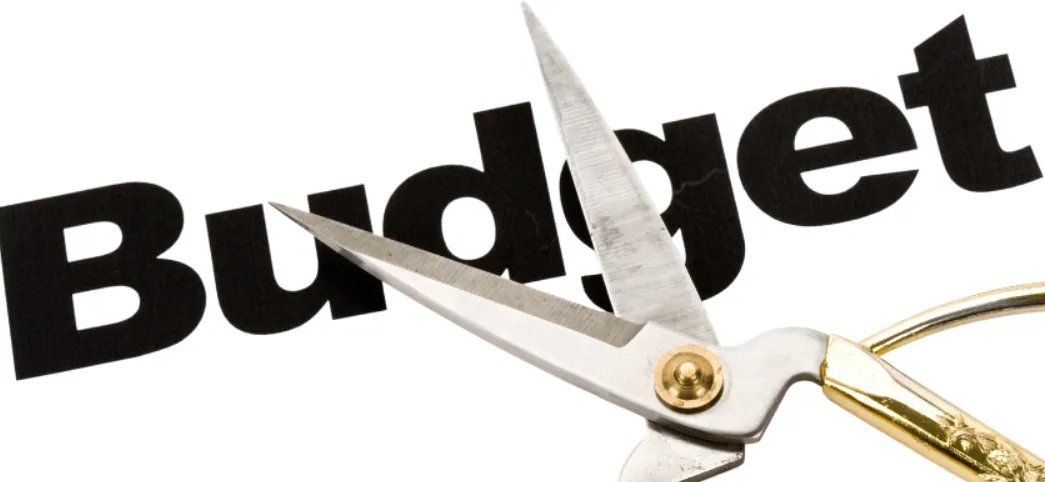


“It is very clear in the presentation that there is no other option than to cut benefits — restructure the benefits,” Fund Administrator Richard Villagomez told Vice Speaker Felicidad Ogumoro, Covenant-Saipan, on a fallback plan in the event of the Fund’s asset depletion.
Based on Ralbovsky’s presentation, she provided a projected cashflow trajectory that approximates the Fund’s lifespan to be three years.
She said given the court ordered $100 million reserve, and with the market assets at $305 million, the Fund will have $180 million left by the end of the fiscal year 2012, dwindling further to $135 million in FY 2013 and plummeting to $85 million by the end of FY 2014.
Villagomez said absent any new, substantial cash to fund the system, the obvious solution is accepting what the reality is.
He added that with the economic situation not getting any better, it wipes out the possibility to get substantial cash to fund the system.
“Liabilities are way out of hand,” Villagomez said
Ralbovsky told the lawmakers that the Fund cannot invest its way out of trouble and it has lost its window in winning back contributions owed to it by the government.
“They can never meet their obligations by investing,” she said.
She said the Fund’s market returns have to be over 25 percent per year for the next 10 years and she sees zero probability for this to happen.
She also said it is close to zero probability for the CNMI government to cough up the $58 million in yearly employer contributions for the next 10 years.
“As it stands now, it doesn’t have the resources to make that contribution. It has promised too much liabilities, too much benefits than it can afford,” she said.
Ralbovsky said, “Right now, the Fund has to look at the liability side to save the Fund…You simply cannot afford that liability. People have to face the reality…Look into the future…there is one thing you can do now — to renegotiate your liabilities,” she said.
For Ralbovsky, this may be a painful thing to do.
She told lawmakers the scenarios offered by actuarial consultant Buck Consultants to restructure the liabilities. In the scenarios presented by Dylan Porter on May 12 at the Legislature, everybody will take benefits cut by 10, 25, and 50 percent across the board.
“If sharing the pain will cause to save the Fund, it will save the livelihood of the CNMI,” she said.
She said if the Fund is out of money, the government (the pension plan sponsor) has to have a disorderly default on its liabilities. “It is going to take away the livelihood of many people…it is going to be devastating to the island.”
Fund board counsel Viola Alepuyo explained that of the projected $68 million in pension payouts, over $50 million is spent in the economy.
Ralbovsky said majority of those receiving benefits are less than 60, with some in the 40s and 50s.
She said if only they could hold off on receiving their benefits, the Fund will have a decent chance to invest in a decent program and it will buy time for the Legislature to find resources to fund the system.
“We will gain a lot of investment horizon and have the Legislature find a better way to fund the program,” she said.
Ralbovsky further laid down the cards on the table for the Fund. She said there are two possible options for the government: raise taxes or sell assets.
She hinted that the government can look into the possibility of exploring hidden assets it could tap into.
Senate President Paul A. Manglona, Ind.-Rota, asked whether the CNMI government could float a bond to raise $600 million to pay the accrued unfunded liability of $591 million and save the Fund.
Ralbovsky said it is not the solution.
“There is no way the investment program can earn more than the borrowing costs — which means you cannot float a bond,” she said.
Manglona asked if there were cases in the U.S. where pension benefits were cut. Ralbovsky said there was a city pension system that filed for bankruptcy.
She stated in an interview with Variety that the U.S. state pension funds have the backing of the state, the pension plan sponsor.
“The states usually put the pension contribution as no. 1 or no. 2 priority in their budget… It is super priority,” she said.
In the case of the Retirement Fund, it doesn’t have the backing of the CNMI government, said Ralbovsky.
The CNMI government has been remiss in remitting its employer contributions to the Fund which led to the court judgment in 2009 that awarded the Fund $231 million.
For Ralbovsky, the biggest asset to a pension program is not the financial asset but the backing of the pension plan sponsor.
Rep. Joseph M. Palacios, R-Saipan, during the presentation yesterday, questioned the change in the projection on the life of the Fund from the May 12 presentation by Buck Consultant’s Porter when the projection of the Fund’s life would be five years and not three years.
Alepuyo explained that several things had happened since then when Fund’s total assets was hovering a little over $300 million.
She said it is now sitting at $271 million.
Alepuyo hinted at national and global events resulting in the volatility of the markets that led to Wilshire advising the Fund to adopt a glide path approach — taking the investments from an aggressive stance to a more conservative approach.
Less risky investments yield less returns.
“We earn less, we lose less,” she said in the event the stock market takes a dive.
Ralbovsky, in an interview with this reporter Monday night, said when the investment horizon is expected to be shorter, adoption of a less risky asset allocation is in the offing.
Asked what type of assets to invest in, Ralbovsky said, “More fixed income than stocks.”
“It’s a slippery slope. The shorter investment horizon you have, the less you can earn,” was what Ralbovsky told lawmakers yesterday.
Hope is not a strategy, she said and if nothing gets done, the Fund will be out of money in three to four years.
If the Fund ran out of money, Ralbovsky said, “the liability is not the Fund’s liability; it is the government’s liability.”
Once the Fund is gone, she said, the government still has the liability because it is the plan sponsor.
“Right now, we have three years to renegotiate a better deal: orderly restructuring or disorderly restructuring,” Ralbovsky said.
Addressing the lawmakers, she said, “Either you solve the problem today or face the much worse problem three years down the road.”
With the choice to save the Fund or let it go, Rep. Ramon Basa said, “At all cost we should try to save this (the Fund).”
