





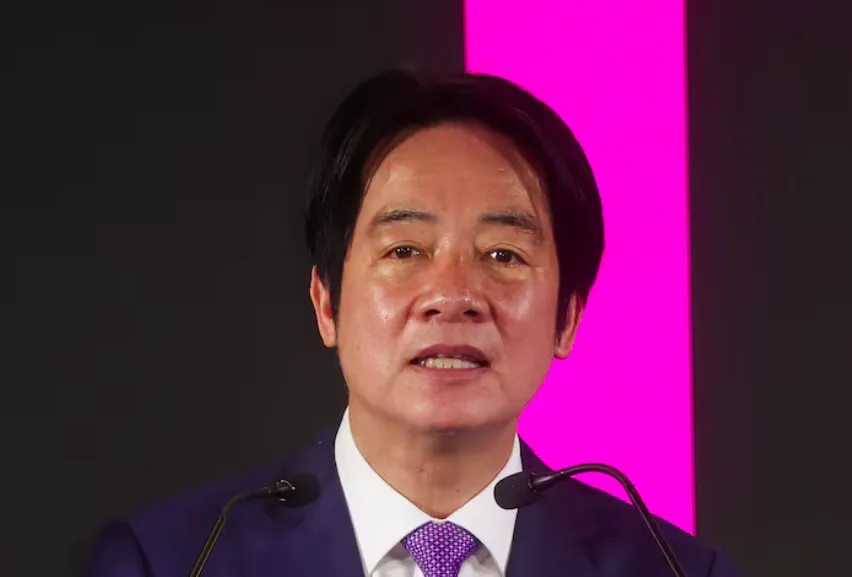
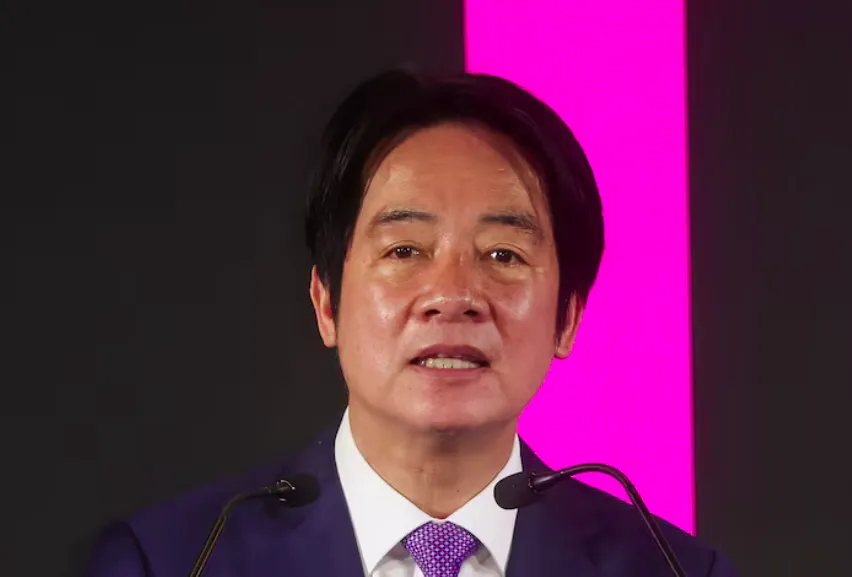
TAIPEI (Reuters) — Taiwan safeguarding its own security and refusing rule by China’s Communist Party should not be seen as a provocation, President Lai Ching-te said on Thursday, adding he hoped a new U.S. arms sale package can be approved soon.
Democratically governed Taiwan is viewed by China as its own territory and Beijing has stepped up military and diplomatic pressure against the island.
Speaking to the Taiwan Foreign Correspondents’ Club in Taipei, Lai reiterated his desire for talks based on “parity and respect” with China, but said Taiwan had a right to protect its interests and that only the Taiwanese people can decide their future.
“Taiwan’s safeguarding of its own national security and maintaining its democratic and free way of life, its refusal to accept unification, and its refusal to accept rule by the Chinese Communist Party should not be seen as a provocation against China,” he added.
China calls Lai a separatist and has rebuffed his multiple offers of dialogue.
China’s military is extending into the Western Pacific, and its various forms of coercion continue to intensify, Lai said.
“It is clear that China is the main driving force changing the status quo in the Taiwan Strait and affecting regional peace and stability.”
Neither China’s Taiwan Affairs Office nor Foreign Ministry immediately responded to requests for comment.
Arms sales
Taiwan has also been unnerved by comments last month from U.S. President Donald Trump after he met China’s Xi Jinping in Beijing that he was still considering whether to approve new arms sales for Taiwan, saying they were “a very good negotiating chip” with China.
Lai said the U.S. security commitment to Taiwan has not changed.
“The key is that Taiwan must not change course in strengthening its own defense capabilities, nor can it slow its pace,” he said.
“We will continue to maintain close communication with the U.S. government, and we also hope the arms purchases can be approved as soon as possible.”
Lai has championed increased defense spending, in line with calls from Trump for allies to spend more on their military.
South Korea will move its Civilian Control Line closer to the border with North Korea to give local residents more freedom of access.
However, last month Taiwan’s opposition dominated parliament only approved two-thirds of the $40 billion supplementary defense budget Lai had proposed, cutting the part that had been meant for drones and domestically produced weapons.
On Thursday, Taiwan’s defense ministry said it was proposing another special defense package worth T$210 billion ($6.66 billion) for surveillance, coastal attack and small unmanned surface drones.
Lai said China should renounce the use of force, and that Taiwan’s weapons purchases send an important message to the world that it is willing to defend itself.
Taiwan “is willing to safeguard its own national security, and is also willing to share collective defense responsibilities with the international community, in order to create a deterrent effect and achieve regional peace and stability.”
