








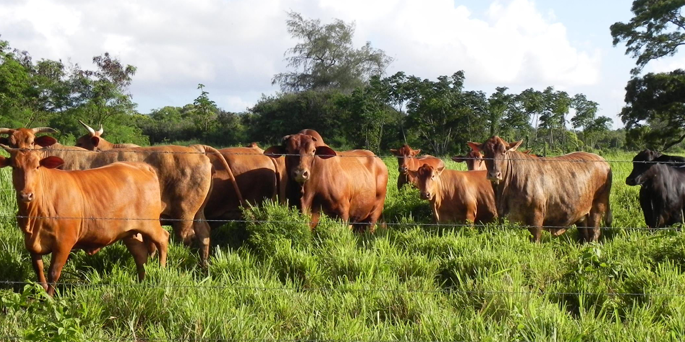

THE Department of Land and Natural Resources’ Animal Health Division is continuing its comprehensive rancher survey across the CNMI, with data collection expected to conclude by September or October. This survey aims to gather vital information on the number and types of animals raised throughout the CNMI to improve support and resources for local ranchers and the broader community.
DLNR invites all ranchers raising livestock and poultry — whether cattle, goats, chickens, rabbits, or other species — to participate in this survey. The data collected will guide future efforts to enhance livestock health, ensure that needed supplies are accessible, and support sustainable agricultural practices and food security within the CNMI.
“Right now, we depend heavily on imported meats,” said Lauren Cabrera of DLNR Animal Health. “This survey will help us better understand the needs of our ranchers so we can support them in their work and ensure sustainable food sources for our community.”
Ranchers have several options to complete the survey:
1) Request a Visit – Saipan residents can request a visit from DLNR’s Animal Health Team to assist in completing the survey.
2) Phone – Call DLNR Animal Health at (670) 256-3319 to complete the survey by phone.
3) Online – Visit https://dlnr.cnmi.gov/animal-rancher.html to complete the survey online.
Tick surveillance
In addition, the DLNR Animal Health team is conducting tick surveillance by collecting ticks from cattle for testing by an off-island entomologist. “Our hope is to establish a baseline understanding of the types and prevalence of diseases carried by ticks in the CNMI. We recently completed the collection of over 500 ticks from dogs for testing, and are now focused on collecting ticks from cattle,” Cabrera said.
Ranchers can request a visit from the Animal Health staff to assist with tick collection, or they can bring ticks to the Division of Agriculture office in Kagman. Individual test results per cow will not be provided; however, the findings will be made available publicly in a report. This data will be used to help reduce tick-borne illnesses in cattle.
“Anaplasmosis is one tick-borne disease that we know is highly prevalent in our community,” Cabrera explained. “This disease is significant to ranchers because it can cause weight loss in cattle, abortions, and even death in livestock.”
The survey and tick surveillance project are critical steps in ensuring the health of livestock and the sustainability of food sources in the CNMI. If you have any questions, call DLNR Animal Health at (670) 256-3319 or email [email protected]/.
