







THE CNMI’s Bar admission requirements are comparatively lenient, according to Associate Justice John A. Manglona.
Manglona said Hawaii and Guam have more stringent admission requirements than those that the CNMI Supreme Court proposed and which the House of Representatives recently rejected.
Hawaii and Guam require even experienced attorneys to re-take the multi-state bar examination in addition to the full number of essays, said Manglona in a letter to Senate President Paul A. Manglona, R-Rota, and House Speaker Heinz S. Hofschneider, R-Saipan.
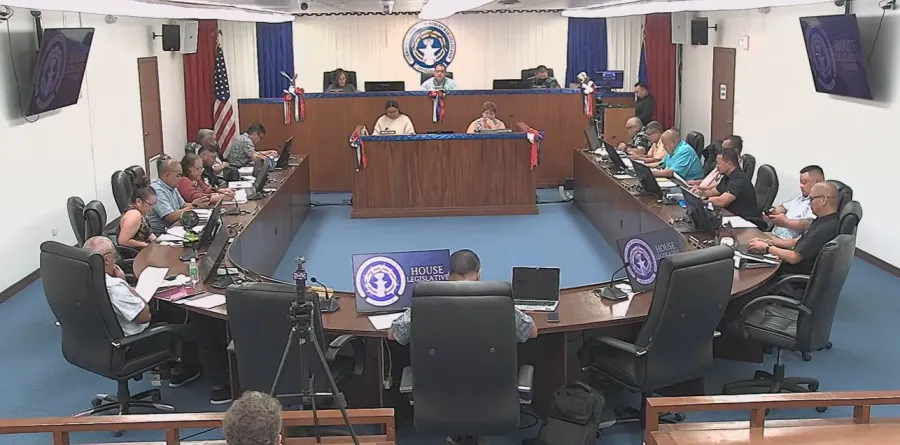
Manglona sent the letter to the Legislature a day before the House unanimously rejected the Supreme Court’s proposed changes in the Rules of Admission.
The associate justice drafted the letter in response to Attorney General Robert T. Torres’s concerns regarding the high court’s proposed changes.
Under the proposed changes, attorney applicants would be required to take additional testing before they are allowed to practice law in the commonwealth.
Torres opposed the proposed amendment. He said an attorney licensed in another U.S. jurisdiction with five years or more legal experience and in good standing during that period and has acquired competency in local laws and procedures is already “sufficiently qualified” to practice law in the CNMI as a government attorney.
But Manglona said even with the proposed changes, the CNMI’s requirements “are hardly burdensome to the extent that any employer will be unable to recruit experienced counsel.”
“Perhaps the attorney general faces specific hurdles in recruiting experienced attorneys for his office, but we ask the AG to note that his is not the only office hiring lawyers, and that our bar admissions requirements must suit the entire legal community,” Manglona said in the letter.
The high court, Manglona said, proposed an amendment to the CNMI Rules of Admission that would require attorney-applicants to take the multi-state essay examination, a standardized essay examination administered by the National Conference of Bar Examiners.
An attorney-applicant is someone seeking admission to the CNMI Bar who is also licensed to practice law in another U.S. jurisdiction, and has actively practiced law for at least five of the last 12 years.
Manglona said previously, the CNMI adopted Oregon’s essay portion of the bar examination for testing bar applicants.
Under this system, Oregon officials devised and evaluated the essay portion of the bar examination and “so, essentially, Oregon officials were testing CNMI Bar applicants,” Manglona said.
For the multi-state essay examination, Manglona said, CNMI examiners are trained by the National Conference of Bar Examiners.
“This has the advantages of making the test more uniform, and keeping the grading process under local supervision, rather than under the control and supervision of another state’s bar examiners,” he said.
Further, Manglona said, while attorney-applicants were previously given up to six essay questions to answer, under their proposed changes, the applicants will answer up to 12 essay questions.
“We have made this change because of our determination that the six questions are not enough to guarantee that attorneys new to this jurisdiction will be sufficiently familiar with appellate procedure and other fundamental aspects of lawyering,” he said.
Manglona said they feel that testing these subjects with such uniform, standardized test “is the best way to ensure that all lawyers licensed in the CNMI will have adequate facility with the law to maintain the high degree of professional ability we expect.”
