








HAGÅTÑA (The Guam Daily Post) — So far, there are 20 potential sites for missile defense facilities on Guam but the intent is to reduce the system to the smallest number of sites possible, according to Rear Adm. Benjamin Nicholson, the outgoing commander for Joint Region Marianas.
Nicholson and Rear Adm. Gregory Huffman, the incoming Joint Region Marianas commander, spoke with media representatives Wednesday. They discussed a number of topics, including what Guam might anticipate from missile defense plans.
“In many cases, we’re looking at more areas than we might necessarily need. I think when we first brought up the missile defense sites … we talked about, ideally, we’d like to have everything in one location. But because of the way the island’s positioned, we can’t do that. So we had to break it up into multiple locations,” Nicholson said.
Environmental studies will guide where facilities are best suited, he added.
From the potential sites identified for the missile defense system, only one site, in Malesso’, isn’t already part of a military installation.
Project information on the missile defense system states that in the event Department of Defense properties aren’t available for system components, or where buffer zones encroach on nonfederal properties, it may be necessary to acquire property.
Nicholson said acquisitions outside of DOD installations would be “very judicious.”
“Ideally, you’ll find some land that can be leased and paid for, whether that’s private-owned land or whether that’s government-owned land. But right now that’s all in the exploratory phase of how that would go,” Nicholson said.
If nonfederal lands are needed and identified, the first thing the military would do is make an offer to the landowner. If the owner rejects the offer, the military would find another piece of suitable property, Nicholson said.
“The intent is to put everything that we can on the DOD installations, and if the system can work wholly like that, great. If it can’t and we have to have a small little piece somewhere else to make sure we can have the complete coverage, that’s what we’ll look for,” Nicholson said. “And if we have folks that don’t want to sell or lease the land, then we’ll look for other places that could meet that same requirement.”
Eagles Field area
There was major debate over the Eagles Field area of Mangilao, where Gov. Lou Leon Guerrero wanted to house a medical complex, including a new hospital for Guam. Several controversies arose over the identification of that federal property, such as land return issues stemming from land takings by the federal government, and criticism over the development of a lease for the property.
The site was ultimately taken off the table for the medical complex project and will be used for whatever purpose the military deems fit, such as to build housing in connection with missile defense needs.
Nicholson was the target of criticism from some local lawmakers at the height of the controversy after he established deadlines for the government of Guam to sign the lease.
At the time, the Legislature was debating whether to override the governor’s veto of a measure requiring legislative review of long-term leases, including those with the federal government. The attorney general also cited legal concerns with the lease.
Lawmakers managed an override after an initial failed attempt. The governor decided not to pursue the lease.
Nicholson said Wednesday his only concern was that “so much” incorrect information had been put out and he believed that “muddied the waters” for the public.
“I am agnostic as where the hospital goes, whether it goes on DOD land or it goes somewhere else. But, at the end of the day, I do believe Guam needs a new hospital, given the status the current Guam Memorial Hospital is in,” Nicholson said. “Where that gets placed, that really needs to be the government of Guam and the people of Guam deciding.”
When asked if he personally felt the Eagles Field lease was a missed opportunity, Nicholson said he felt what had been missed was the opportunity for dialogue.
“It would have been great to have people actually talk about what was going on. Instead, people were just making assumptions about things. And the folks that had some of the answers, myself (included), weren’t asked. And it was really unfortunate,” Nicholson said.
“(It’s) not my decision, as far as, is it good or is it bad. That’s for the people of Guam, that’s for the governor of Guam, that’s for the Legislature to figure out. But when you don’t have all the information, that’s kind of a tough deal, when you’re really not fully informed on what’s going on,” he said.
When asked if he would be open to using federal property for a new hospital or medical campus, Huffman said the military would assess any formal request from GovGuam as the process of siting defense facilities and potential locations proceeds.

Rear Adm. Benjamin Nicholson, Joint Region Marianas commander, answers questions during a meet-and-greet for incoming commander, Rear Adm. Gregory Huffman, at the JRM headquarters in Asan on June 14, 2023.
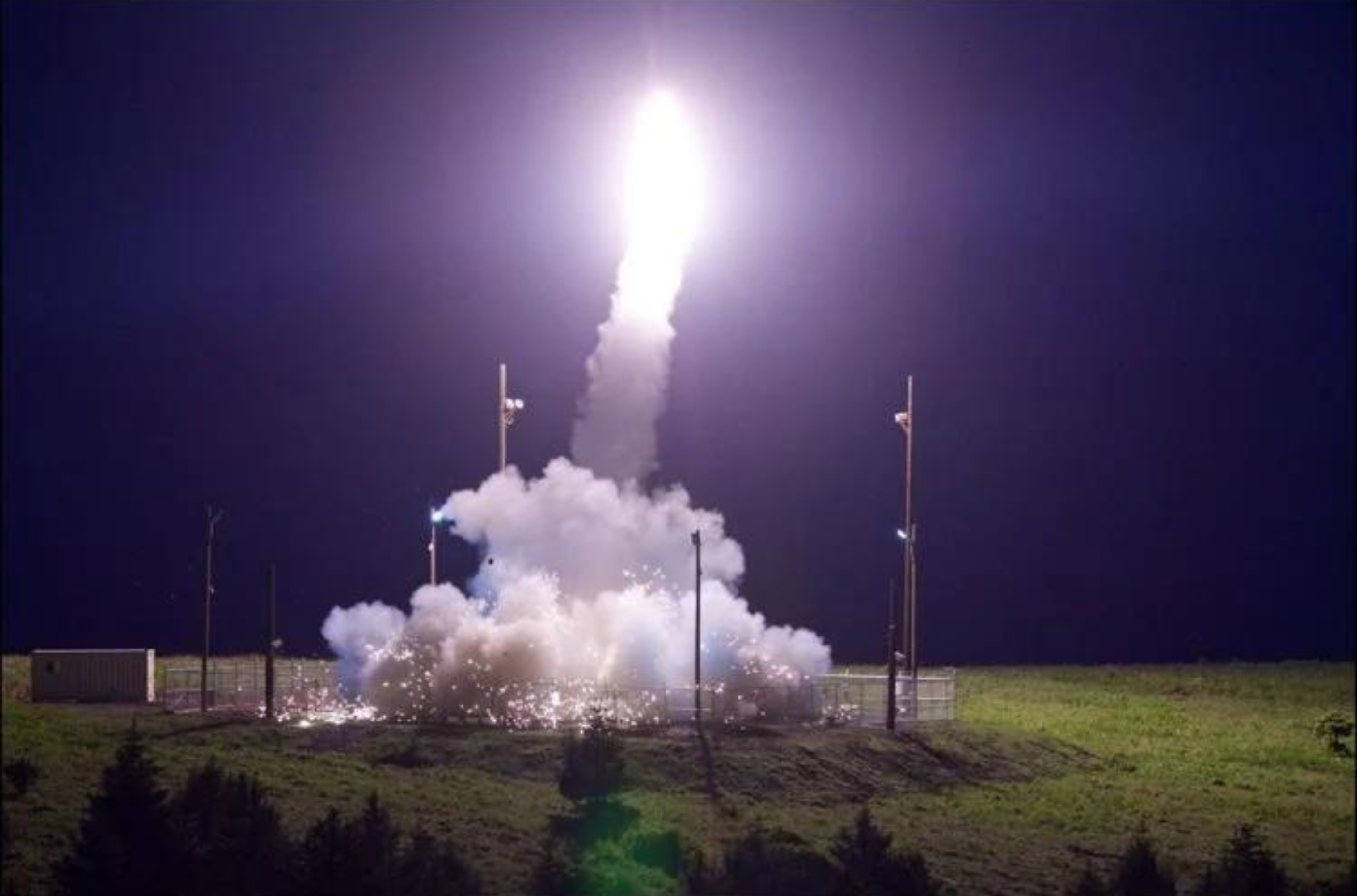
A Terminal High Altitude Area Defense, or THAAD, ballistic missile interceptor is launched from the Pacific Spaceport Complex Alaska in Kodiak, Alaska, during a test on July 11, 2017.
