







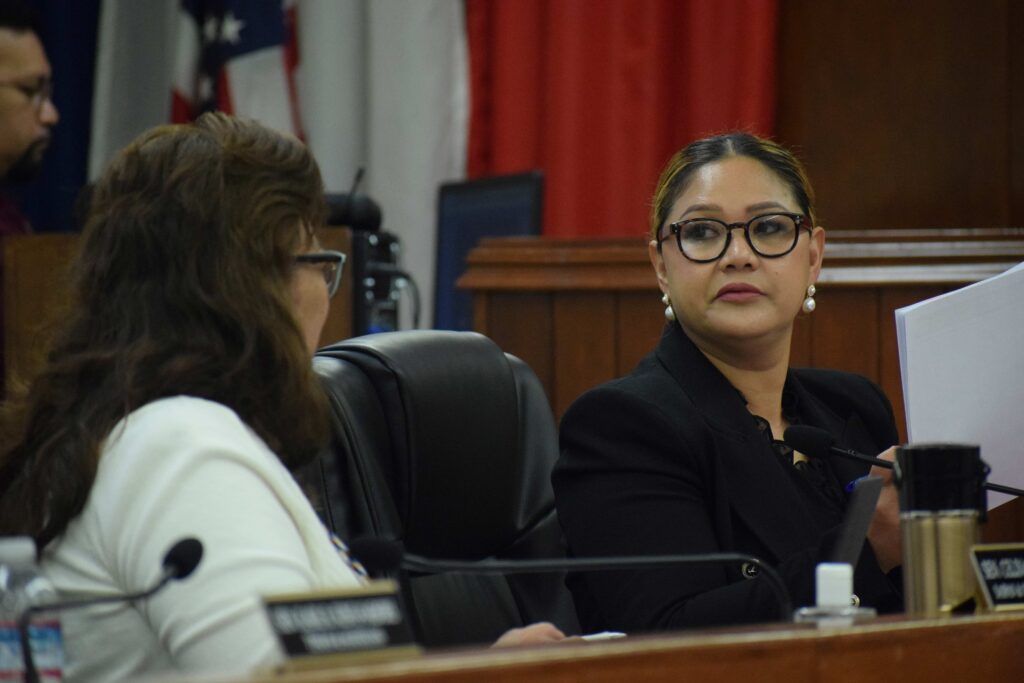
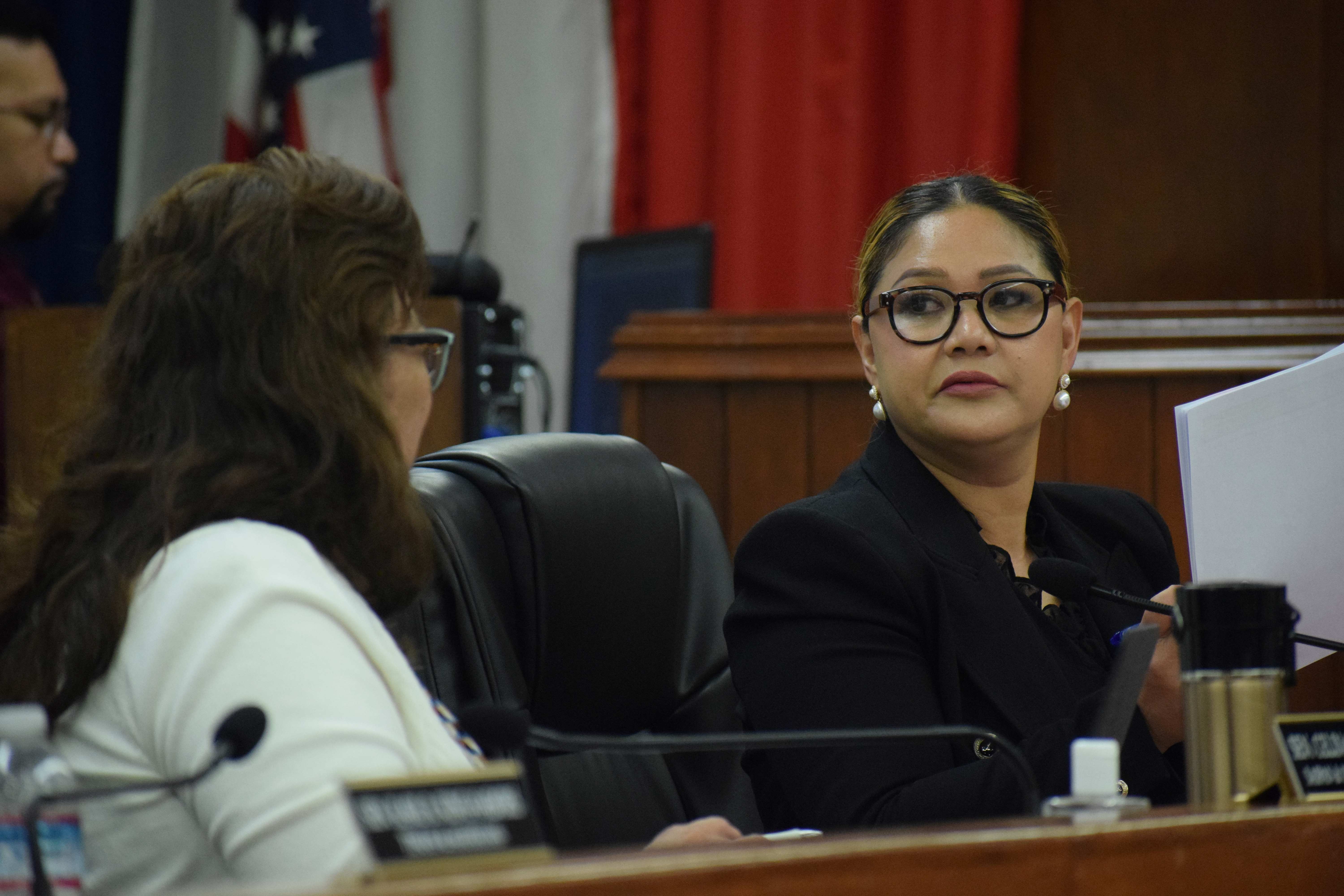
Senate Floor Leader Corina L. Magofna, right, and Sen. Celina R. Babauta confer during a break from a Senate session.
THE Senate on Friday passed Senate Bill 23-16 which would amend the Commonwealth Disaster Price Freeze Act of 1996 to make it applicable to a public health emergency.
All seven senators present voted for the passage of S.B. 23-16, which was authored by Senate Floor Leader Corina L. Magofna.
Senate Vice President Donald L. Manglona and Sen. Paul A. Manglona were excused.
The Senate Committee on Resources, Economic Development and Programs noted in its report that the governor had declared a price freeze as authorized by the law in response to disasters. However, the committee said, it is unclear whether a price-freeze declaration applies to a public health emergency like the Covid-19 pandemic, which hit the CNMI three years ago.
The intent of the bill is to clarify that a declaration of a price freeze also applies when a public health emergency is declared. It also provides for flexibility in imposing a price cap that permits the increase of consumer prices and housing rentals based on the consumer price index of the U.S. Bureau of Labor Statistics.
In the event of an indexed cap, S.B. 23-16 would make it illegal to raise the price of any items for sale or housing rentals including apartments and condominium units beyond the monthly increase in the CPI.
The price freeze law imposes a $10,000 penalty or one year imprisonment on any person who sells an item with a price that has been unlawfully raised while a price freeze or cap is in effect.
Attorney General Edward Manibusan, in his written comment, said the CNMI price freeze law “accords the governor with a wide discretion to impose a price freeze.” He also said that none of the states or territories use the CPI from the U.S. Bureau of Labor Statistics as a benchmark for prices in times of disaster or emergency.
