

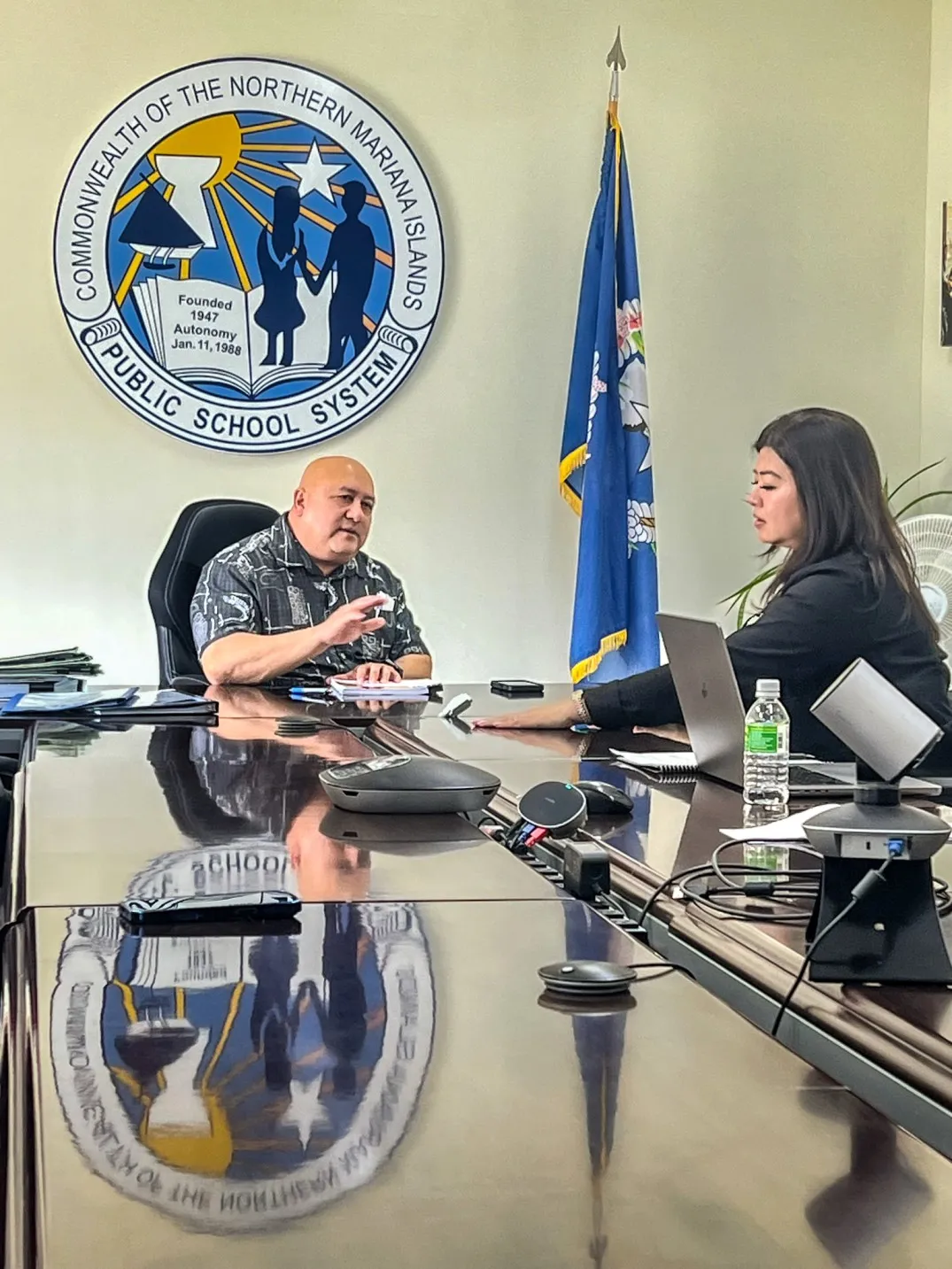
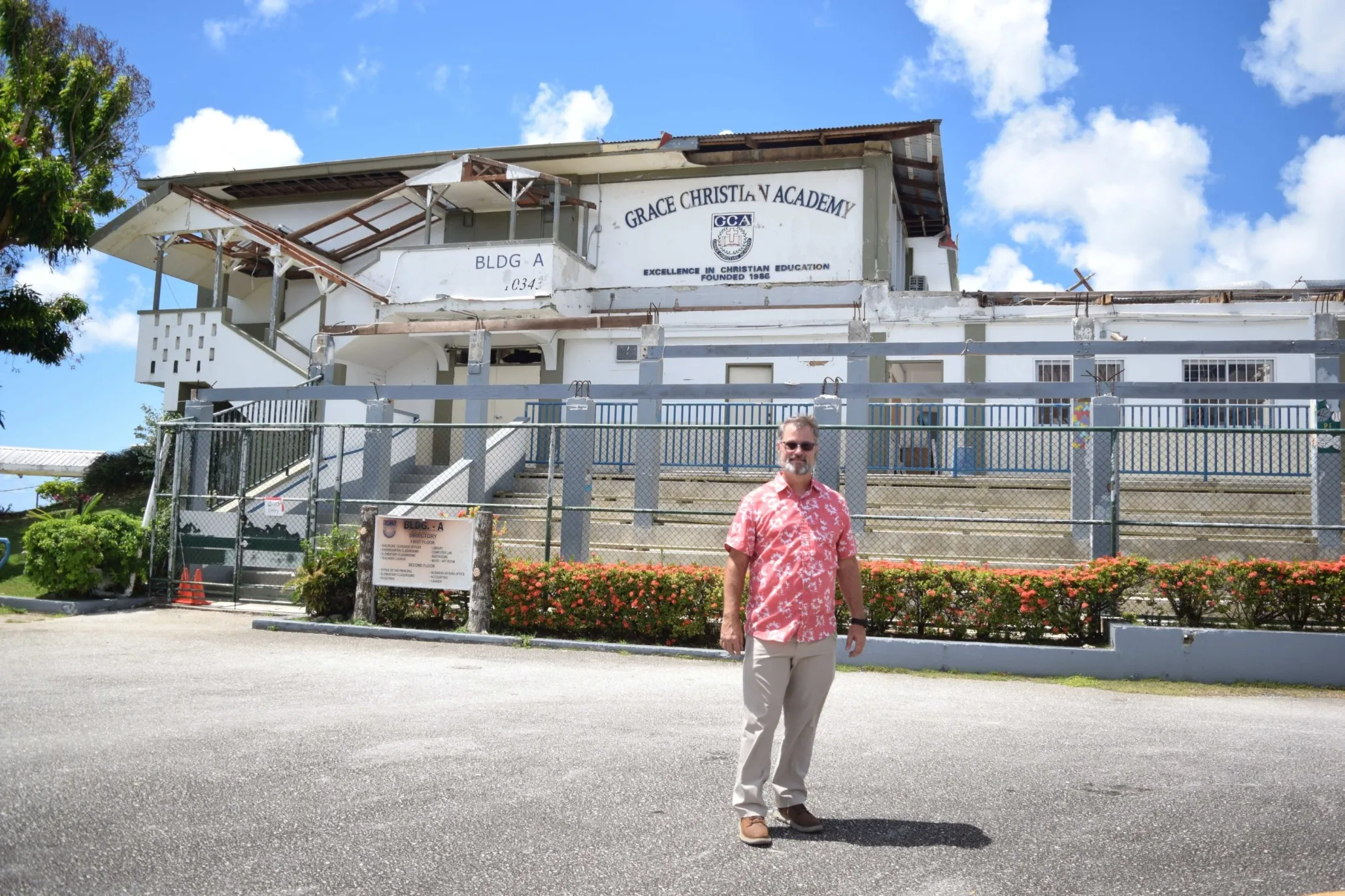


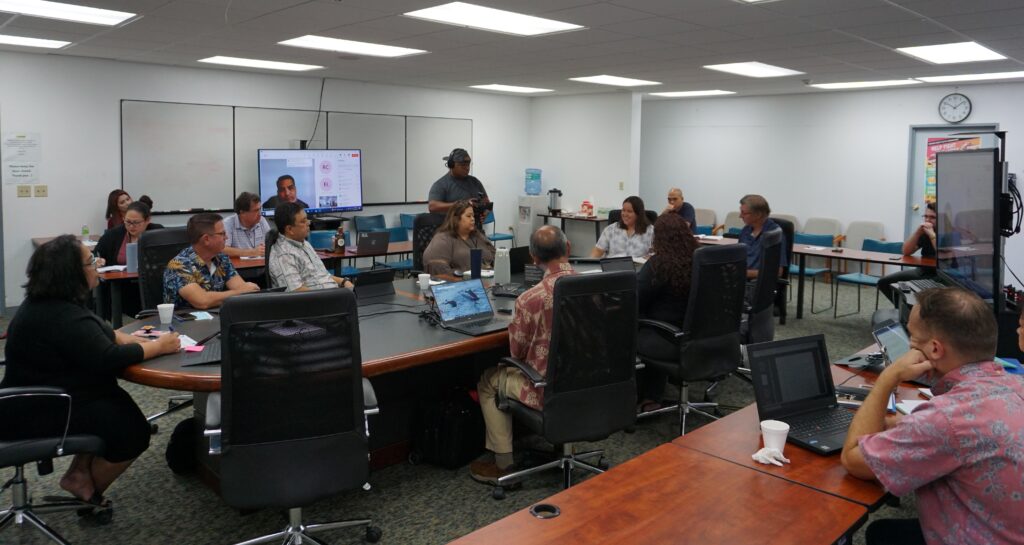
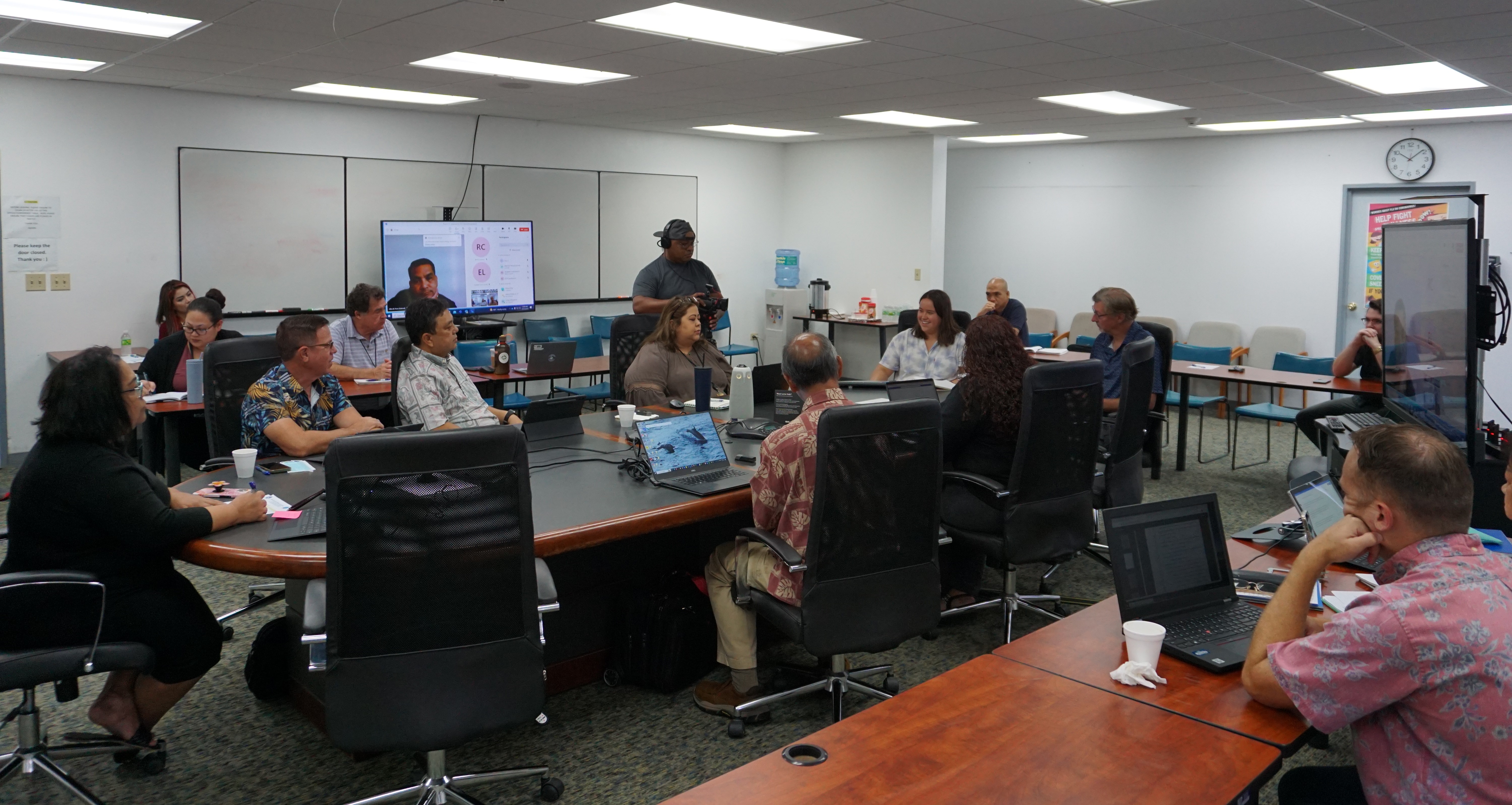
Environmental Protection Agency Clean Water Act inspector and enforcement officer John Tinger and Hallie McManus, EPA region 9 water/wastewater infrastructure grant project officer, meet with the Commonwealth Utilities Corp. board members on Thursday, Oct. 19.

Environmental Protection Agency Region 9 water/wastewater infrastructure grant project officer Hallie McManus and EPA Clean Water Act inspector and enforcement officer John Tinger.
THE federal court’s stipulated orders established a minimum criterion for eight management positions within the Commonwealth Utilities Corp., according to Environmental Protection Agency Clean Water Act inspector and enforcement officer John Tinger.
The stipulated orders have timelines, he said, and “those timelines have associated penalties.”
Tinger added. “We haven’t gone to penalties yet. We did send a letter a few months ago, kind of a warning letter that these positions need to be filled…and…asking about what the problems are.”
“EPA in the past has issued fines and penalties for not filling positions — I think it’s not for lack of trying,” Tinger added.
Tinger and Hallie McManus, EPA region 9 water/wastewater infrastructure grant project officer, made presentations about their areas of expertise during a meeting with the CUC board members on Thursday.
The CUC board members present were Rebecca White, Allen Perez (via video conference), Donald Browne, Rufo Mafnas, Simon Sanchez, and Chairwoman Janice Tenorio.
Attorney Elizabeth Loeb of the U.S. Department of Justice-Environmental Enforcement Section participated via online video conference.
Background
In Nov. 2008, after EPA cited CUC for violating the Clean Water Act and the Safe Drinking Water Act, the federal court issued Stipulated Orders 1 and 2.
SO1 focuses on CUC’s management structure, drinking water and wastewater issues, such as requiring CUC to provide safe drinking water to residents on a 24-hour basis, maintaining adequate chlorine supplies, safely treating and discharging wastewater, developing long-term capital improvement and financial plans, and implementing the projects described in the Master Plan. SO1 also restructures CUC’s organization to reflect a typically functioning utility and requires that key employees possess appropriate education and experience levels.
SO2 focuses on oil issues and requires CUC to repair and replace oil storage units and operation infrastructure, manage tank and pipeline facilities, facility wastes, facility drainage and storm water runoff. CUC is also required to maintain infrastructure and implement spill and emergency response protocols.
Remaining issues
Tinger said, “In terms of the stipulated orders, we approved the majority of the items in the order to date — there are a few remaining issues…so [in] a lot of ways there has been a lot of progress since that time. CUC now has 24-hour water and is meeting drinking water standards; overflows have been significantly reduced with the improvements to the pump stations; the wastewater treatment plants have been generally in compliance even with some problems caused by past typhoons and the other issues that keep popping up.”
He said “it’s a testament to the CUC staff out in the field who really put in extra effort in so many ways to keep things running. A lot of kudos to CUC’s operators and staff to keep things running.”
He added, “The biggest priorities we have lately, especially this year, are the vacancies. The stipulated order does establish minimum criteria and requirements for management positions. That was established early on in the program because there was a realization that certain managers didn’t have the necessary experience to lead CUC.”
That has been an ongoing issue, Tinger said, but added that acting Executive Director Betty G. Terlaje “who has stepped in, and the others who have stepped into those positions, have done an exemplary job.”
Still, Tinger emphasized the importance of having those positions filled.
“The executive director’s position, the chief financial officer, and the chief engineer remain unfilled,” he added.
“For any utility not to have a…certified engineer on staff, but especially for the amount of money and projects coming in, is a real concern for us,” he said.
Tinger said Terlaje has fulfilled her role as acting executive director “amazingly.”
“A lot of thanks to her for stepping into this when it was needed. But in terms of long-term stability, we do need to have someone in this position to meet those criteria of experience,” he added.
Tinger said amending the stipulated order pertaining to the hiring of the executive director and chief engineer “is not a possibility at this time for multiple reasons.”
“All personnel hired as executive director, chief engineer, associate engineer, and chief financial officer have to be approved by EPA,” he added.
According to Variety files, the minimum requirements for the executive director include a master’s degree in management, engineering, finance or public administration or, in the alternative, a bachelor’s degree in engineering and registration as a professional engineer pursuant to the National Council of Engineering Examiners standards in the civil, mechanical or electrical branch. In addition, an applicant must have at least 10 years’ experience as senior management in wastewater, drinking water and/or power utility.
