


A UNIVERSITY of Guam social work professor believes that learning the Chamorro language is one way to “heal the wounds of history.”
Dr. Gerhard Schwab and local historian Manny Borja worked together to create the presentation “Learning CHamoru/Chamorro: Healing the Wounds of History.” Their work was presented on Saturday, Sept. 2, during the 6th Marianas History Conference at Crowne Plaza on Saipan.
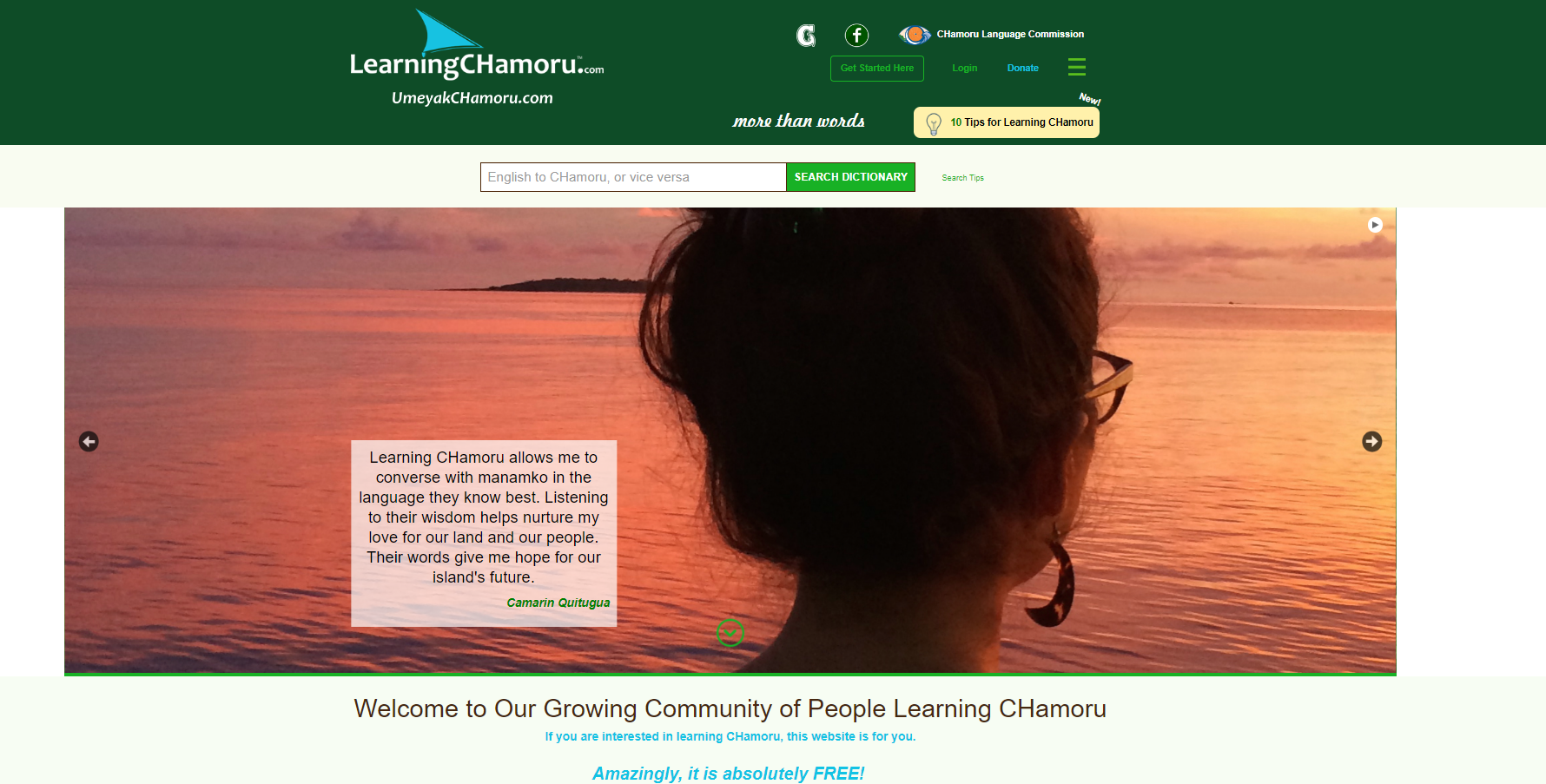
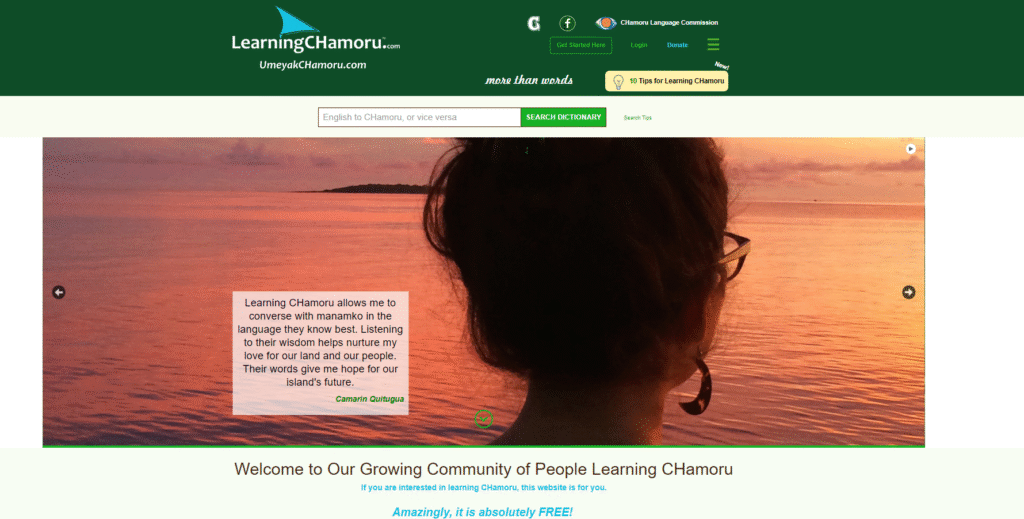
Schwab was at the conference to also detail his work creating learningchamoru.com, a free multi-media website where members of the public can access resources to learn Chamorro.
During the presentation Schwab occasionally spoke in Chamorro.
He referenced Census data that showed the declining number of Chamorro speakers in Guam and the CNMI.
In 2000, Guam had a population of 154,805 with 30,708 Chamorro speakers. In 2020, Guam had a population of 159,358 with 21,390 Chamorro speakers.
“I looked at the Census in Guam. The number of [Chamorro] speakers in the last 30 years has continuously dropped,” Schwab said. “We’ve lost the ability to generate the speakers that we need to maintain the language.”
Data in the CNMI also showed a decline in Chamorro speakers as well, Schwab said.
In 2000, the CNMI had a population of 72,127 with 44,907 Chamorro speakers. In 2010, the population of the CNMI was 54,087 with 22,519 Chamorro speakers.
“The bottom line is it seems the number of speakers is declining in both jurisdictions,” he said.
Schwab said learningchamorro.com can change the environment where Chamorro could be learned.
Schwab is originally from Austria, and is not related to anyone who can speak Chamorro, which was problematic for him because he wanted to learn the language. He enrolled in the Chamorro Studies Program as a student despite being a faculty member at UOG.
“When I started to look at how to learn Chamorro, I realized it was not that I was dumb; it was the way I interacted with the environment,” Schwab said. “I needed to change the environment and I needed to create an environment so I could practice. Nobody in my family spoke Chamorro so I said I needed to create some substitute. The website is my substitute.”
Schwab said learningchamoru.com was a way for him and his Chamorro Studies majors to practice learning outside of the classroom.
Today, the website has grown to feature audio resources in Chamorro with Chamorro translations, dialogue practice, grammar resources, speaking and listening drills and more.
By signing up using an email address, members have 24-hour access to the resources, for free.
Even though Schwab said being one of the “manamko’” makes acquiring a new language difficult for him, “learning how to learn Chamorro” has been valuable, nonetheless.
“Gatbo na linguiahi Chamorro. It’s a beautiful language,” Schwab said.