




RHAMAN and Rumi Madshudur have filed a civil complaint against a construction company based on Tinian and are demanding a jury trial in federal court.
The couple, through attorney Joseph Horey, named as defendants Minjian General Construction Corporation, Hongxiang Zheng, and Anwar Narul.
The lawsuit is alleging breach of contract, breach of CW-1 agreement, violation of the CNMI Employment Act and the Trafficking Victims Protection Act, and intentional infliction of emotional distress.
The plaintiffs want the court to issue an order awarding them damages in an amount to be proven at trial and other relief.
Background
In December 2015, the lawsuit stated, Rhaman was living in Bangladesh with his wife Rumi and their daughter when he was contacted by Narul.
Narul offered Rhaman “an attractive opportunity for employment in America.”
Narul told Rhaman that Narul’s friend Zheng owned a “large construction company,” Minjian, which needed a lot of manpower, and for which Rhaman could work and earn good wages.
Narul said to Rhaman that he would need to pay 1.4 million Bangladesh taka (about $12,800) in order to obtain employment. The amount included the cost of visas for Rhaman, Rumi and their daughter.
Narul instructed Rhaman to hand the money to Kafil Udding, Narul’s father-in-law who was then in Bangladesh.
According to the lawsuit, Rhaman and Rumi sold their cattle and jewelry to raise 200,000 taka which they paid to Uddin on or about Dec. 15, 2015. They obtained the remaining 1.2 million taka by taking out loans at high interest rates. After borrowing another 700,000 taka, they paid Uddin on or about April 2, 2016.
On information and belief, at least some of the money paid by Rhaman and Rumi went to Minjian, the lawsuit stated. After each of the first payments, Narul advised Rhaman that if Rhaman did not pay the remaining amounts, Minjian would not return the amounts already paid.
After the full amount of 1.4 million taka was paid, Rhaman signed a one-year contract of employment with Minjian that was presented to him by Uddin, pursuant to which Minjian agreed to employ Rhaman as a construction worker at a wage rate of $6.05 per hour.
Uddin then assisted Rhaman and Rumi in obtaining their visas at the American Embassy in Dhaka, Bangladesh.
Rhaman obtained a CW-1 visa authorizing him to enter and work in the CNMI for Minjian, along with CW-2 visas for Rumi and their daughter. The visas were issued on July 30, 2016.
Rhaman and his family arrived on Tinian on or about Sept. 1, 2016, and he promptly presented himself to Zheng as ready, willing, and able to work for Minjian.
However, Zheng advised him that no work was available for him at the time.
Rhaman remained ready, willing, and able to work for Minjian throughout the term of his employment contract, and he frequently contacted Zheng to see if work was available for him.
However, according to Zheng, no work was available to Rhaman at any time during the term of his contract.
According to the lawsuit, “It was important for the couple that Rhaman work and get paid. Without work and pay he could not provide for his family and afford the basic necessities of life. His wife also become pregnant with their second child. Their daughter fell ill due to their hot and unwholesome living conditions, but they could afford no better. Rumi was advised that her inadequate diet was causing her blood sugar level to drop, and her unborn child to lose weight, endangering its health. Furthermore, Rhaman needed funds to repay the debts he had incurred in Bangladesh.”
The lawsuit stated that Minjian, Zheng and Narul were fully aware of the nature and cause of the plaintiffs’ distress, as Rhaman explained it to them repeatedly when requesting work.
“Nevertheless, and notwithstanding their contractual obligation to do so, Minjian and Zheng provided no work for Rahman at any time during the term of his employment contract.
“Instead, Zheng threatened to have Rhaman, and by extension his family, deported to Bangladesh if Rhaman continued to bother him with demands for work.
“Meanwhile, Narul made threats of violence against Rhaman and members of his family in Bangladesh if Rhaman returned to Bangladesh or made any complaints or revealed the truth about his employment situation on Tinian.”
On or about Feb. 7, 2017, the lawsuit added, Zheng called Rhaman and told him that Minjian had obtained a new project on Saipan, and that work on the project was available for him if he renewed his employment contract and his visa for another year and paid $1,000 for the processing fee.
Rhaman paid $1,000 to Zheng, but his visa was not renewed, and Zheng never returned the $1,000 to Rhaman, the lawsuit added.
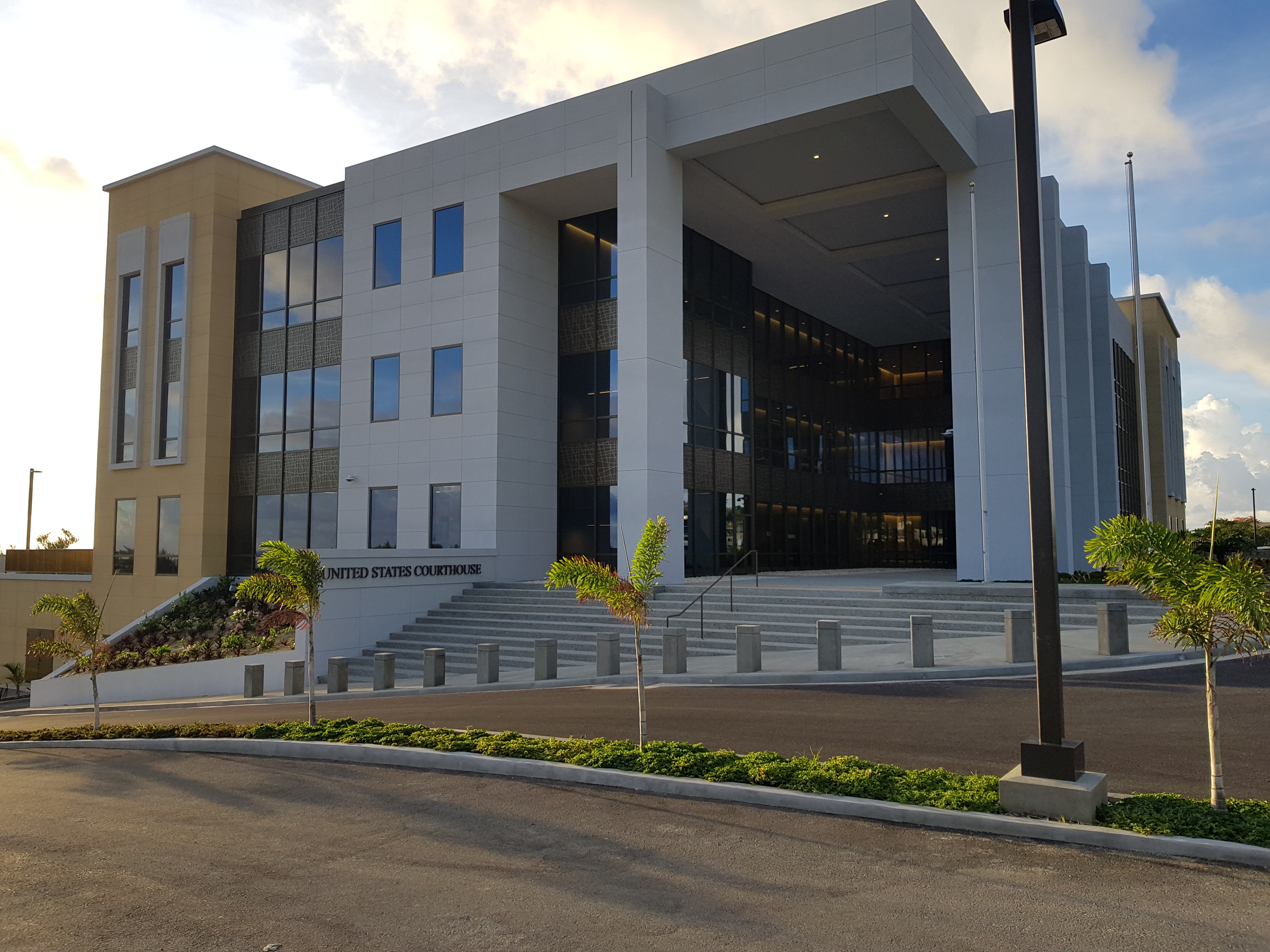
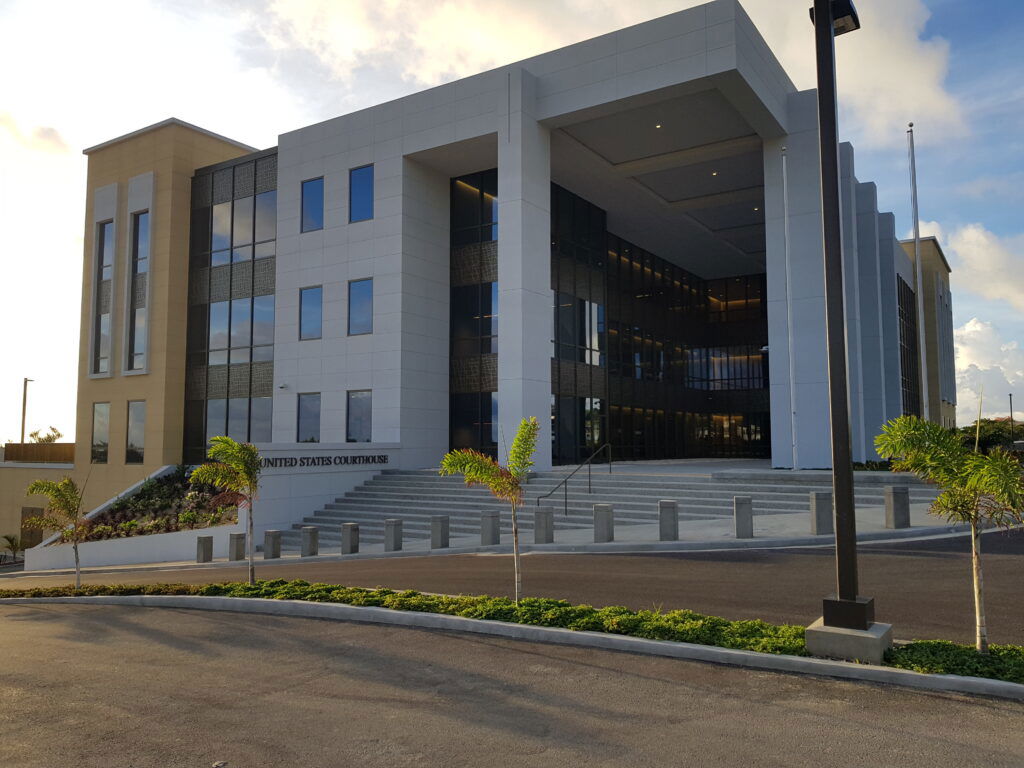
The United States Courthouse in Gualo Rai, Saipan.
