





THE September 2022 issue of the Reader’s Digest includes the following “fun fact” about the origin of the word “candidate”:
“In ancient Rome…[p]oliticians wore gleaming white robes…to show the purity of their intentions. This white toga was called toga candida, from the Latin candidare (to whiten). From there we get the English words candidate (one seeking office) and candid (truthful), two words rarely uttered in the same sentence.”
(Rim-shot sound effect.)
But election candidates should not feel slighted.
According to the Reader’s Digest, the opposite of a candidate is…an idiot. Idiotes in Greek. “Coming from the word idios, meaning ‘private,’ an idiot was anyone who didn’t hold public office.”
And now that we all feel insulted, let’s talk about this year’s campaign promises. As usual, they are a rehash or rewording of previous election-year pledges that many of us no longer remember. It’s all about the three Rs of political campaigns:
Reduce (specifics), Reuse (generalities), Recycle (banalities).
No. I don’t believe that all candidates for office intentionally lie to voters. Many truly want to “make a difference,” “to serve the public,” “to make the world a better place.”
“For the people!”
“For the children!”
“For the future!”
And when these candidates get elected to office, they’re more than ready to do the things they want to do. But then they will find out that there are so many other things they have to do first now that they’re in charge. And these require tens of millions of dollars in public funds.
Try to imagine what a newly elected or re-elected governor must do on the day s/he’s sworn into office in January 2023. First s/he must ensure that the CNMI’s largest employer, the government, will meet payroll, on each payday, and that the government will continue to make hefty payments to the Settlement Fund. Here’s the rest of his/her must-do list:
• The retirees’ 25% benefit
• Medical referrals
• Scholarships
• The 25% for PSS
• Funding for NMC and NMTI
• The costs of ensuring public safety and maintaining the justice system (the courts, Corrections, etc.)
• The government’s utility payments
• The deteriorating state of CUC’s old power plants and engines
• The state of the local economy and the islands’ only industry, tourism
• Labor shortage
• Emergency/disaster response
• The government’s financial condition
Then there are the requests for jobs and other favors from supporters, as well as the complaints from members of the public regarding just about everything: unpaved roads, flooding, illegal dumping, blighted properties, employers who won’t hire them, unresponsive or abusive government officials or staff, crime, high prices, low wages, lack of this, lack of that, etc.
Meanwhile, some of your supporters will eventually quarrel with each other (if they’re not quarreling already) while demanding that you as governor side with them even as your political opponents, who usually include former political allies, are already sowing intrigues that could quickly turn into public-relations fiascos in this age of social media.
And these are what the late Defense Secretary Donald Rumsfeld called the “known knowns” — the things we know we know. But, he said, there are also the “known unknowns” or the things we know we do not know and, worst of all, the “unknown unknowns”: the ones we don’t know we don’t know. These usually include global events beyond our control but whose consequences to the islands could be catastrophic.
And so in November, as usual, voters will elect the politicians who, in the next election, are likely to be blamed for the bad things that happened and the good things that didn’t.
Send feedback to [email protected]

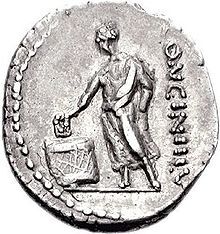
A 63 BCE coin depicts a Roman casting a ballot.
