


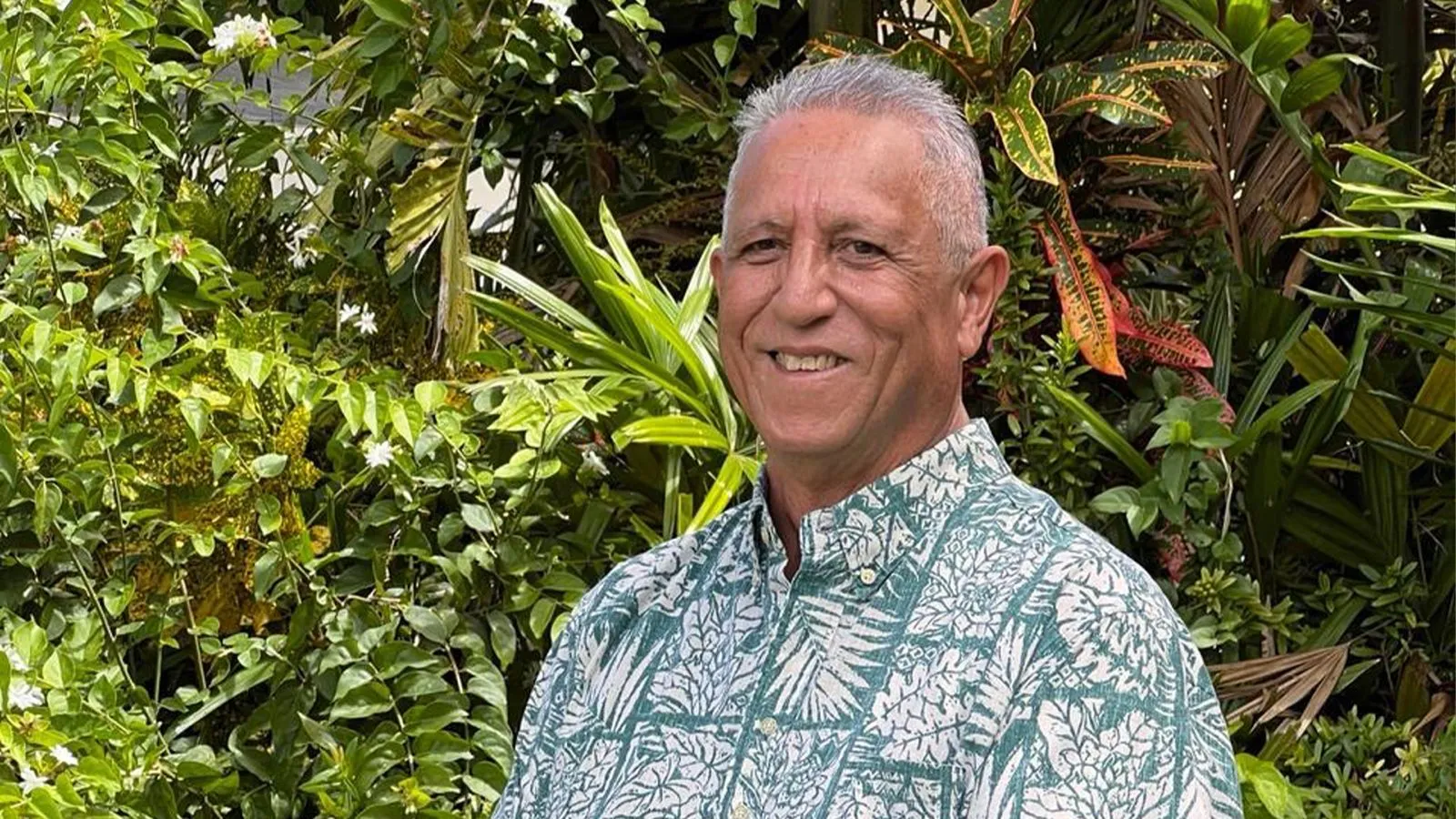


CHEF Inas “Nas” Hocog’s culinary journey began with cooking rice in fourth grade.
That humble start has now led him to become an instructor at the Northern Marianas Technical Institute and co-owner of The Hut restaurant, along with his startup, Marianas Chorizos Company LLC.
His path from curious child to seasoned culinary professional offers valuable insights for anyone considering a career in the trades.
“Every chef you’ll meet has at least been a dishwasher or a prep cook. No one jumps the line,” Chef Nas said, reflecting on the foundational truth of the culinary industry.
His own path exemplifies this, having worked his way up through every level of kitchen hierarchy during his 13 years in San Diego, where he spent a decade as a professional chef before returning to the CNMI.
So yes, it all started with learning how to cook rice. Born to a traditional Chamorro household, food was central to family life, and he relished it with the wonder and abandon of a curious child.
“Growing up in a Chamorro household, food is everywhere,” he said. “As a kid, that is what I wanted to sit in. I learned the basics in our kitchen, with my family and my mom.”
When traditional college didn’t suit his learning style, he discovered culinary school and found his calling.
His professional experience spans an impressive range of establishments, from L&L Hawaiian Barbecue in Santee, California, where he started as a line cook in 2004, to Alpine Inn Restaurant, Vine Cottage as a sous chef, Marriott Gaslamp, and eventually executive chef at Tio Chino in San Diego.
Each position built upon the last, creating a foundation of technical skills and leadership experience that would later prove invaluable in his teaching and entrepreneurial endeavors.
“My first internship, I got my first positive review from the chef,” he remembers with pride. “He said that I was a nice, even-keeled intern, I was steady, all around, reliable, and consistent in my work and behavior. Then I just continued and had 10 years of experience.”
Today, Chef Nas channels his expertise into Northern Marianas Technical Institute’s culinary program, which serves 30-40 students annually with a completion rate of 75-80 percent. The program focuses on making students “marketable [at] the entry level, from prep cook to even a dishwasher,” while building confidence and life skills that extend far beyond the kitchen.
“Our current program of levels 1 and 2 is really to make them marketable,” he explains. “It allows you to have confidence in your life skills, to be able to read recipes and to be familiar with the kitchen world.”
The program’s trajectory includes expanding to produce line cooks, representing the next step up in culinary careers.
Chef Nas doesn’t sugarcoat the realities of culinary work.
“Trades are hard work. Standing on your feet for hours, no air conditioning. It can be hot, and it is hard work. You need to be able to lift 50 pounds.”
He’s honest about the financial challenges, too: “I teach in my class that you will not make good money for a little bit. I can’t lie to them, so I say that outright. Start with minimum wage.”
However, he emphasizes that determination and passion can overcome these initial hardships.
“If you’re determined and you obtain power, eventually you’ll become a chef, then you’ll make bigger bucks. Passion really numbs the body, and the fact that you really want to be there.”
What sets the CNMI market apart, according to Chef Nas, is the opportunity for young talent to demonstrate soft skills alongside technical abilities.
Unlike in the U.S. mainland, where immediate technical competency is expected, the local market offers more flexibility for growth.
However, this requires a crucial element: management that understands their role as educators.
“Sometimes a key factor is the managers,” Chef Nas observes. “Managers of a restaurant here have to be willing to teach young talents. Delegation doesn’t necessarily work all the time. Managers have to be comfortable teaching in the kitchen too.”
This is in contrast to U.S. mainland operations, where new hires are expected to perform immediately.
Here in the CNMI, “maybe you don’t have that culinary background or technical skills yet. But you can show them your reliability, your punctuality, your enthusiasm, great attitude, and passion, because that will keep you there. You can market yourself using these skills here.”
His success as an entrepreneur, including his award from the Small Business Development Center incubator program, demonstrates the diverse opportunities available in the culinary field beyond traditional restaurant work.
“I am lucky enough to be part of teams doing start-ups,” he notes.
For young people considering culinary careers, Chef Nas represents more than just professional success. He embodies the possibility of building a meaningful career rooted in passion, community, and continuous growth.
His journey from a child cooking rice to a respected chef, educator, and entrepreneur shows that even the humblest beginnings in the culinary trades can lead to extraordinary achievements.
“To entice the younger generation, we just need to put more role models out there,” Chef Nas reflects.
Through his teaching, his businesses, and his story, he’s doing exactly that—one student, one meal, and one dream at a time.
<strong>Growing up in a Chamorro household, food is everywhere. As a kid, that is what I wanted to sit in. I learned the basics in our kitchen, with my family and my mom.</strong>
<p style=”text-align: right;”>—<span>Inas “Nas” Hocog</span>

