





BY a vote of 15 to 3, the House of Representatives on Monday passed an amended version of House Bill 22-102, which would exempt the Commonwealth Ports Authority from the 1% public auditor’s fee.
As amended, H.B. 22-102 no longer includes the Commonwealth Utilities Corp. in the proposed exemption.
The original substitute bill included a sunset provision so that the exemption would expire five years from the enactment of the legislation.
But prior to the roll-call vote, the bill’s author, Speaker Edmund S. Villagomez, offered a floor amendment to delete the word “temporary” from the language of the bill and remove the sunset provision.
Of the 18 members present, 15 voted for the adoption of Villagomez’ floor amendment. Reps. Tina Sablan, Edwin Propst and Leila Staffler voted no. Reps. Sheila Babauta and Donald Manglona were excused.
The vote was also 15 in favor and three against passing the bill which now goes to the Senate.
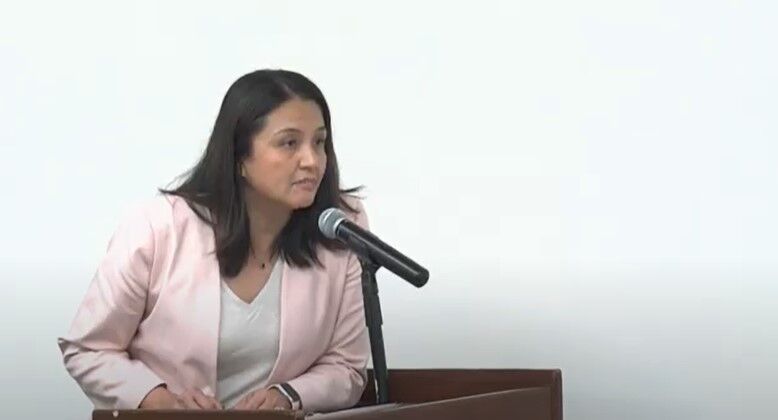
Public Auditor Kina B. Peter spoke before the House and reiterated her strong opposition to the bill.
She told lawmakers that passing the measure without a definitive answer from the Federal Aviation Administration regarding the supposed non-compliance with the revenue diversion statute “does not represent good governance.”
CPA has said that paying the 1% OPA fee would be considered revenue diversion by the FAA.
Peter, for her part, asked House members not be pressured into voting on legislation that is “very impactful” on OPA.
“I ask this body to allow OPA, as a regulatory agency, to function and exist without a continued threat to its funding and independence,” she added.
In her remarks, Rep. Tina Sablan said she was really uncomfortable about making a permanent exemption for CPA in the absence of a clear and final determination from the FAA.
She was also “uneasy” about removing the sunset clause in light of OPA’s strong objections and CPA’s significant deficiencies in its audit reports which, she noted, have nothing to do with the OPA fee.
Sablan said she along with other House members met last week with FAA officials, representatives from OPA, the Department of Finance, CPA and Senate President Jude U. Hofschneider.
She said the FAA officials they met with “could not give us a definitive answer one way or another about whether the 1% OPA fee is unlawful revenue diversion or not.”
The FAA officials did say that a written determination could be requested, Sablan added.
“And I must say that I agree with Ms. Peter that it is not good governance, colleagues, to pass legislation of this magnitude with incomplete information and while the agencies are still working to resolve the issue in dispute,” she said.
House Minority Leader Angel Demapan said the intent of the bill “has put us in a difficult position, kind of between a rock and a hard place.”
He said he was inclined to support the bill for the sake of the economy, by way of keeping the ports open, but he also doesn’t want it to backfire.
For his part, Speaker Villagomez said he also met with CPA and FAA officials, and the main issue was revenue diversion.
He said he agrees with Demapan that they are caught between a rock and a hard place, but if they don’t pass the bill, the airports, which are very important to the CNMI economy “and our residents who travel for all kinds of reason,” could be adversely affected.
CPA has said that the 1% fee “will be ultimately passed on” to its tenants and the traveling public.

Public Auditor Kina B. Peter urges House members not to pass the bill that would exempt the Commonwealth Ports Authority from the 1% public auditor’s fee.
