






THE House of Representatives on Wednesday passed the Senate version of Rep. Donald Manglona’s House Bill 22-95, which identifies and appropriates a total of $2.6 million to fund the $1,000 bonus for each CNMI government retiree.
Rep. Celina Babauta abstained because her husband, former Rep. Franklin Babauta, is a retiree so she believes she may indirectly benefit from the measure. The 16 other House members present voted in favor of H.B. 22-95, SS1.
House Floor Leader Ralph Yumul and Reps. Sheila Babauta and John Paul Sablan were excused.
The bill, which now goes to the desk of Gov. Ralph DLG Torres, identifies the following funding sources:
• $39,052 reserved for the double-dipping period liability that may be owed to a former House member.
• $50,000 for the Office of Planning and Development’s feasibility study on the casino gaming industry.
• $156,550 for the Micronesian Legal Services.
• $2.6 million for the within-grade increase due the 1,458 government employees of various agencies.
H.B. 22-95 SS1 no longer includes the reappropriation of $858,006 allotted for the Marianas Visitors Authority and the $66,660 in discretionary funds for the governor’s office. Also, the bill does not provide the governor with 100% reprogramming authority.
Prior to the roll-call vote, Speaker Edmund S. Villagomez allowed House members to say some words about the measure.
Vice Speaker Blas Jonathan Attao said they asked the Department of Finance and the Office of Personnel Management about the “lapsed funds” for government employees’ within-grade increase that were identified by the Senate.
He said according to Finance, tapping those funds would not affect the employees who are entitled to the within-grade increase because Public Law 22-8 or the fiscal year 2022 budget appropriates American Rescue Plan Act funds for the within-grade increase.
“So this won’t touch the government employees who will be receiving the within-grade increase moving forward after this bill becomes law. I am ready to support it,” Attao said.
Rep. Tina Sablan expressed her appreciation to her House colleagues specially the vice speaker and the Ways and Means chairman, Rep. Donald Manglona, for their “leadership” in supporting the retirees’ bonuses.
She said they made sure that the bonus is “appropriated the right way” without granting “unlimited 100% reprogramming power” to the governor.
She also expressed appreciation to the senators and the Department of Finance for providing information that, she said, the House asked for to identify the funding source.
“I wished we could have come to this table together sooner, but it is what it is and I am glad that we all are at the same table. Now I am ready to support it,” she said.
On Dec. 14, 2021, the governor asked the Senate and the House to adopt a joint resolution that would allow the Department of Finance to provide $500 bonuses to CNMI retirees.
The following day, the Senate adopted Senate Joint Resolution 22-5 to authorize the reprogramming of funds for the retirees’ bonuses.
The House, however, did not act on the joint resolution. Instead it passed a bill on Jan. 12, 2022 that would fund the bonuses by reappropriating the funds that the governor had line-item vetoed.
Since then, and until the House session on Wednesday, the House and the Senate had been deadlocked over the funding source of the bonuses.
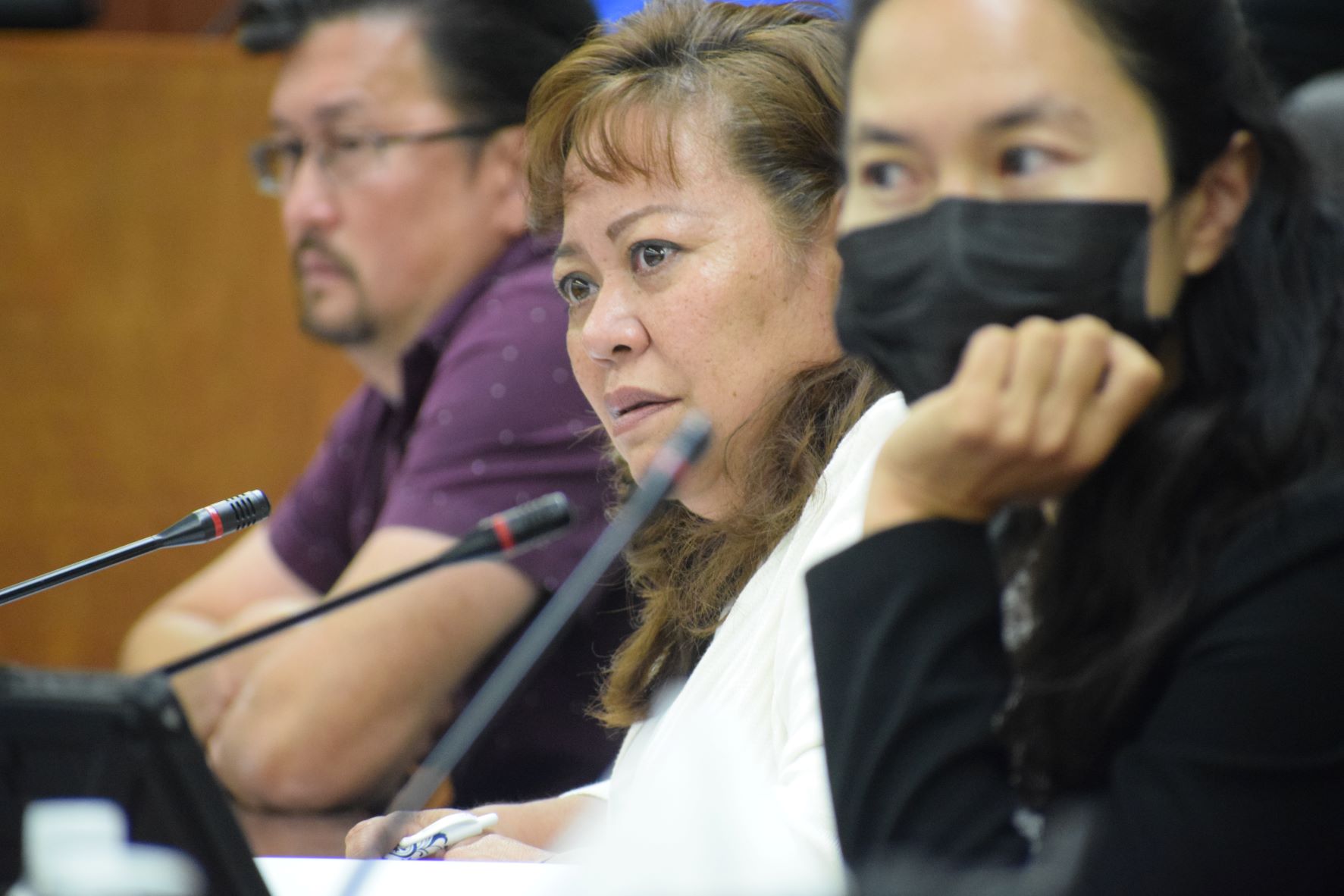
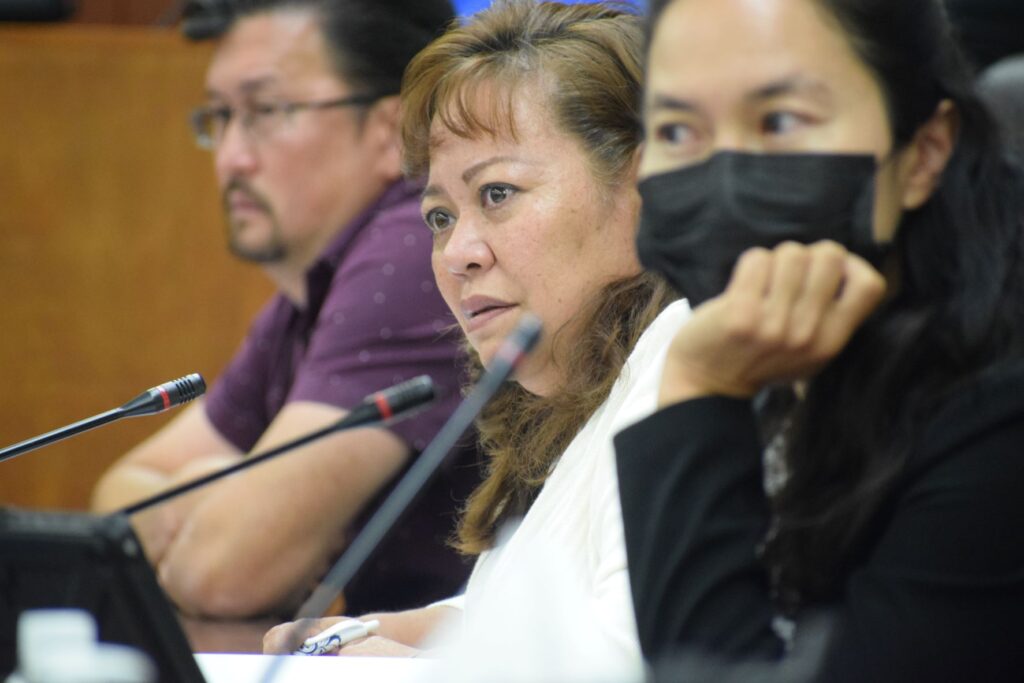
Rep. Celina Babauta, center, recuses herself from voting on the retiree-bonus bill, saying she has a conflict because her husband, former Rep. Franklin Babauta, is a retiree. Also in photo are Reps. Edwin Propst and Tina Sablan.
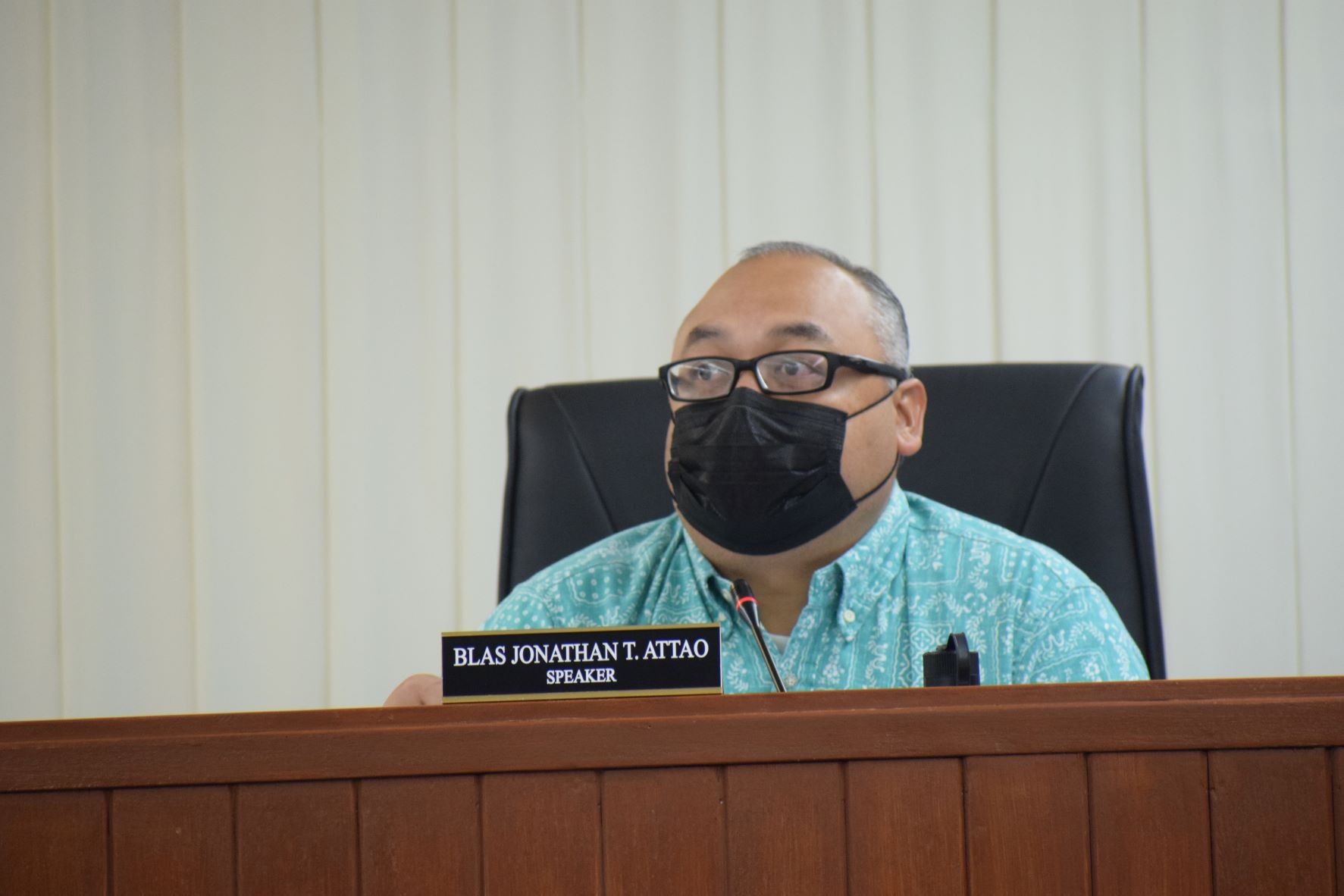
Vice Speaker Blas Jonathan Attao talks about the retiree-bonus bill.
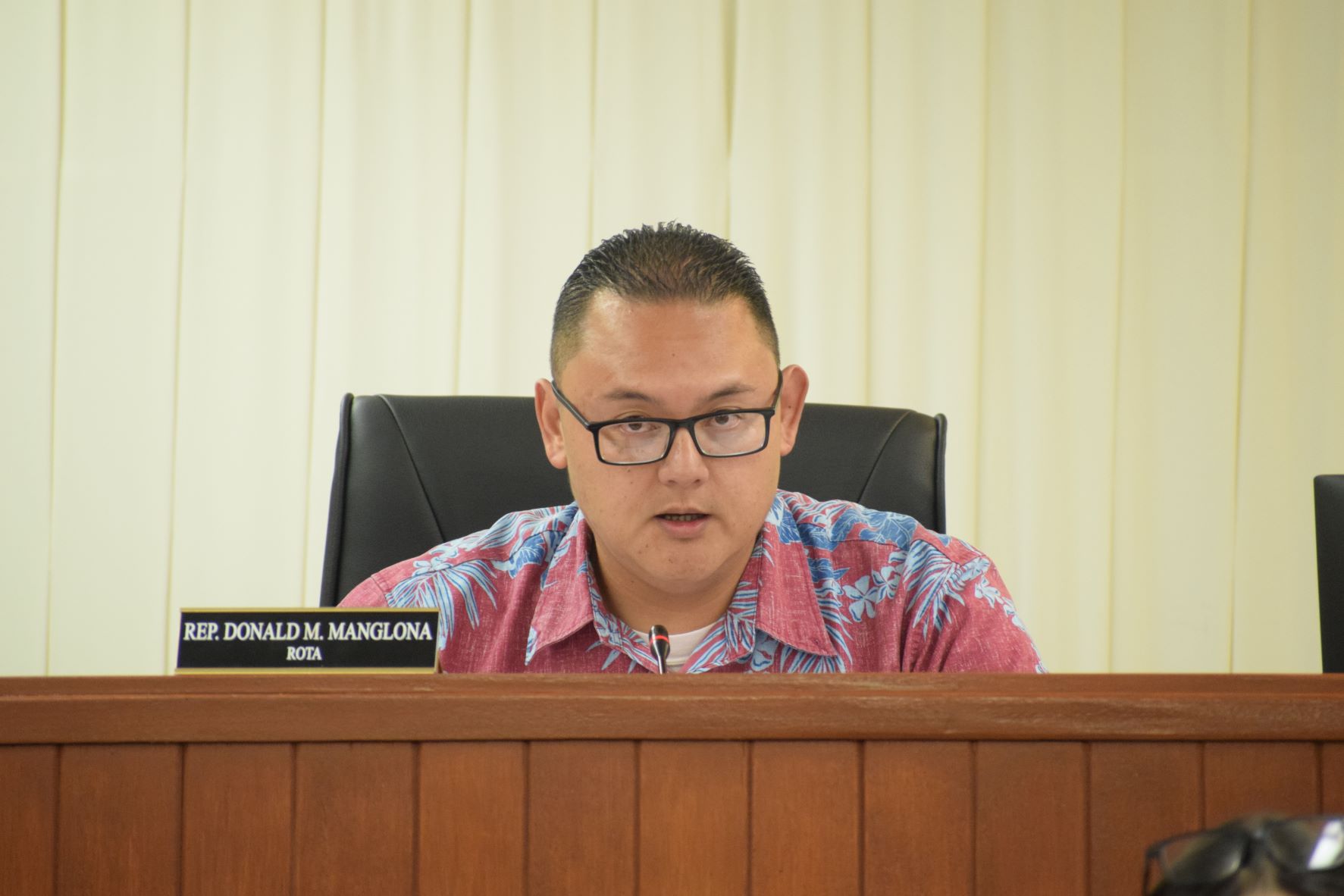
Rep. Donald Manglona, as acting House floor leader, moves for the passage of the retiree-bonus bill during a House session on Wednesday.
