






THE Commonwealth Healthcare Corp. on Wednesday announced that a dose of Pfizer or Moderna vaccine booster is now encouraged for individuals at least 12 years of age who are moderately to severely immunocompromised. (Not a second booster as earlier reported.)
In line with guidelines from the U.S. Centers for Disease Control and Prevention, or CDC, pre-teens, teens, and adults who are moderately or severely immunocompromised should receive a total of four doses of the Covid-19 vaccine.
These four doses are made up of a primary series of three doses of an mRNA Covid-19 vaccine, plus one booster of an mRNA Covid-19 vaccine.
This fourth mRNA dose, otherwise referred to as the booster dose, can be administered at least three months after the third mRNA dose, or additional dose.
CHCC Chief Executive Officer Esther L. Muna said that a referral form is available for eligible patients to avail of after discussing with their medical provider.
This form is available to CHCC and private medical providers.
“CDC guidelines state that vaccine recipients are encouraged to speak with their medical provider about their conditions and whether getting a fourth dose is appropriate for them,” Muna said.
If deemed eligible to receive this fourth mRNA dose, the individual will then bring his or her completed referral form to vaccine outreach team, mass vaccination site, or CHCC immunization clinic to obtain the fourth mRNA dose.
As to the capacity to administer these additional doses, Muna said that the CNMI still has contractors from the U.S. Federal Emergency Management Agency, or FEMA, assisting with vaccination.
“We have the adequate inventory supply, so we have that as we’re monitoring this. We have enough to be able to do it,” she said.
Dr. Lily Muldoon, CHCC emergency medicine physician and public health director, said when supply runs low, more will be ordered, received, and made available for eligible individuals.
She noted that the fourth dose, or booster dose, has the same components as the first booster dose.
According to the CDC, many conditions and treatments can cause a person to be immunocompromised, also known as having a weakened immune system.
People are considered to be moderately or severely immunocompromised if they have been receiving active cancer treatment for tumors or cancers of the blood; received an organ transplant and are taking medicine to suppress the immune system; received a stem cell transplant within the last two years or are taking medicine to suppress the immune system; moderate or severe primary immunodeficiency, such as DiGeorge syndrome or Wiskott-Aldrich syndrome; advanced or untreated HIV infection; active treatment with high-dose corticosteroids or other drugs that may suppress their immune response.
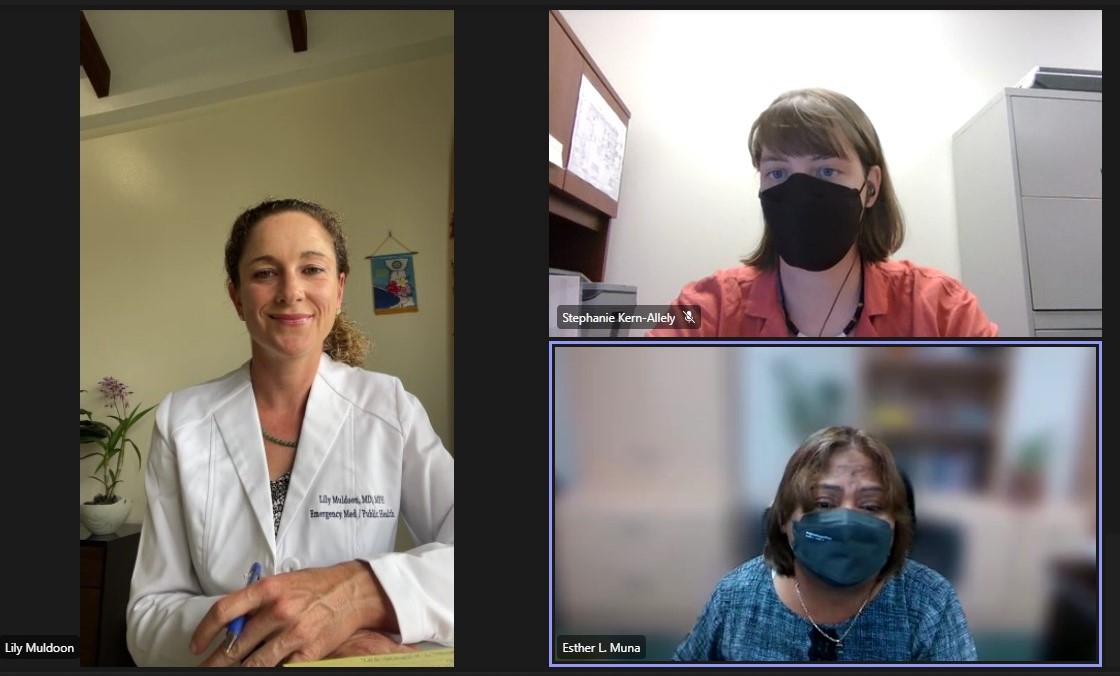
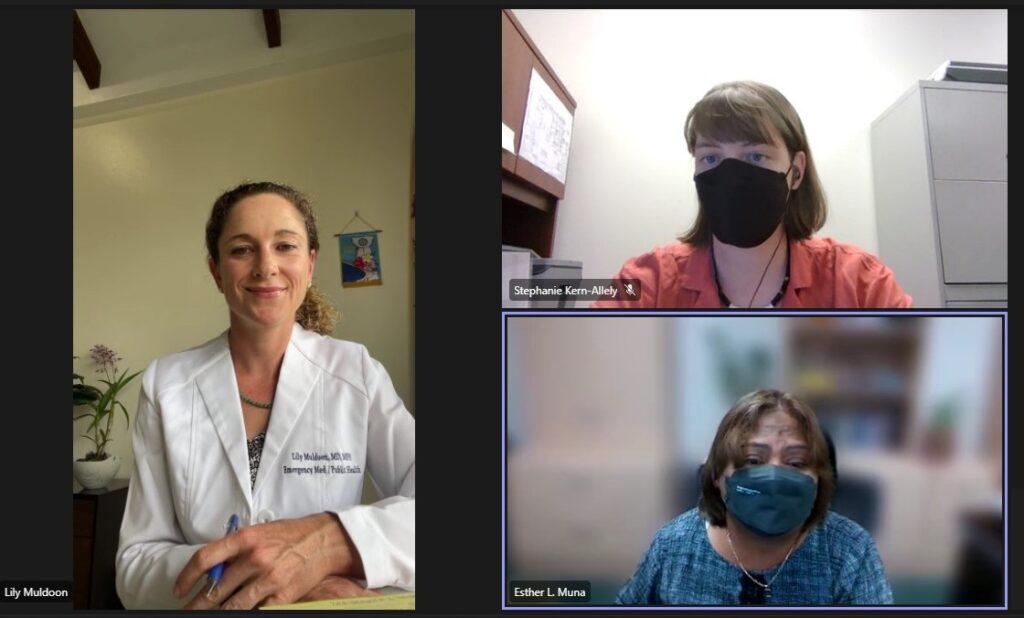
Clockwise from left, Dr. Lily Muldoon, Commonwealth Healthcare Corp. emergency medicine physician and public health director; regional communicable disease epidemiologist Stephanie Kern-Allely of the Pacific Islands Health Officers Association; and CHCC Chief Executive Officer Esther L. Muna provide updates during a virtual media briefing on Wednesday.
