

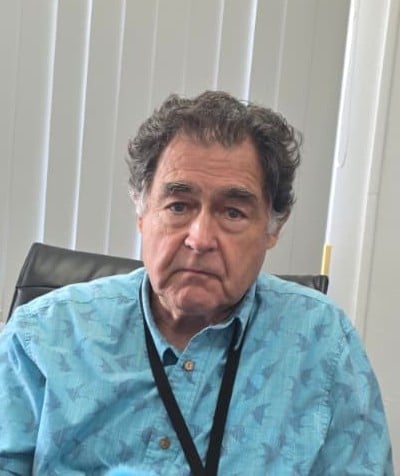





THE CNMI government, through Attorney General Edward Manibusan, has filed a lawsuit against Johnson & Johnson, and Janssen Pharmaceuticals in Superior Court for marketing and selling opioid painkillers in the Northern Marianas.
The lawsuit alleged violations of the Consumer Protection Act and Unfair Business Practices Act, and common law public nuisance.
The Office of the AG is asking the court to issue an order awarding the CNMI an undisclosed amount of compensatory restitution, and a permanent injunction prohibiting defendants from engaging in deceptive acts and practices.
According to the lawsuit, in the mid-1990s, opioid manufacturers pursued aggressive sales strategies to increase sales of their prescription opioids which “resulted in a dramatic rise in opioid prescriptions in the Commonwealth.”
“It also contributed to a sharp increase in the use of even more powerful drugs such as fentanyl and heroin, which are sometimes used by themselves and other times used in combination with prescription opioids. Fentanyl and heroin use exacerbated opioid abuse, dependence, addiction, and overdose deaths in the Commonwealth,” the lawsuit stated.
Assistant Attorney General Hunter Hunt filed the 13-page complaint on behalf of the AG’s office on March 25, 2022.
Every community in the Commonwealth suffers from the opioid crisis of addiction and death, the lawsuit stated.
One of the largest
Johnson & Johnson is one of the largest pharmaceutical companies in the world, the lawsuit stated.
“Through its company, Janssen, defendants have manufactured, marketed, and sold five branded opioid products: Duragesic, Nucynta, Nucynta ER, Ultram, and Ultram ER,” the lawsuit added.
In promoting its branded opioid products, as well as in unbranded promotions, Janssen minimized or omitted discussion with doctors of the risk of addiction and misrepresented the potential for abuse of its opioid prescription drugs with purportedly abuse-deterrent formulations, the lawsuit stated.
It further alleged that Janssen failed to disclose ceiling doses when taking prescription opioids; misrepresented that the risk of addiction is low in older persons; misrepresented that the risk of addiction from taking prescription opioids is a myth; and minimized rate and risk of withdrawal from taking prescription opioids.
According to the lawsuit, Janssen also falsely represented that opioids effectively produced positive long-term outcomes in the treatment of chronic pain, including improved function, increased quality of life, and the ability to return to work, walk or run, play sports, and live “normally.”
To promote opioids over other pain medications, Janssen exaggerated the adverse side effects of over-the-counter NSAIDs or “non-steroidal anti-inflammatory drugs” while downplaying the risk of addiction from taking opioids, the lawsuit stated.
In addition, Janssen overstated the efficacy of patient screening tools, patient contracts, urine drug screens, and similar strategies in preventing addiction, the lawsuit stated.
Moreover, the lawsuit alleged that Janssen falsely represented that many individuals who exhibited signs of addiction to opioids were actually experiencing “pseudoaddiction.”
To expand the opioid market from cancer pain to chronic pain, the lawsuit added, Janssen promoted the concept that chronic pain was, in fact, undertreated, and promoted its opioids for use in treating chronic pain to primary care physicians.
According to the lawsuit, misrepresentations were made both by Janssen and various third-party organizations funded by Janssen.
These include the American Geriatric Society, the American Pain Foundation, the American Pain Society, the American Academy of Pain Medicine, the National Pain Education Counsel, and the Academy of Integrative Pain Management.
These organizations made deceptive statements concerning the use of opioids to treat chronic non-cancer pain in patient education materials, the lawsuit stated.
“Defendants materially contributed to the creation of an addiction crisis that has injured, harmed, and otherwise disrupted the lives of thousands of residents of the Commonwealth of the Northern Mariana Islands. Defendants knew, or in the exercise of reasonable care and diligence should have known, that their actions and inactions would lead to this result,” the lawsuit added.
Beginning in 2016, similar lawsuits have been filed by states and other territories against manufacturers and distributors of opioid painkillers.

