



MANGILAO (UOG) — Two University of Guam students are embarking on a journey to become stewards of Micronesian history. It’s a six- month training opportunity — specifically for indigenous Pacific Islanders — to learn how to care for and exhibit museum and cultural heritage collections.
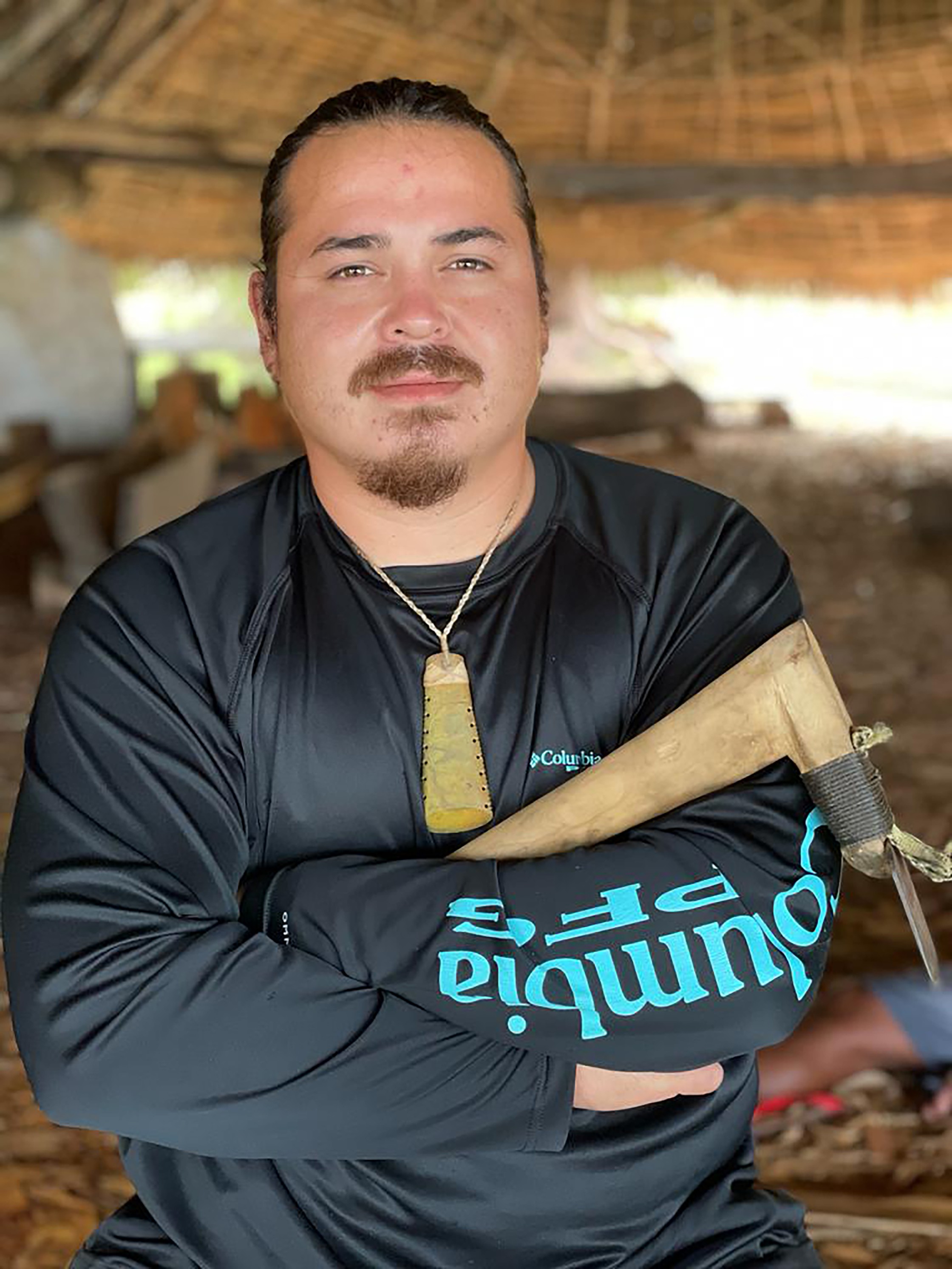
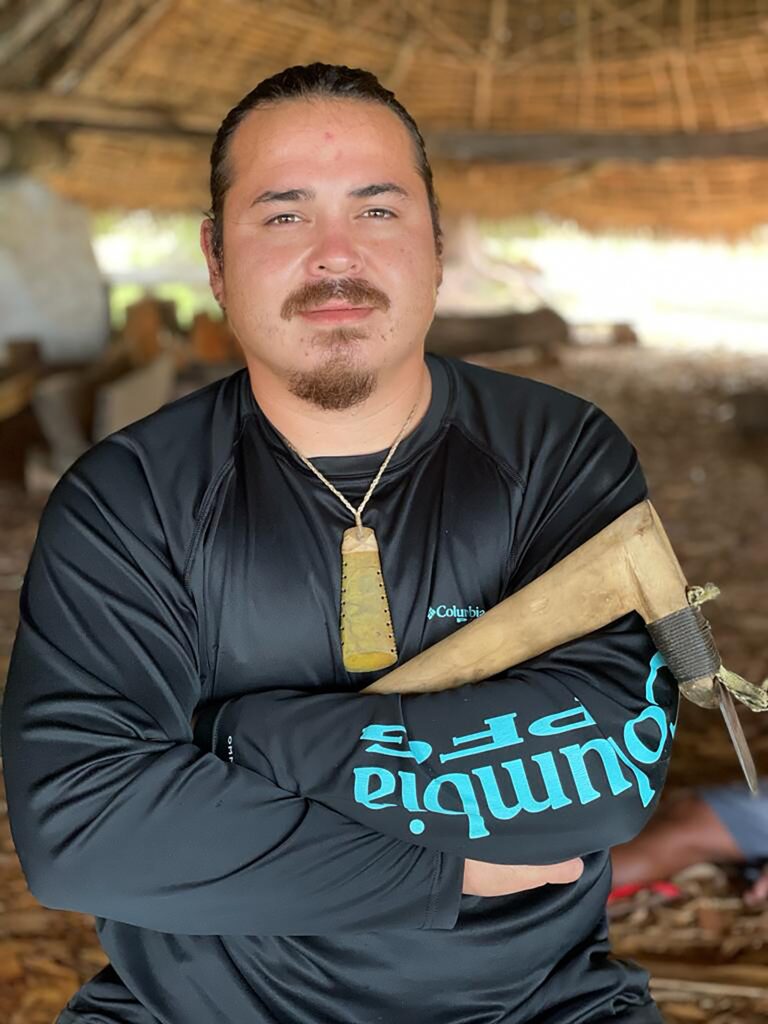
University of Guam senior anthropology major Tyler Warwick holds a traditional canoe carving tool inside a canoe house he helped build as a volunteer trades helper of the Seafaring Traditions Program in Saipan. Warwick was one of 20 applicants selected for the University of Hawaiʻi at Mānoa’s inaugural museum institute for indigenous Pacific Islanders.
The program — called “Weaving a Net(work) of Care for Oceanic Collections” — is a new institute hosted by the University of Hawaiʻi at Mānoa’s Department of American Studies, in partnership with the East-West Center, made possible by a $350,000 grant from the National Endowment for the Humanities in 2021.
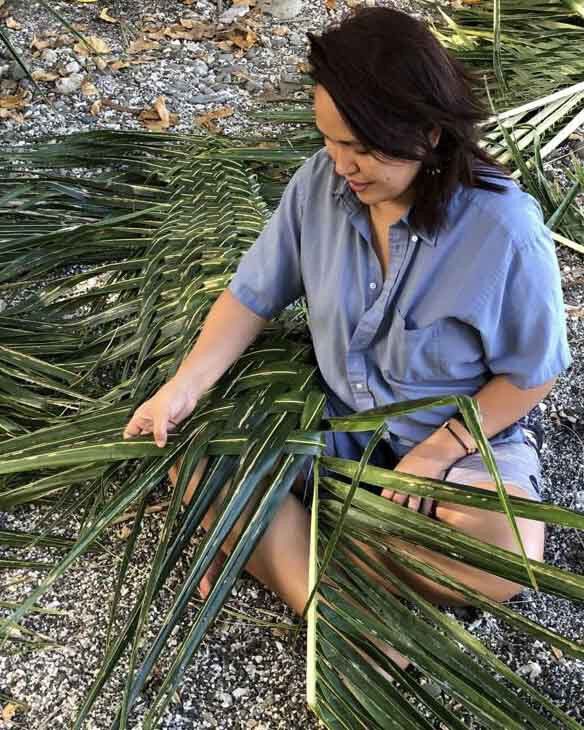
Nicole Duenas weaves during a Traditional Seafaring Navigation class taught by Larry Raigetal.
Selected by a peer-review panel to be part of the inaugural class of 20 students are UOG senior anthropology major Tyler
Warwick and Micronesian Studies graduate student Nicole DeLisle Duenas. The cohort began the program virtually on Jan. 24.
Centralizing indigenous knowledge in museum work
The institute participants include students and early- to mid-career museum and cultural center workers and curators indigenous to Saipan, the Marshall Islands, Palau, Hawaii, Samoa, American Samoa, Kiribati, Fiji, New Zealand, Papua New Guinea, and California.
“The enthusiasm has been overwhelming, but we are most excited by the selection of our cohort, which represents the depth and diversity of our Oceanic communities,” Project Director Noelle Kahanu said.
Duenas said the institute provides an important opportunity to connect with others in the Pacific toward the goal of centralizing indigenous knowledge in museum work.
“[Many] indigenous Pacific collections are associated with histories of colonization and the appropriation or recontextualization of our sacred cultural objects and ancestral remains,” she said. “This program is important because it […] brings people from Oceania together to determine ways museum work can shift from its colonial underpinnings to bringing indigenous stewardship and ownership back into the picture and into practice.”
With an interest in indigenous histories and stories of the Mariana Islands, Duenas has previously worked for the Guam Museum in educational programming and community outreach and has also worked with Humanities Guåhan on humanities-related cultural projects. She is presently writing her master’s thesis on early colonial anthropology and archaeology in Guam.
Learning to care for crucial pieces of culture
Warwick is currently learning to build traditional canoes and a traditional canoe house in Saipan under the tutelage of John Castro and master canoe carver and navigator Antonio Urmeyang Piailug under the Seafaring Traditions Program of the Commonwealth Council for Arts and Culture. He applied to the museum institute to learn skills to preserve cultural artifacts, create proper exhibits, and network with those doing similar work in the Pacific.
“This [institute] is important because it allows us to learn the proper ways to protect and care for artifacts that are valuable and crucial pieces to our culture as they each hold a piece of our history,” Warwick said.
He added, “This institute will provide the necessary tools in learning the proper ways of working in a museum as well as bringing a connection between the cultural preservation of our artifacts and the living cultural heritage that exists in our community.”
Warwick and Duenas will be in the museum institute virtual until July, when they will join the rest of their cohort at the East- West Center in Honolulu for a four-week, in-person culmination of the program.
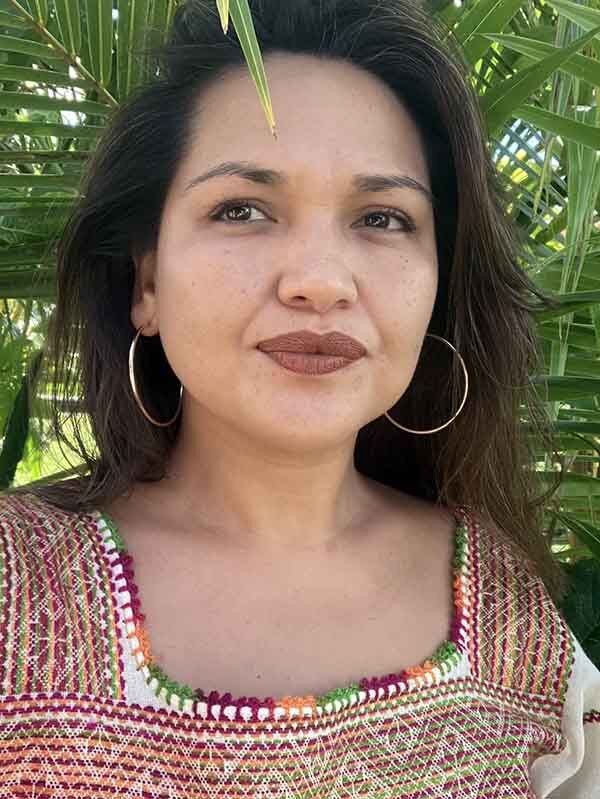
Nicole Duenas
