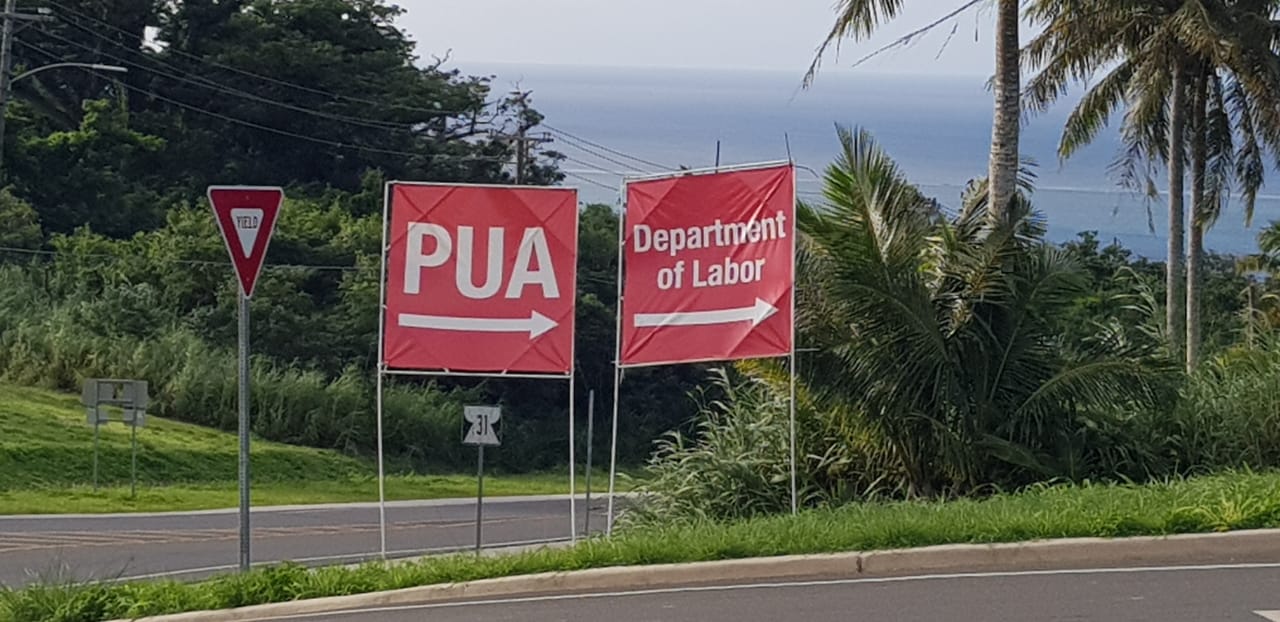





JUDGE Joseph N. Camacho said the Superior Court can hear Pandemic Unemployment Assistance benefit claims if there is unreasonable delay in their release pursuant to 1 CMC § 9112(f)(1).
Judge Camacho noted that it took the CNMI Department of Labor seven months to pay the plaintiff, John Angello who then asked the court to dismiss the case.
The Office of the Attorney General also said that the lawsuit should be dismissed, but Judge Camacho said the court has jurisdiction when an agency unreasonably delays making a decision.
But the judge did grant the plaintiff’s request and dismissed the complaint with prejudice. “With prejudice” means the complaint cannot be refiled.
Background
At a status conference on Jan. 12, 2021, Angello, who represented himself, asked the Superior Court to dismiss the small claims complaint he filed against CNMI DOL and its secretary, Vicky I. Benavente, regarding his PUA application.
But Angello also asked the court to make the dismissal conditional, since his payment had been subjected to another program delay.
He said CNMI DOL promised, via email, that a full payment of $7,833 was being manually processed as of Jan. 5, 2021.
Angello said he trusted CNMI DOL but wanted to verify first that the direct bank deposit was received in his account within the promised five to 10 government working days.
He said he would immediately inform the court when payment had been received.
For its part, CNMI DOL, represented by Deputy Attorney General Lilian A. Tenorio, asked the court to dismiss the complaint for lack of jurisdiction due to the plaintiff’s failure to exhaust his administrative remedies.
Tenorio said the small claims complaint should also be dismissed for presenting a claim that exceeded the small claims jurisdictional amount of $5,000.
The judge’s decision
In his order, Judge Camacho noted that Angello “applied for PUA benefits on June 12, 2020. Following a string of bureaucratic difficulties requiring him to reapply and resubmit all supporting documents multiple times, Angello still had not received any payment of PUA benefits by the date on which he received a new work contract on Sept. 26, 2020. Nor had he received any information beyond an indication on the DOL portal that the processing of his application was ‘in progress.’ Angello finally filed a complaint in the present case on Nov. 20, 2020, still having not received any PUA benefit payment and after no longer receiving any communication from the defendants. It was only several months after the present case was filed that Angello received payment from the defendants on January 21, 2021.”
Judge Camacho said Angello received his PUA benefits just over seven months after he applied.
The court “finds that the matter at issue is one that affects the public interest: the question of emergency PUA benefits being unreasonably delayed affects the ability of those members of the public who lost their jobs due to the pandemic to provide for the basic needs of themselves and their families, namely food, shelter, healthcare, etc.”
The judge added, “The public has an interest in unemployment benefits being available in a timely manner to those who qualify for them.”
He said if “every qualified applicant for PUA benefits only received those benefits seven months or longer after they applied, the fundamental purpose of emergency PUA benefits, namely assisting individuals in need, would be greatly undermined.”
The court finds that this controversy is one “capable of repetition yet evading review.”
“The undue delay in processing applications and issuing PUA benefit payments is certainly capable of repetition. This is especially true as the pandemic is ongoing and new variants of Covid-19 continue to arise: it is foreseeable that additional PUA benefits may be offered in the future. Just as in the present case, any plaintiff bringing this controversy of undue delay in PUA benefit payments before the court is likely to have to wait several months before being able to bring the case. If it takes on average seven months for the DOL to issue PUA benefit payments, it is likely that any plaintiff will receive payment within several months of filing a complaint, causing the case to be moot. Thus, any recurrence of this undue delay in paying PUA benefits would likely continue to evade review,” Judge Camacho said.